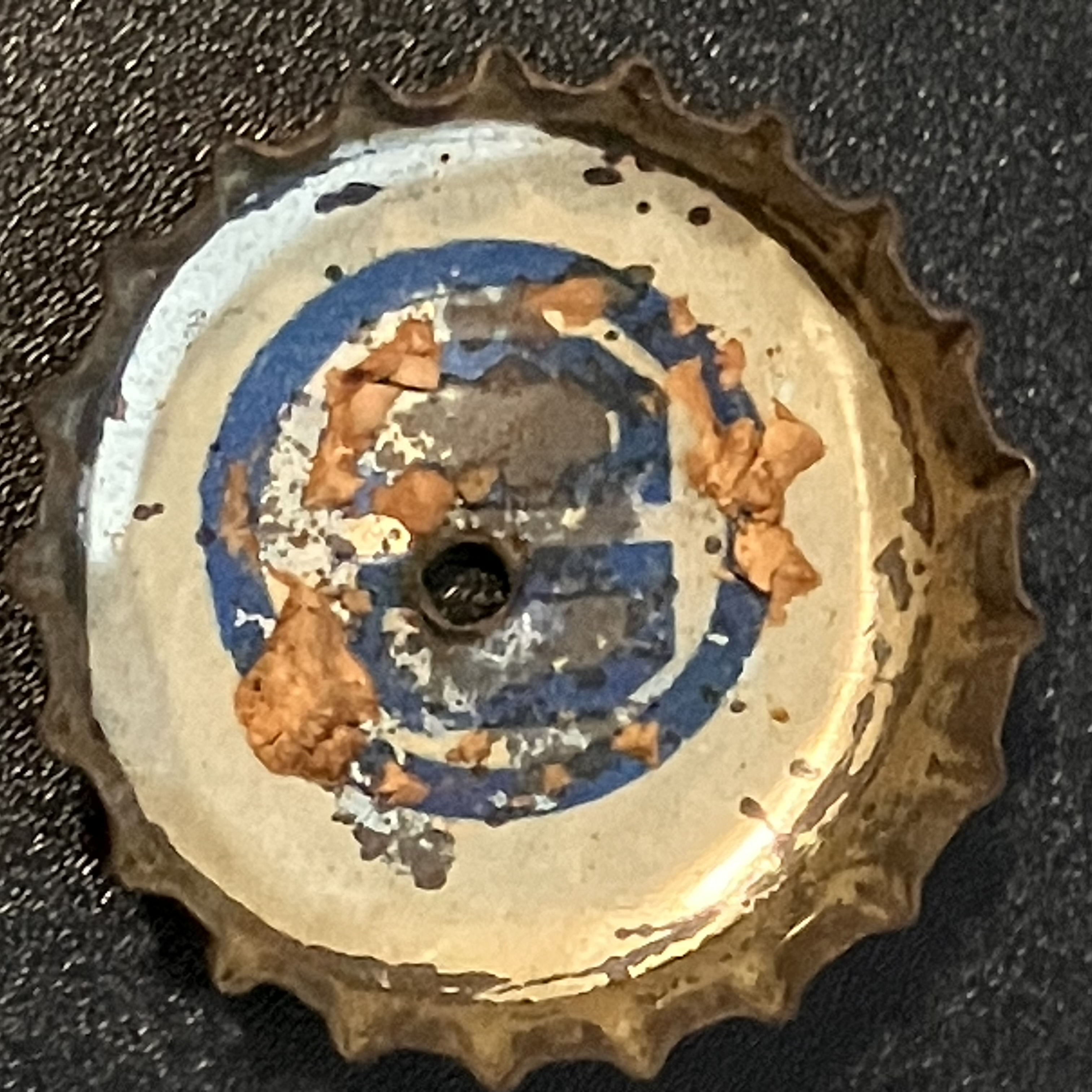
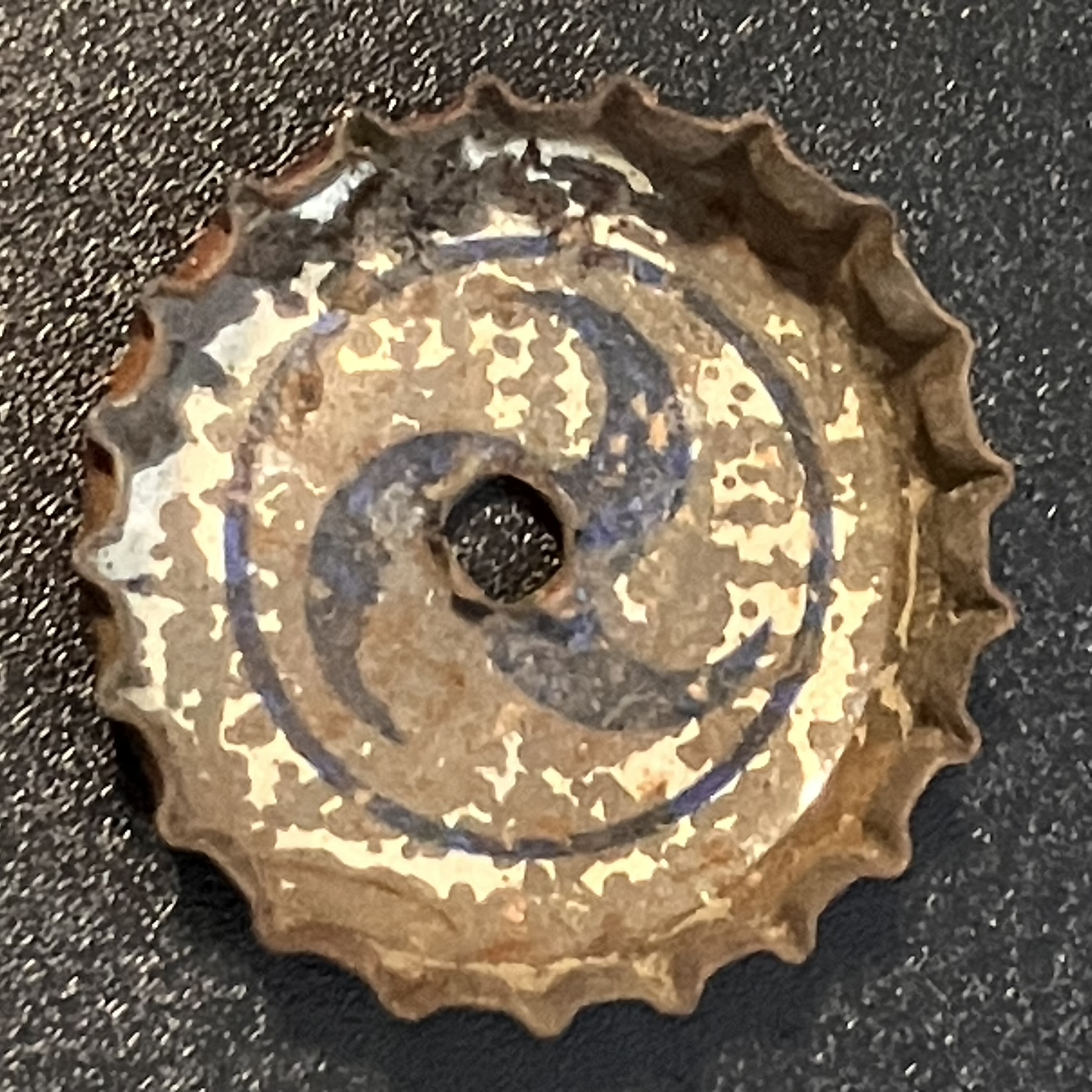
The Crown-Cap Liner Archive
Preserving This Delightful Post-Purchase Brand Moment
Curating Fun-Sized Material Culture™


Special Online Museum Exhibit—March 5, 2026
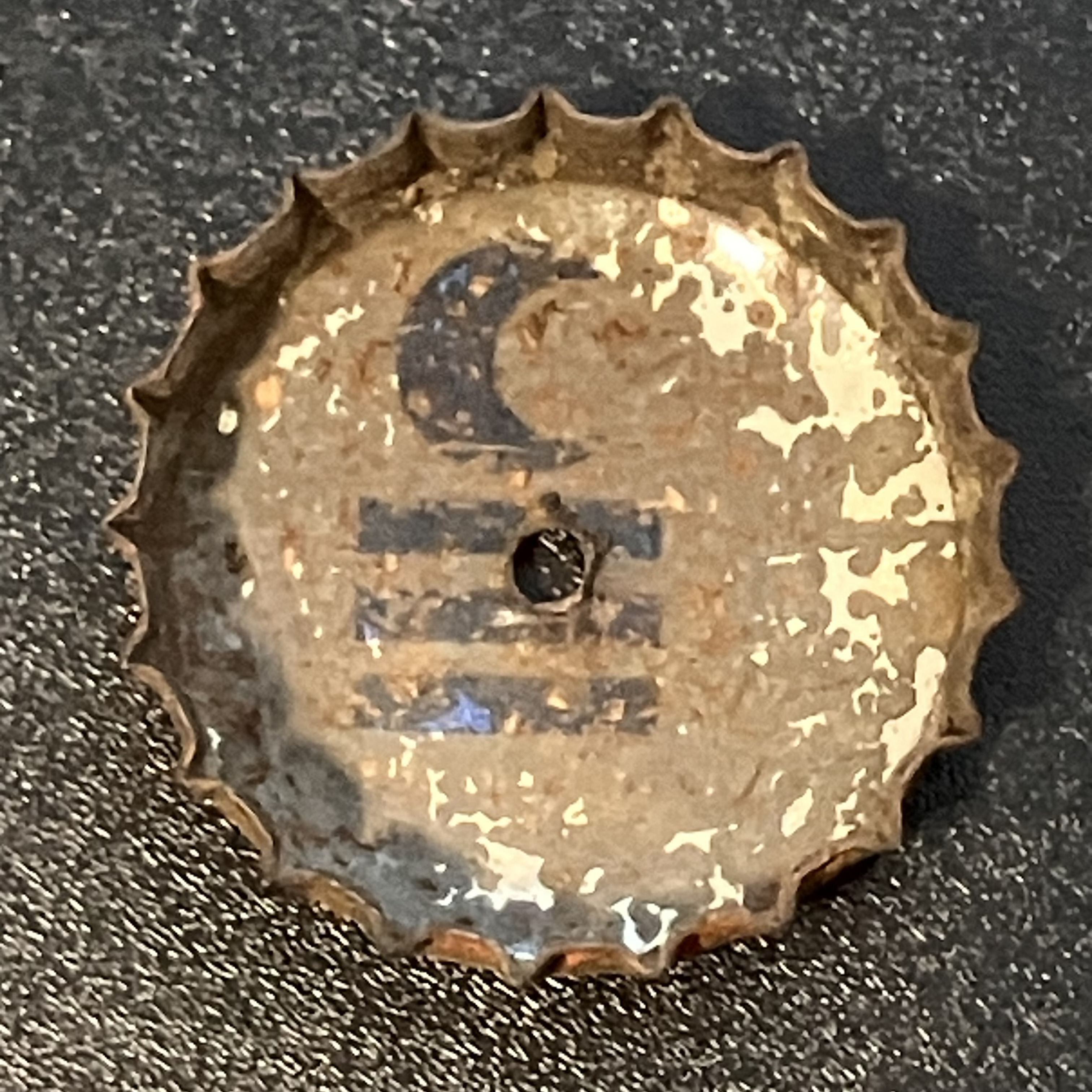
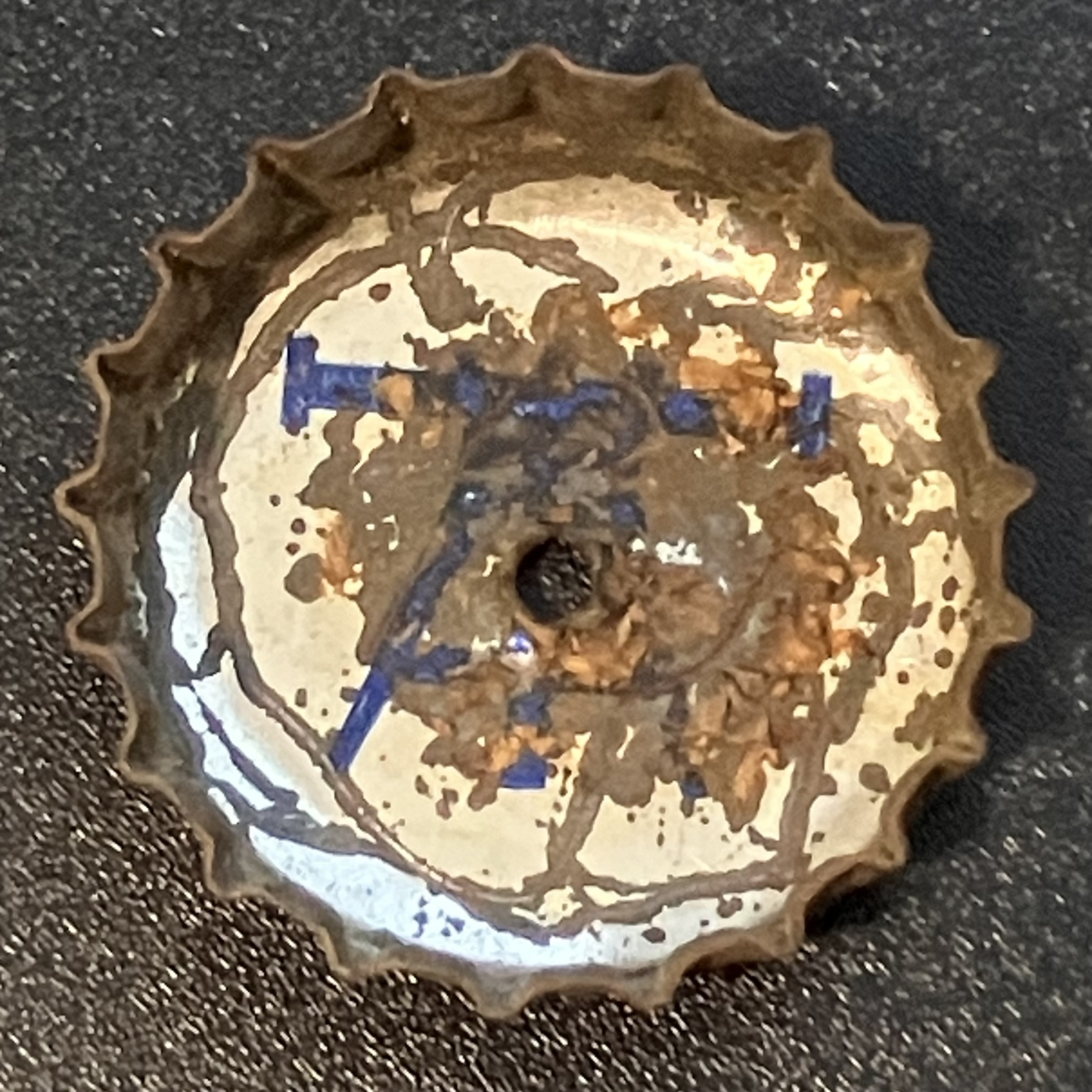
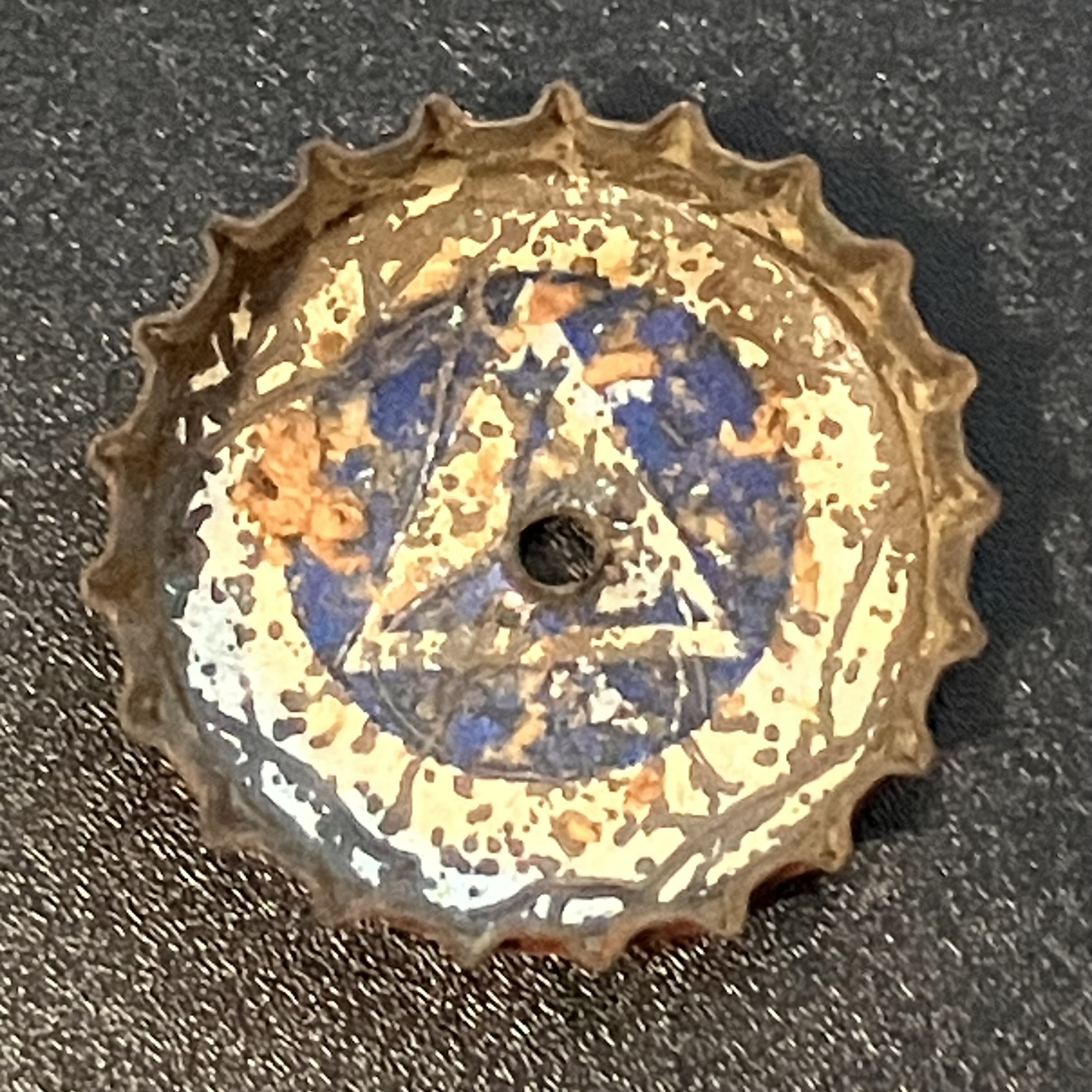
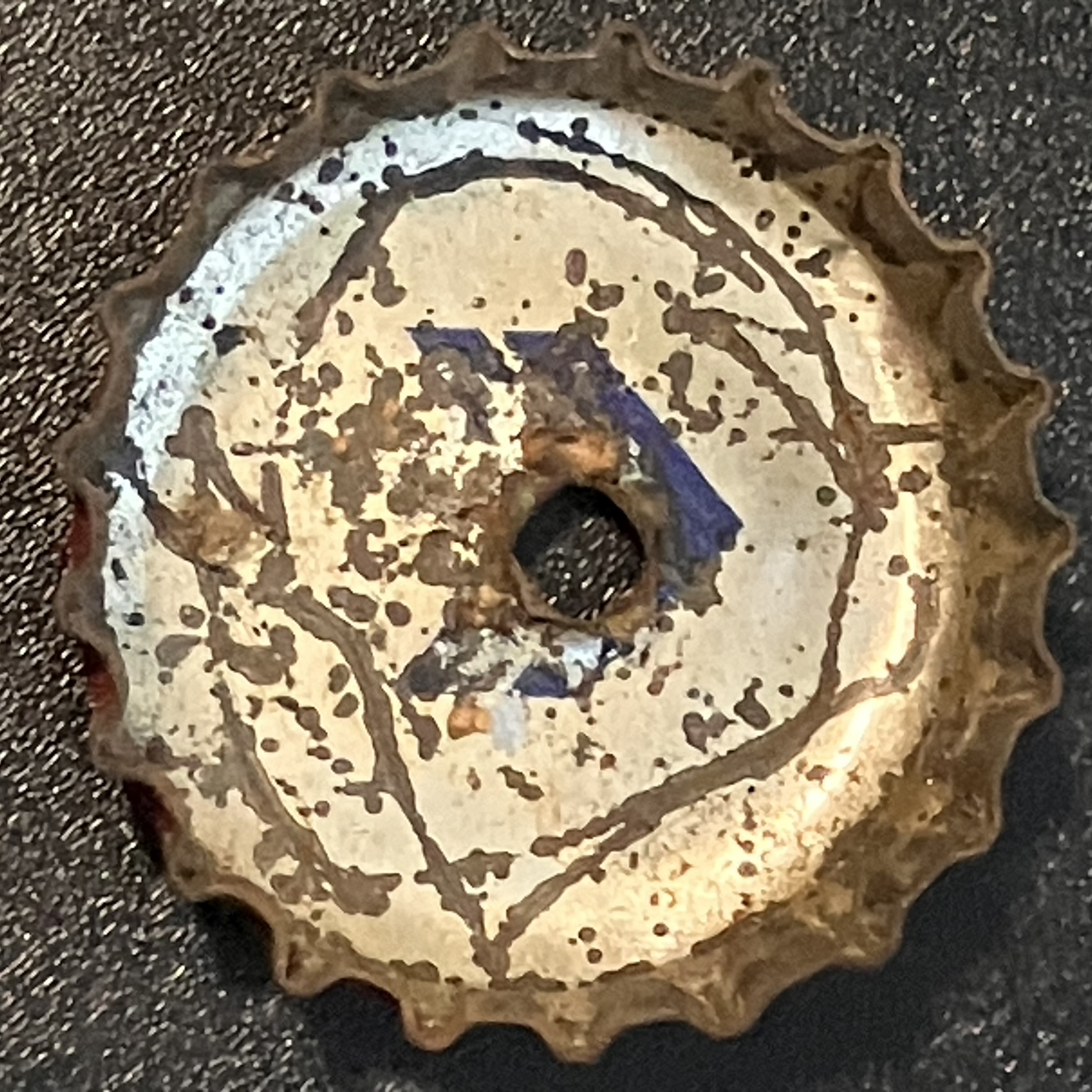
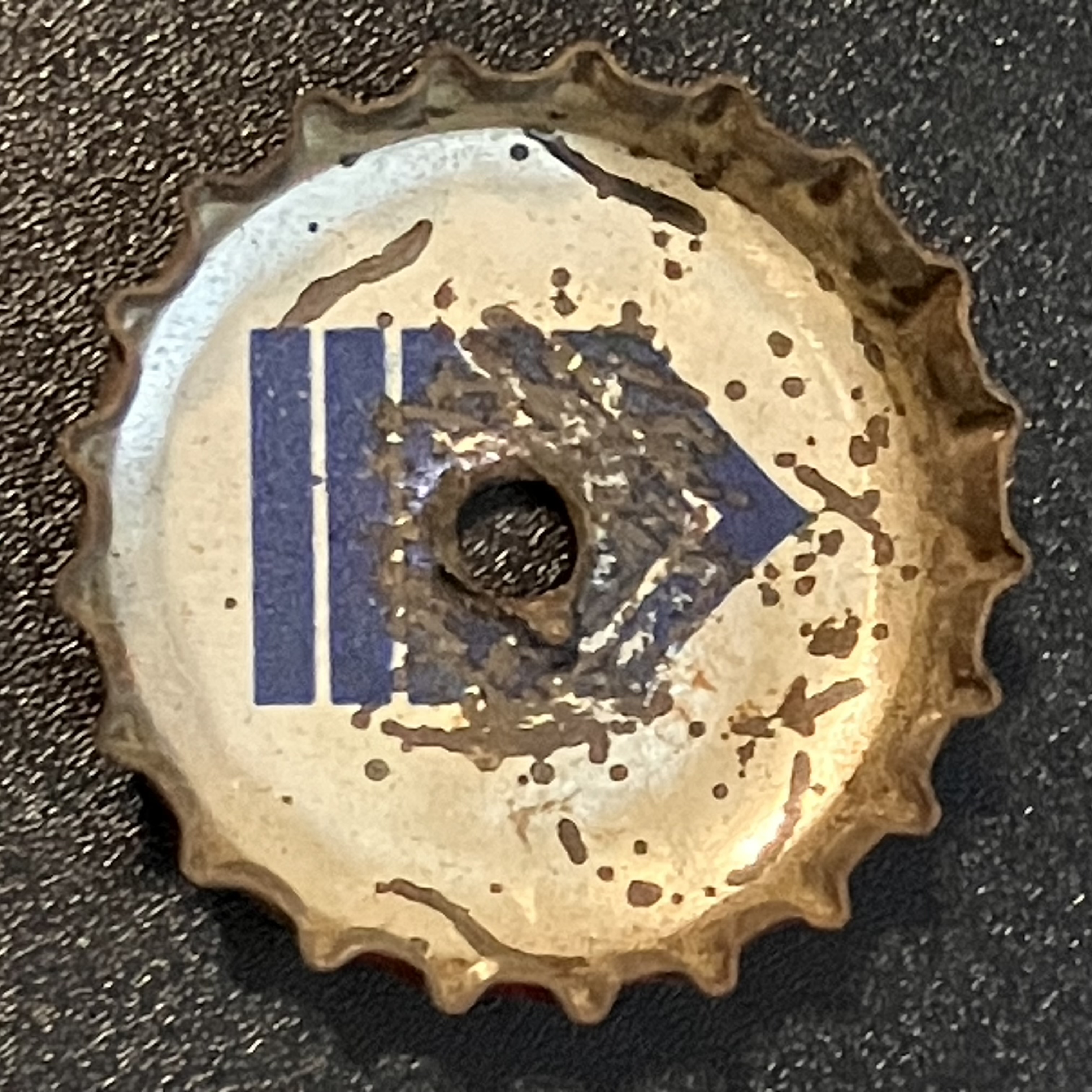
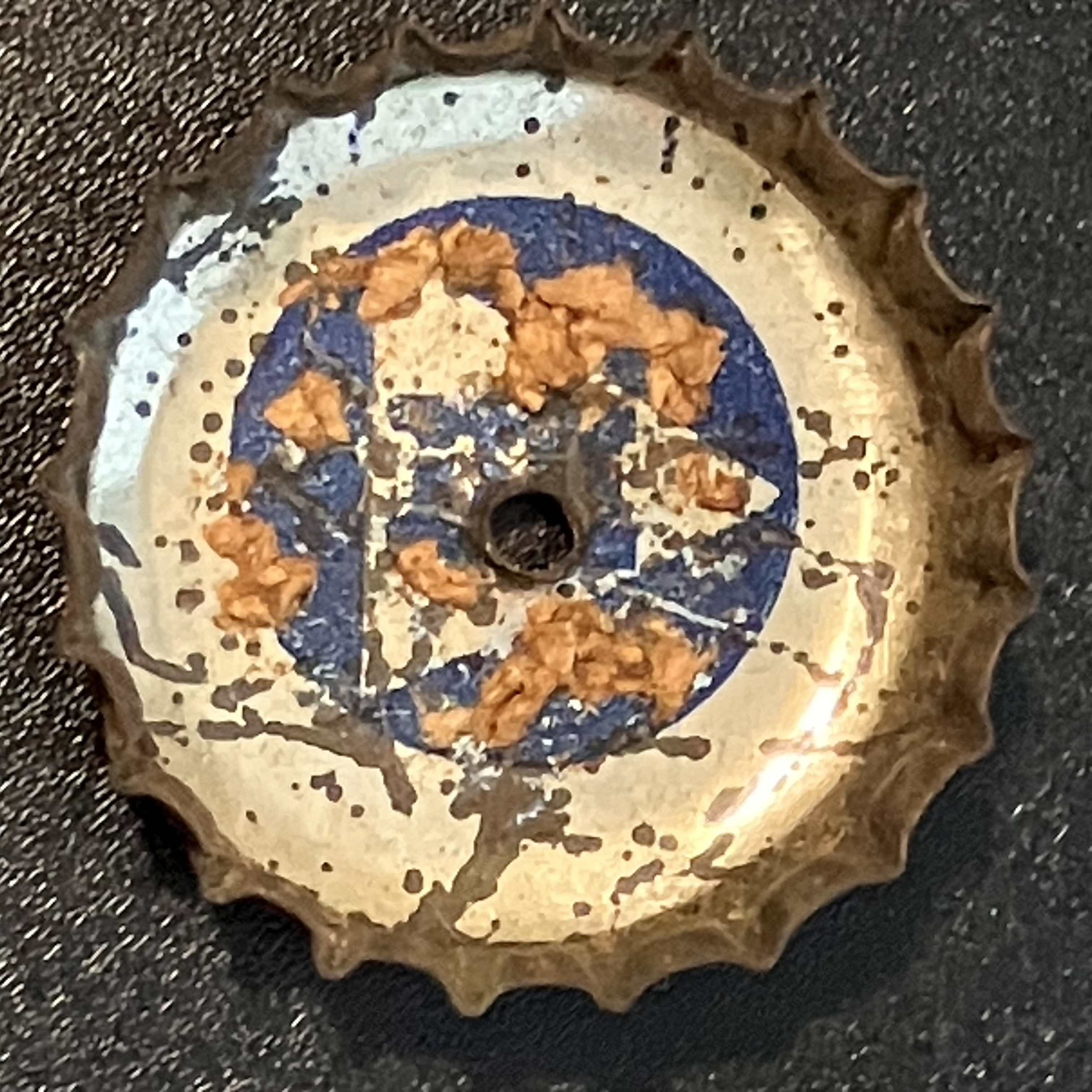
The late 1940s’ intensifying cola war pushed its clear underdog, Pepsi-Cola Company, to try something both patriotic and ingenious: a cluster of contests and sweepstakes inviting the public to collect 48 different U.S. Army insignia—officially called SSI, or “shoulder sleeve insignia”—hidden under the cork liners of select Pepsi-Cola crown bottlecaps. Collect them, submit them, and you might win substantial cash prizes (a total of $2.75MM in 2026 dollars).
From our ongoing research, this appears to be the first time crown-cap liners were used in an American marketing campaign (possibly anywhere in the world; we’re still investigating). Previously, liners were strictly utilitarian with manufacturing shorthand (production line identifiers, batch and date tracking, quality control) and discreet anti-counterfeiting symbols. Pepsi-Cola “Treasure Tops” Sweepstakes and Contests flipped the crown-cap liner out of the factory and into society’s consciousness.
This was a new contest format, and the public understandably needed a bit of education. Print ads included illustrated instructions for prying off the cork liners, but it remained an unfamiliar struggle for contestants. For Pepsi too, there were a couple of early lessons learned. First, they neglected to label the crowns themselves as containing any hidden value. As a result, many winning liners were naively tossed away during the familiar ritual of prying open a cola and reflexively discarding the cap. How many kitchen trash cans swallowed up the chance at a fortune?
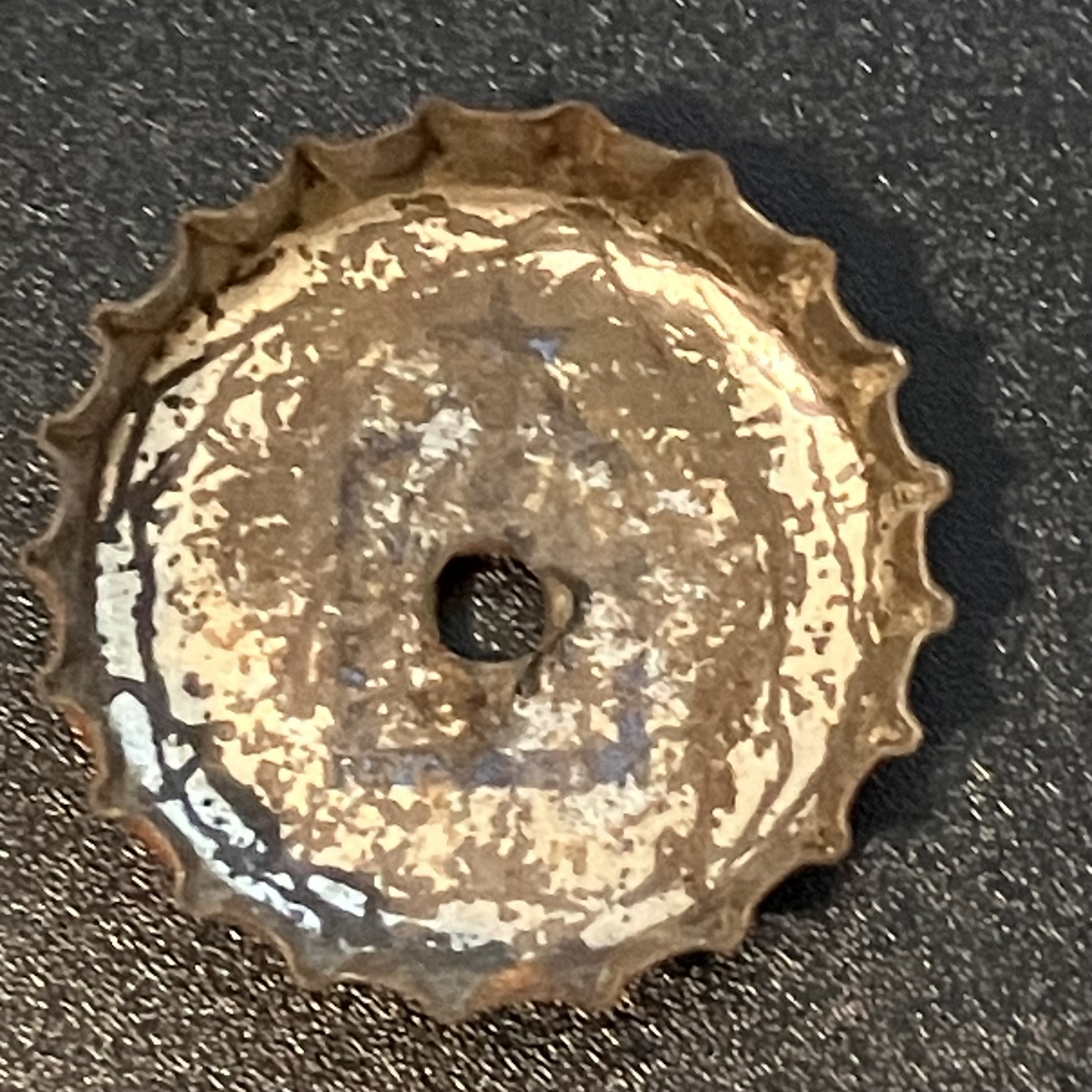
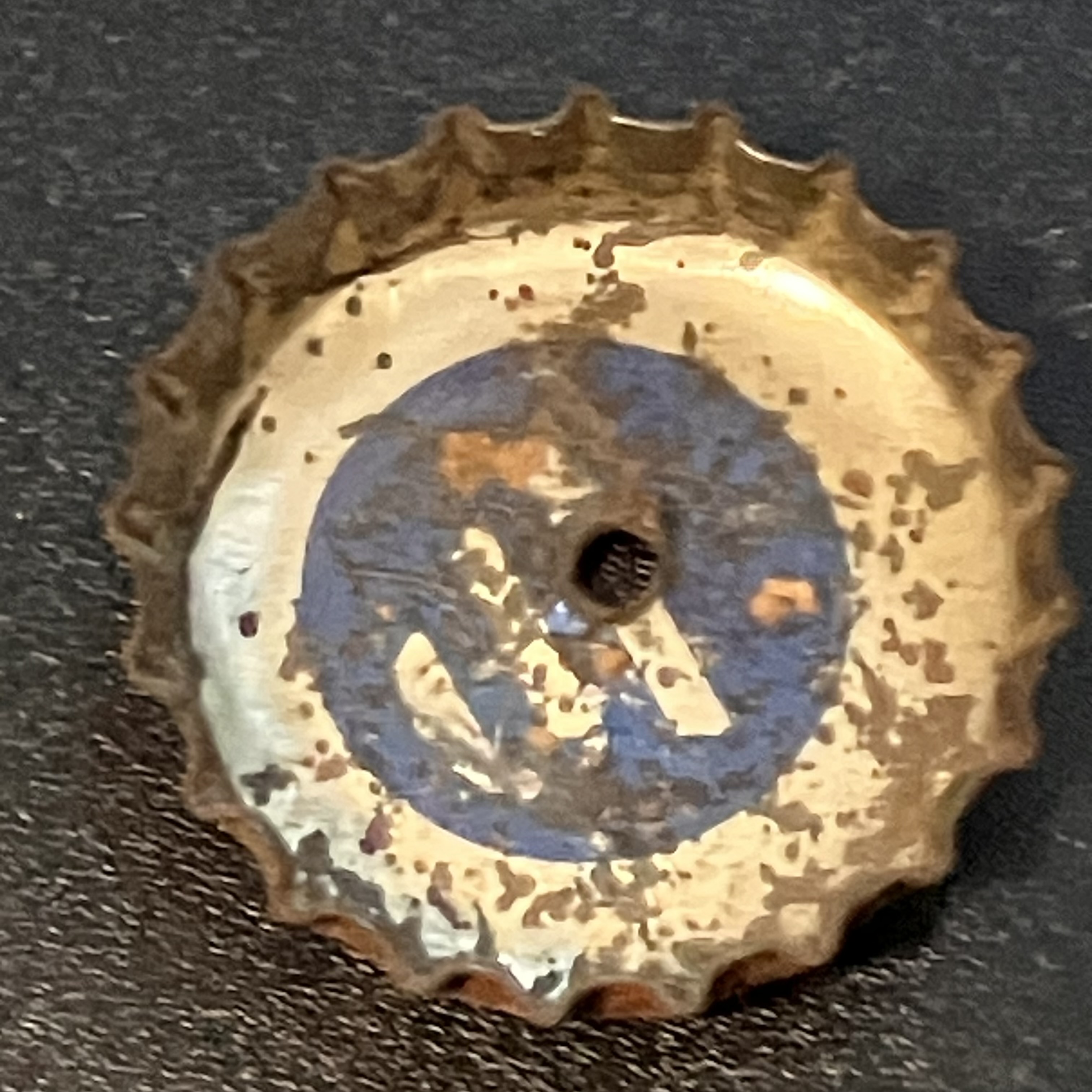
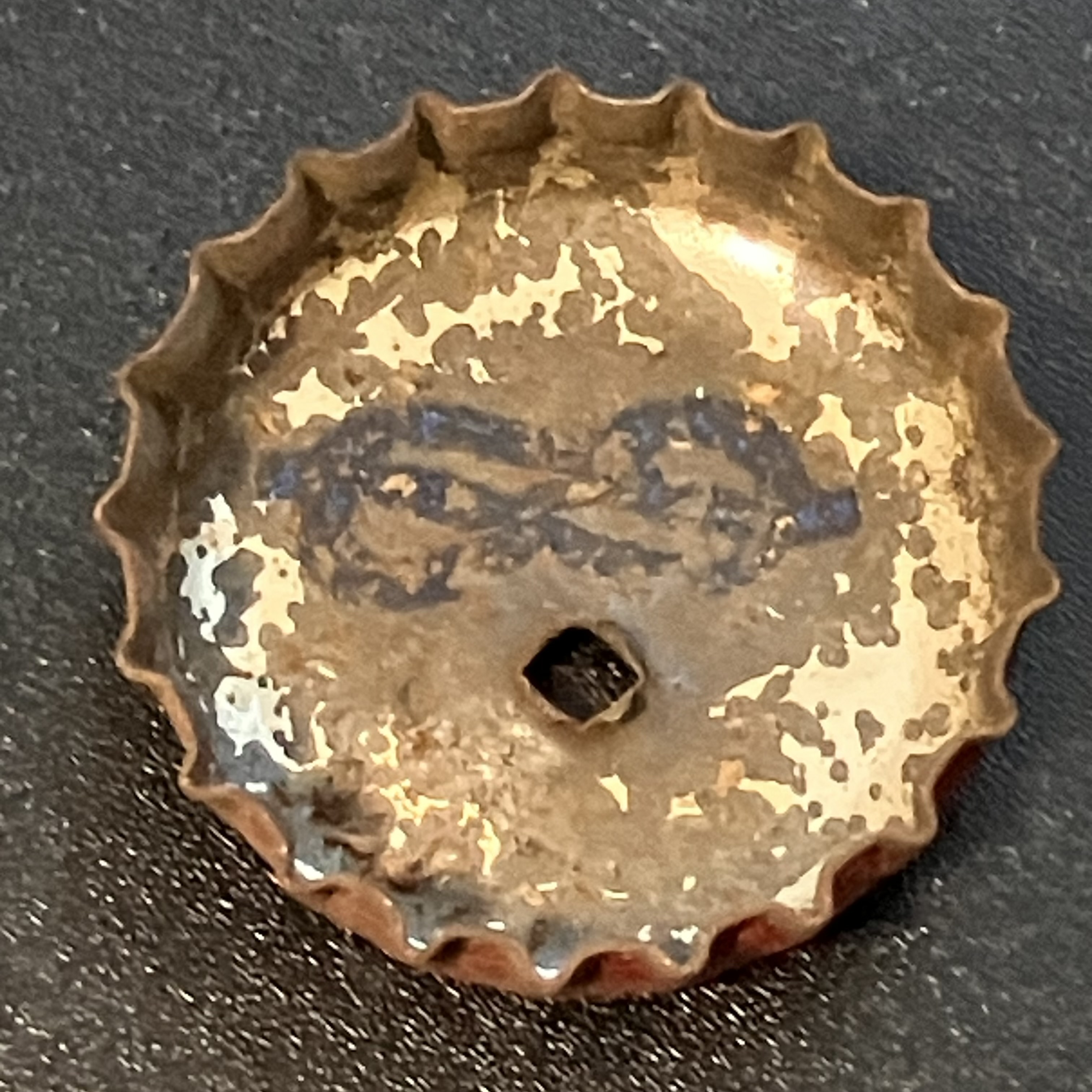
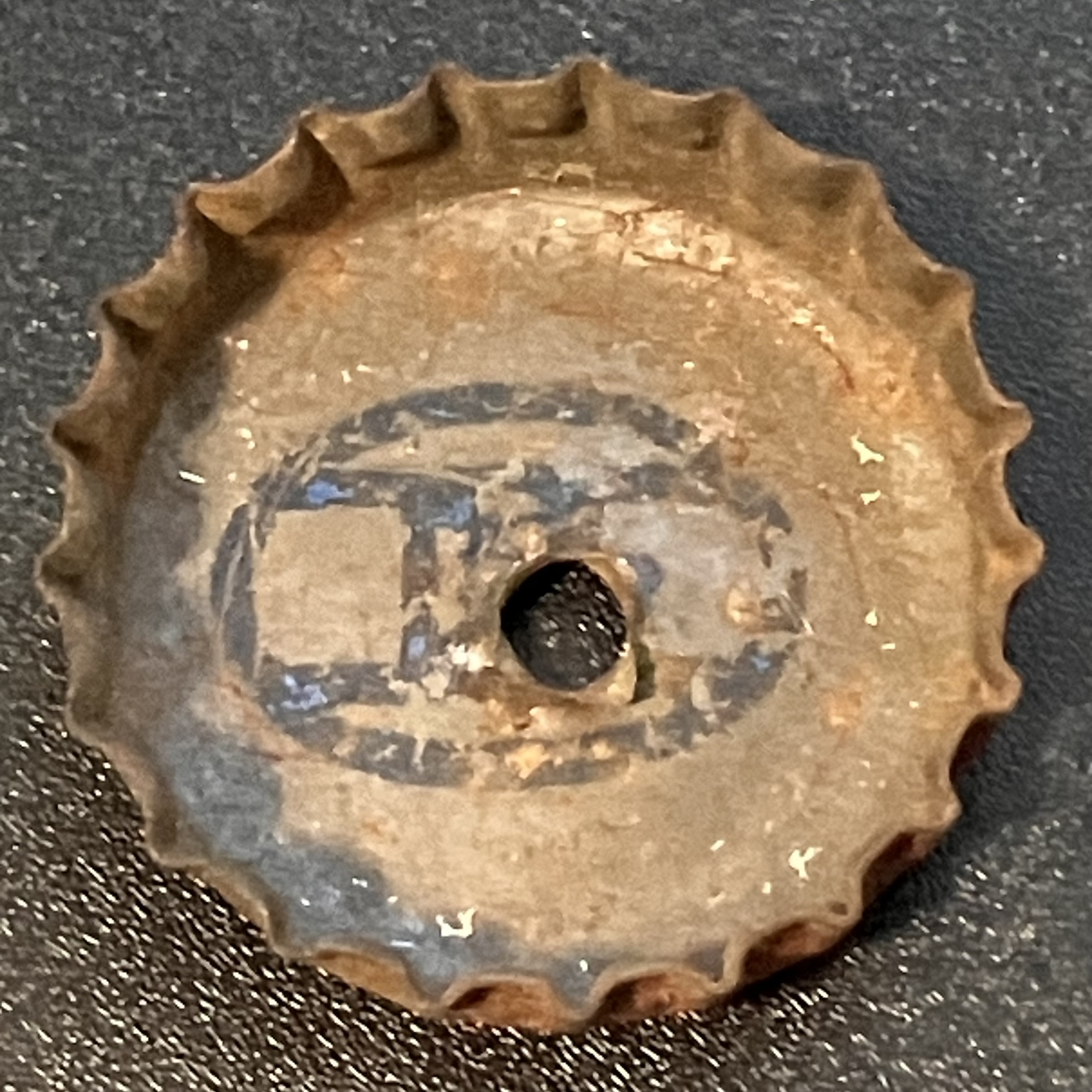
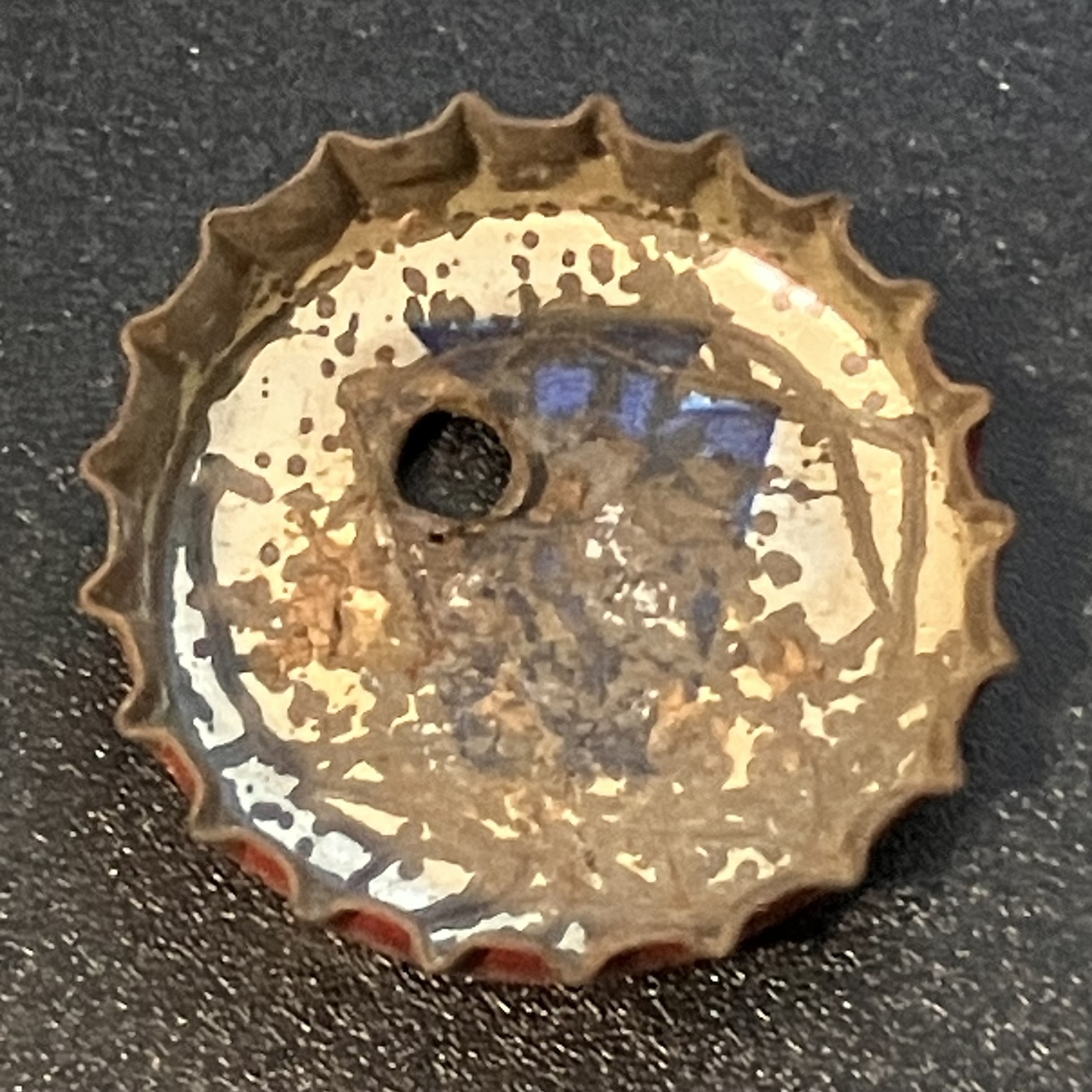
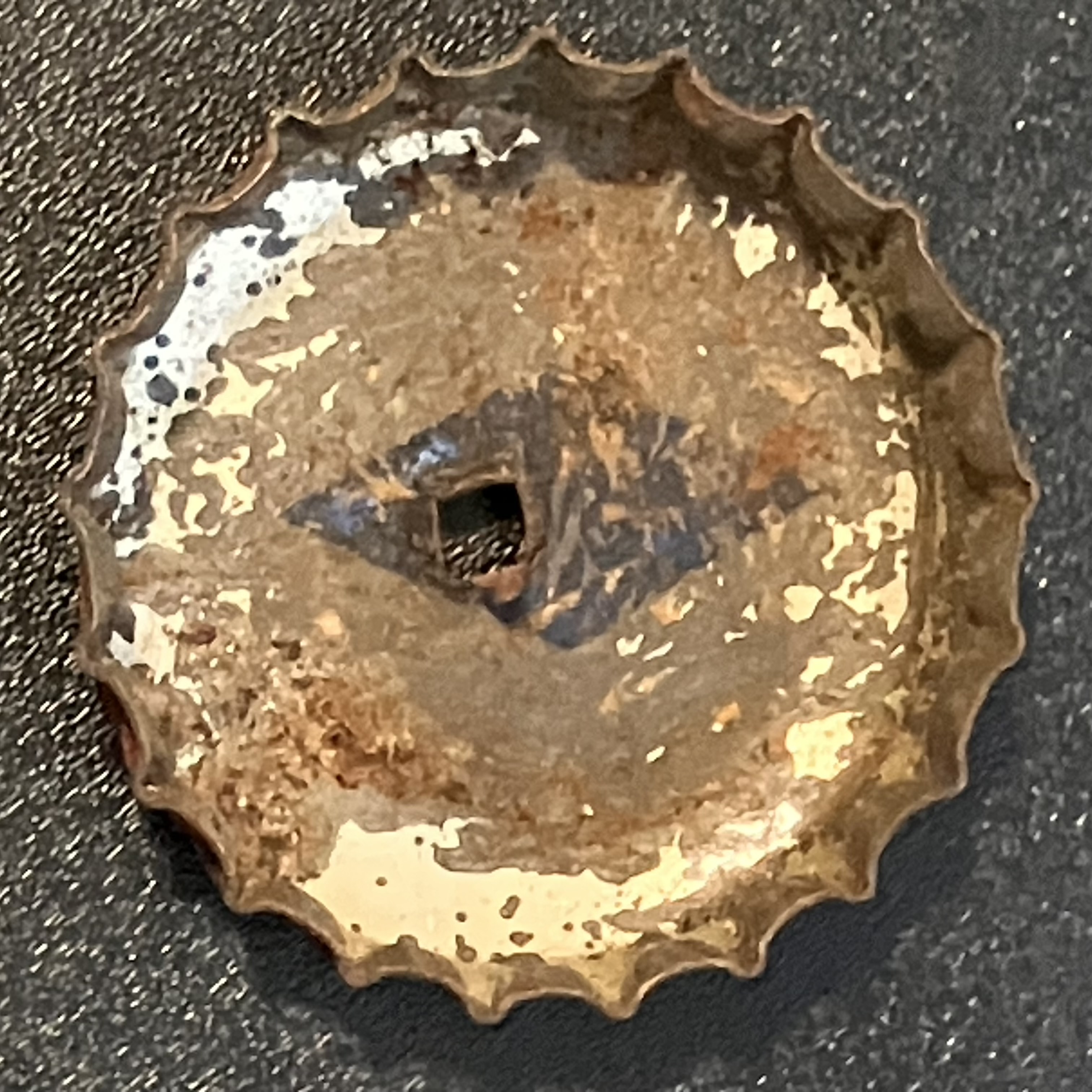
Second, Pepsi printed those insignias directly onto the metal crowncaps in a beautiful deep blue ink, but covered them in a generous amount of horse glue to affix the cork liners without regard for the public who need to remove those liners to participate in the contest. To varying degree, every known example of a circulated Treasure Top liner is hopelessly marred: too strong a glue transferred some ink onto the cork, and many contestants’ scraping left the designs less intact and legible. Industrial strength degraded consumers’ “Treasure Tops” experience and nearly spoiled the success of all the marketing effort.
Enjoy perusing These jump links minimize scrolling:
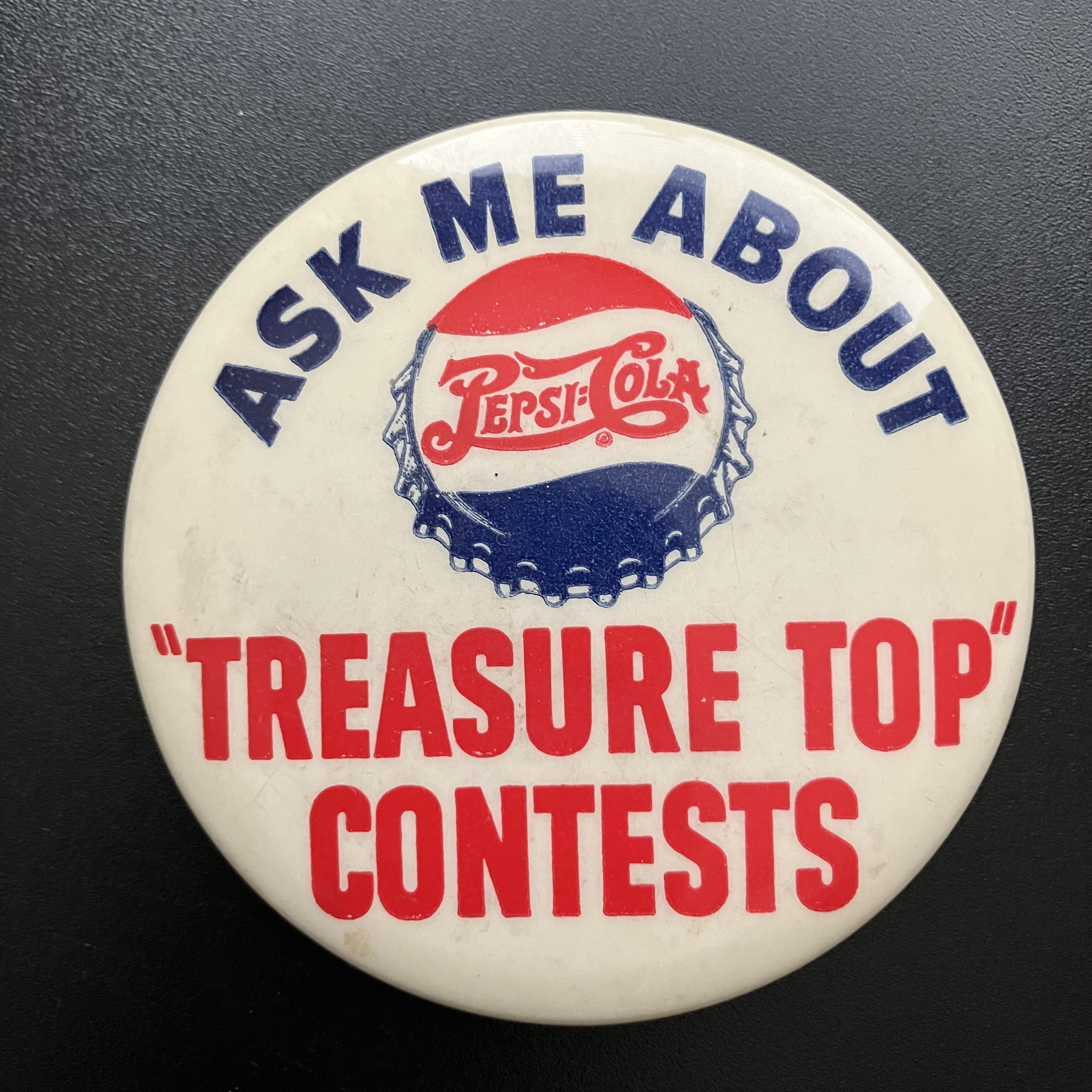
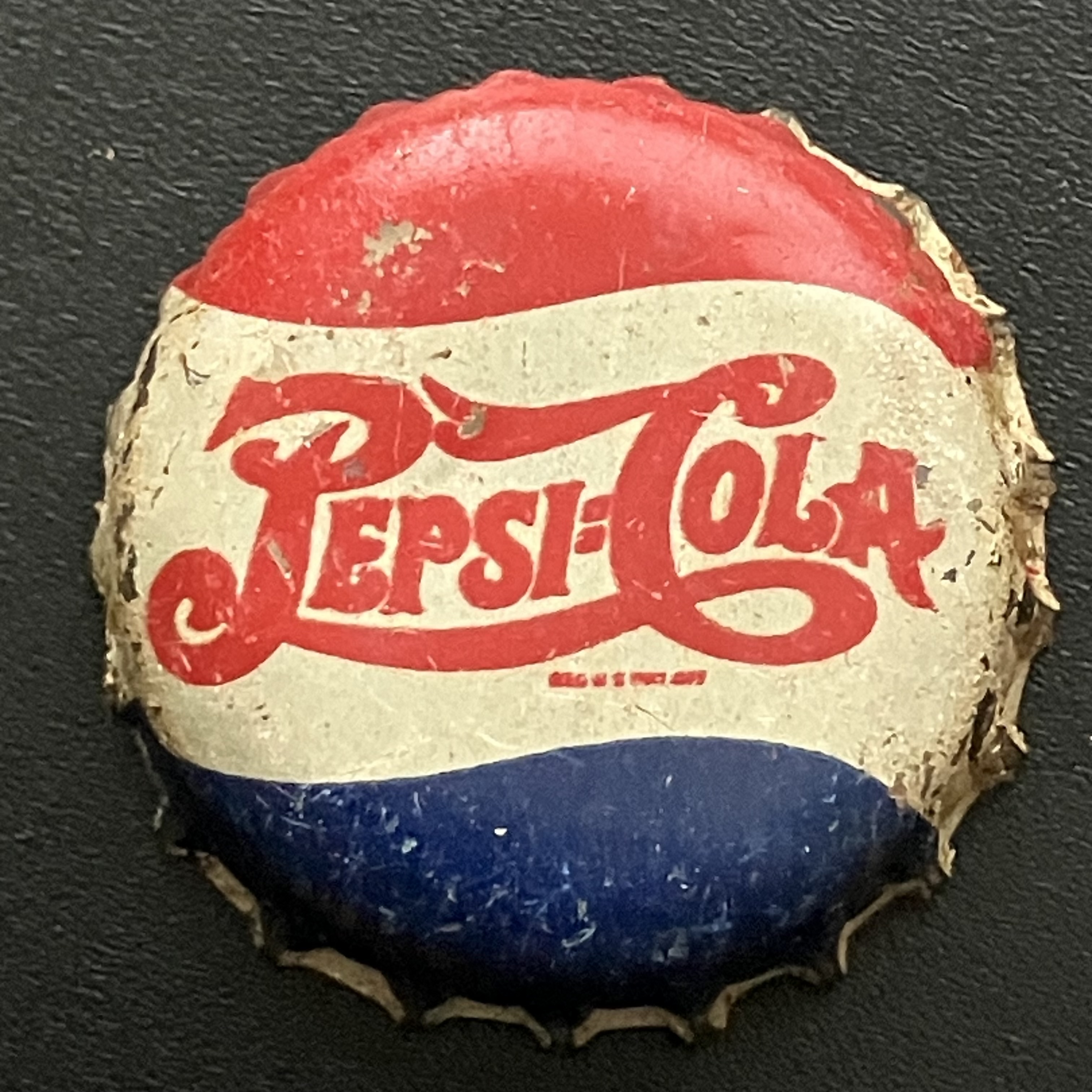
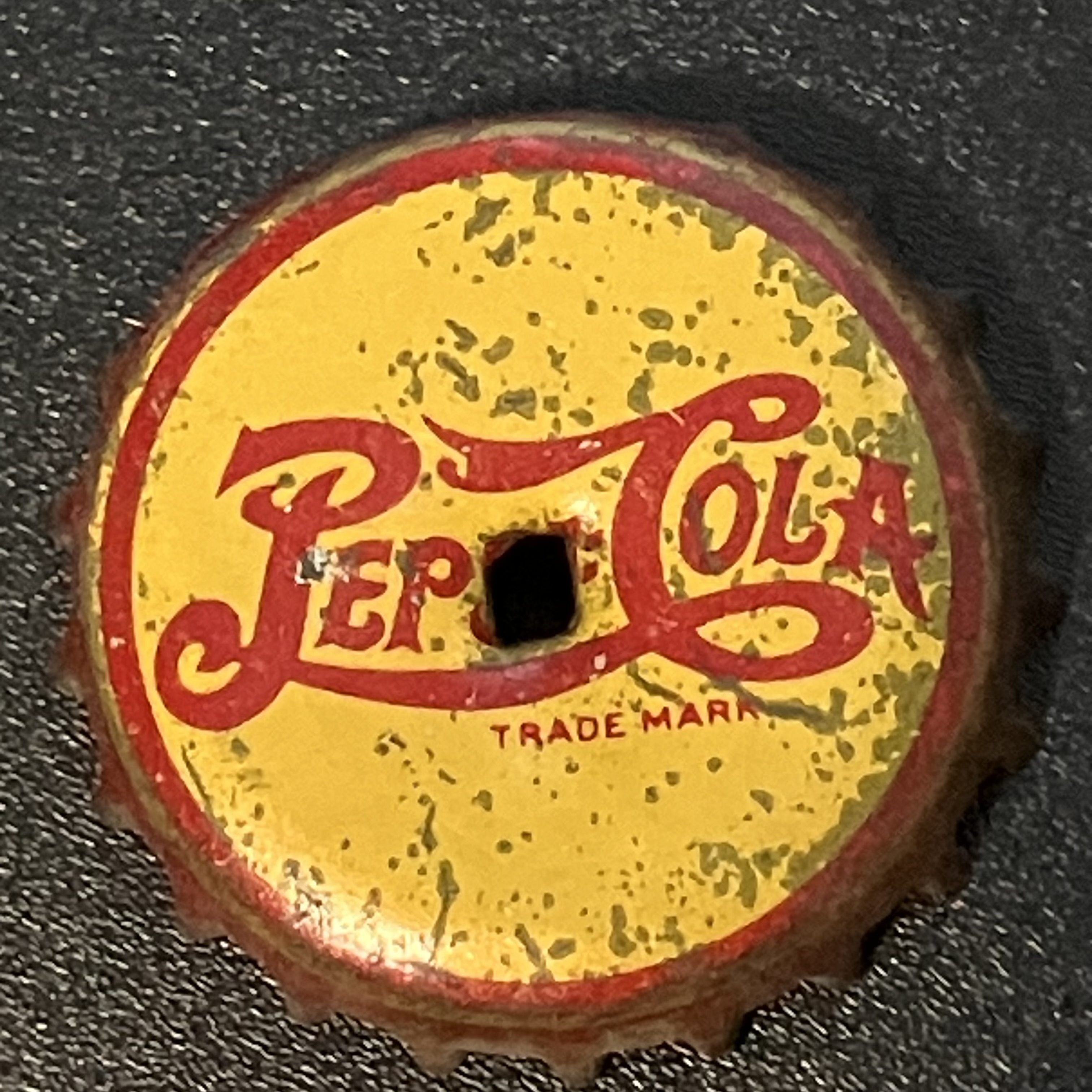
Inconspicuous, but this is the top view of a “Treasure Top” crown. Later contests and liner artwork were deliberately noted on the tops with symbols or wording to prevent unwitting disposal.
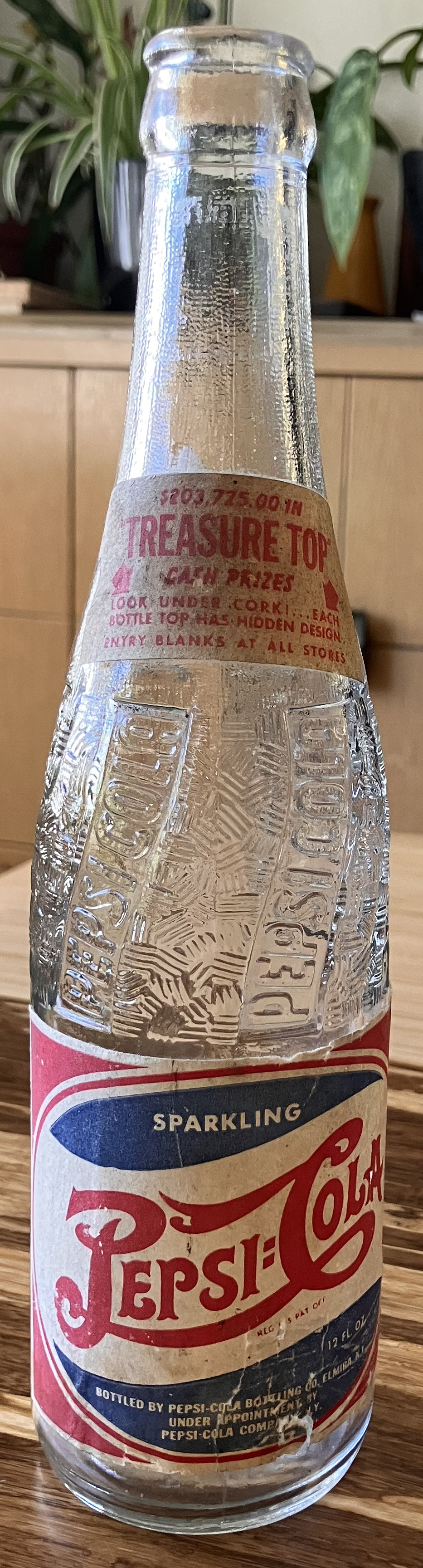
Neck label off-center from main label, applied independently?
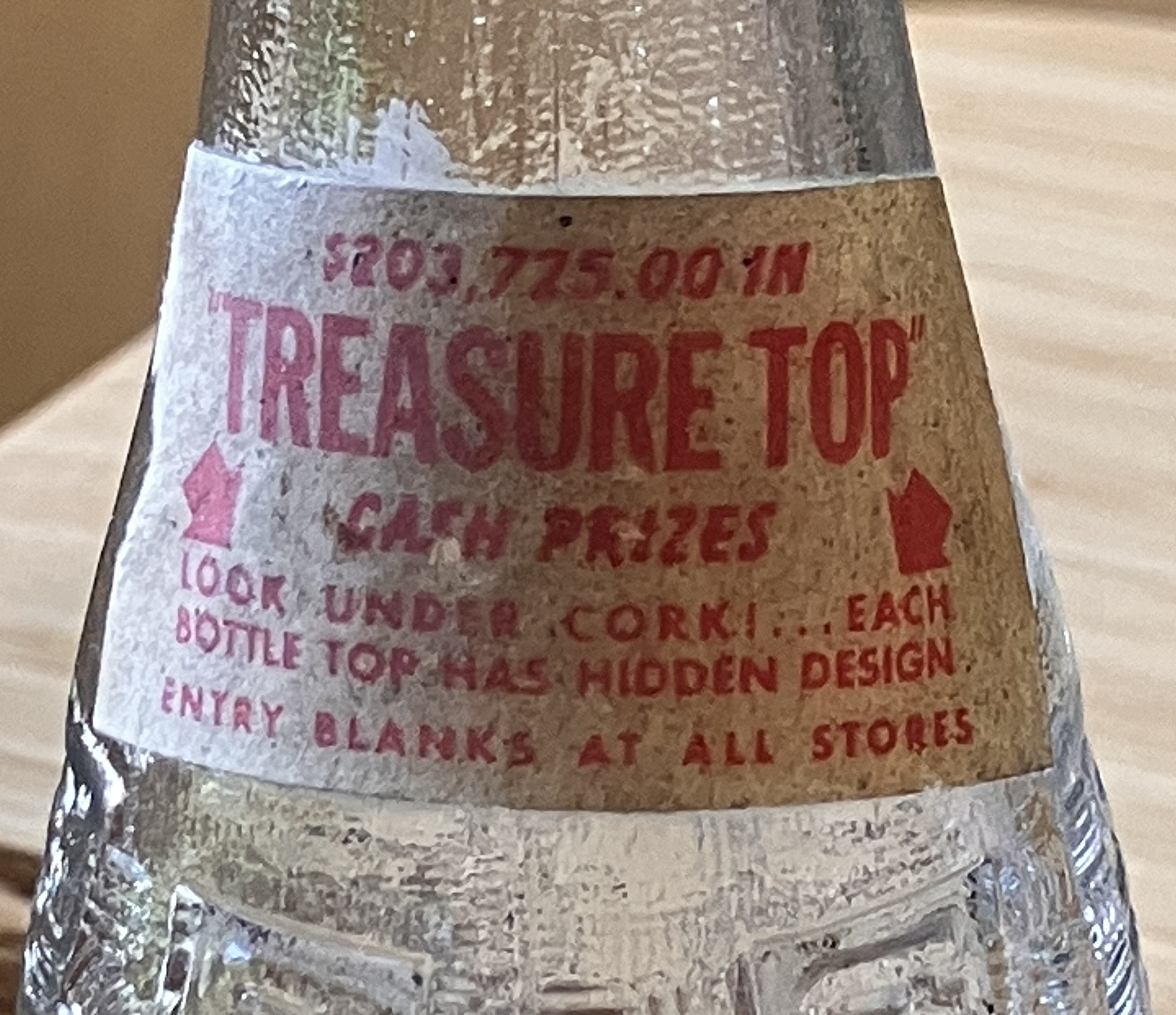
Really pulpy (ie cheap) paperstock with low-quality lithography.
With no indication on the crown caps themselves, this paper label is the only packaging indication that the attached liner contains value.
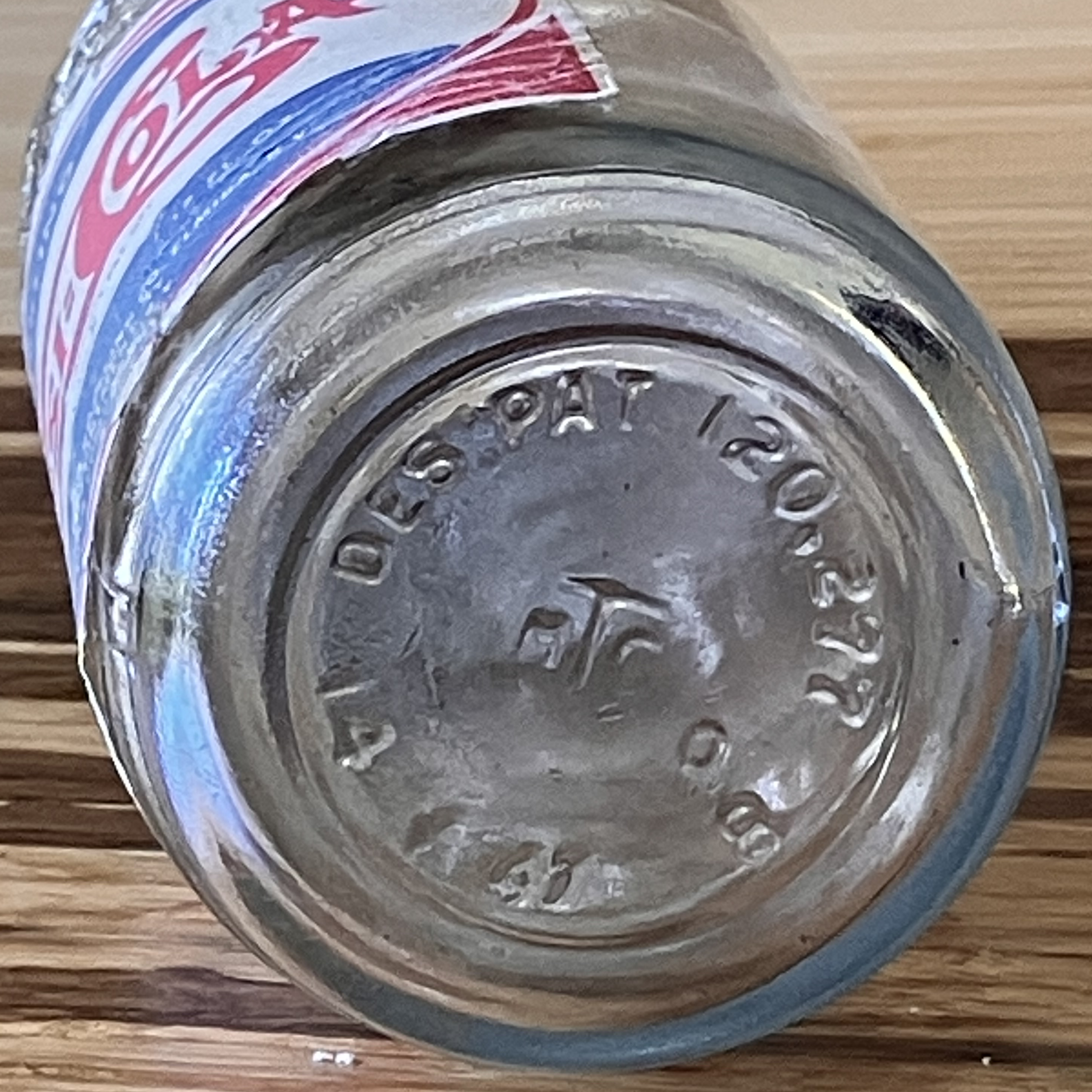
Glass bottle aficionados may recognize these markings on the bottom.
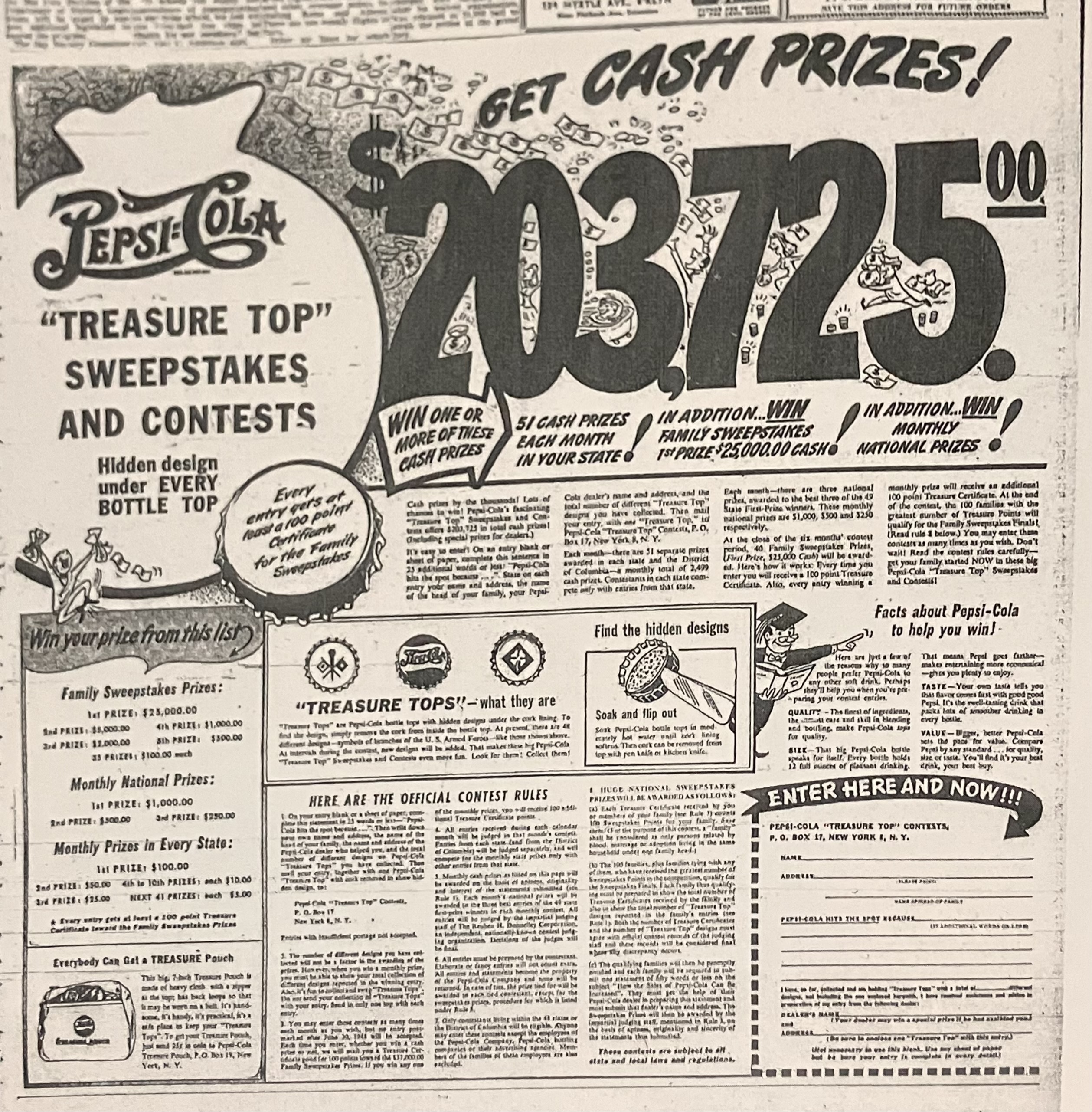
‘Daily Eagle,’ Brooklyn, NY, January 4, 1948 - page 13
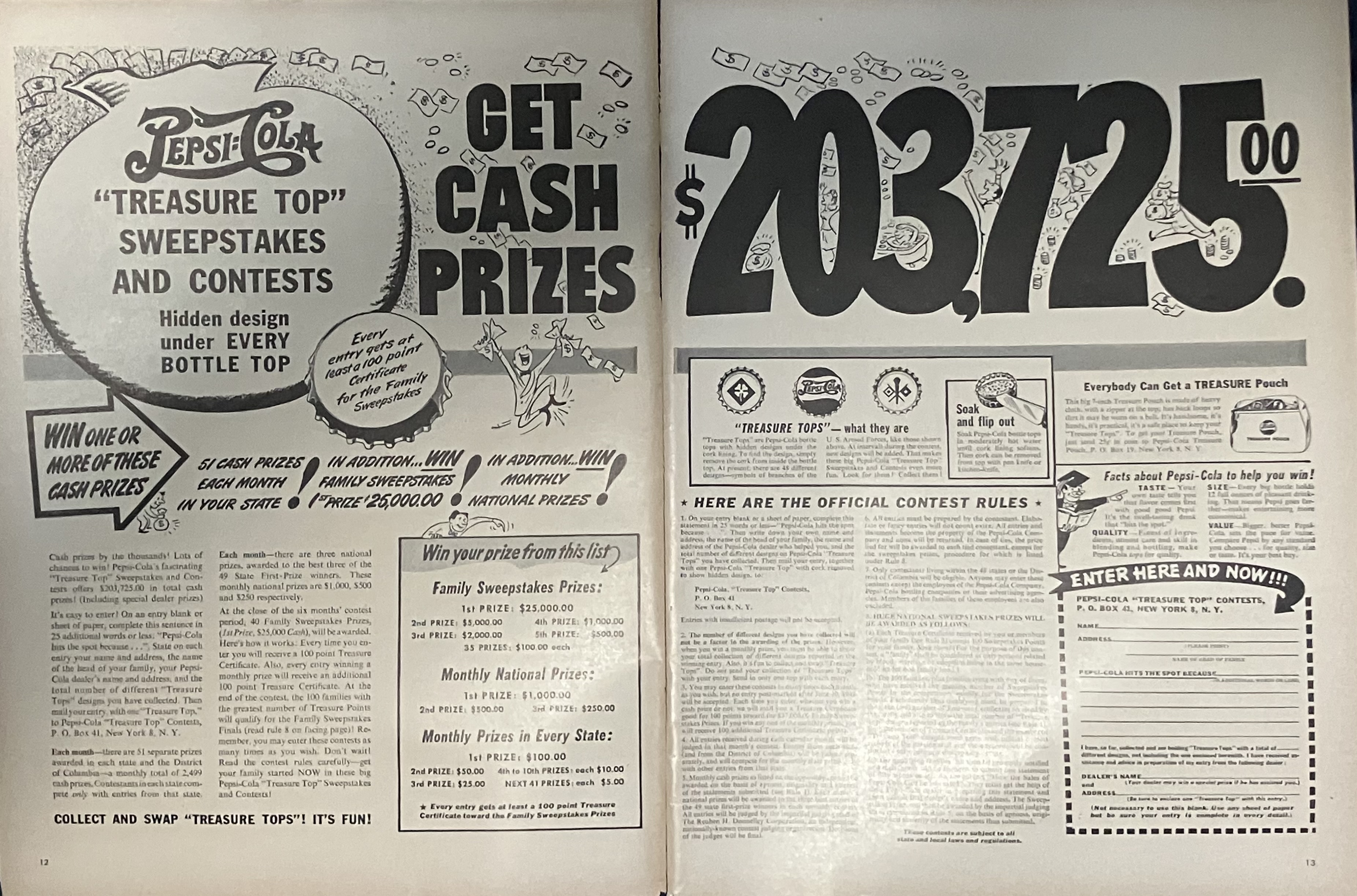
LIFE Magazine, January 19, 1948 - pages 12 & 13
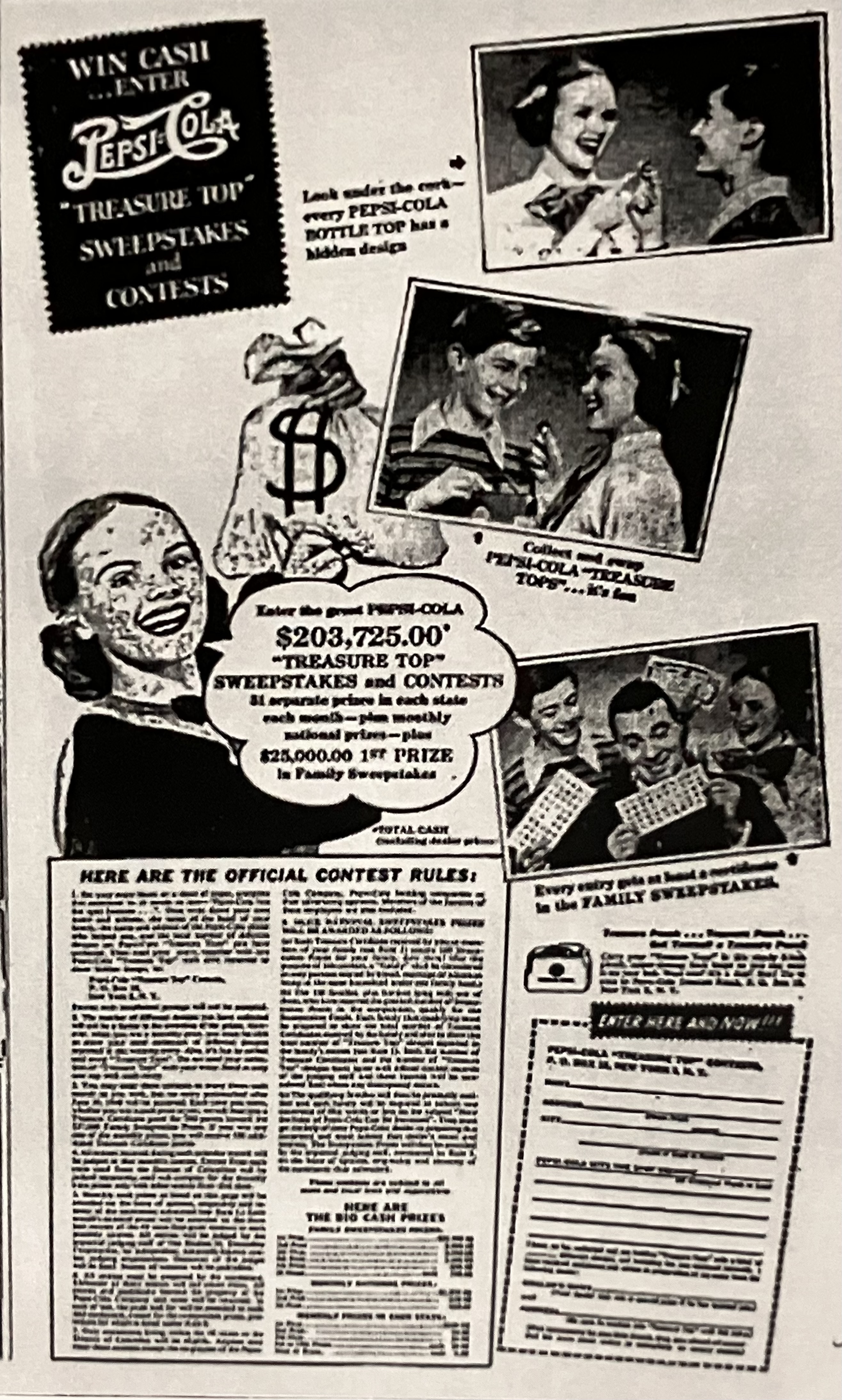
February 1, 1948 - 3 cities
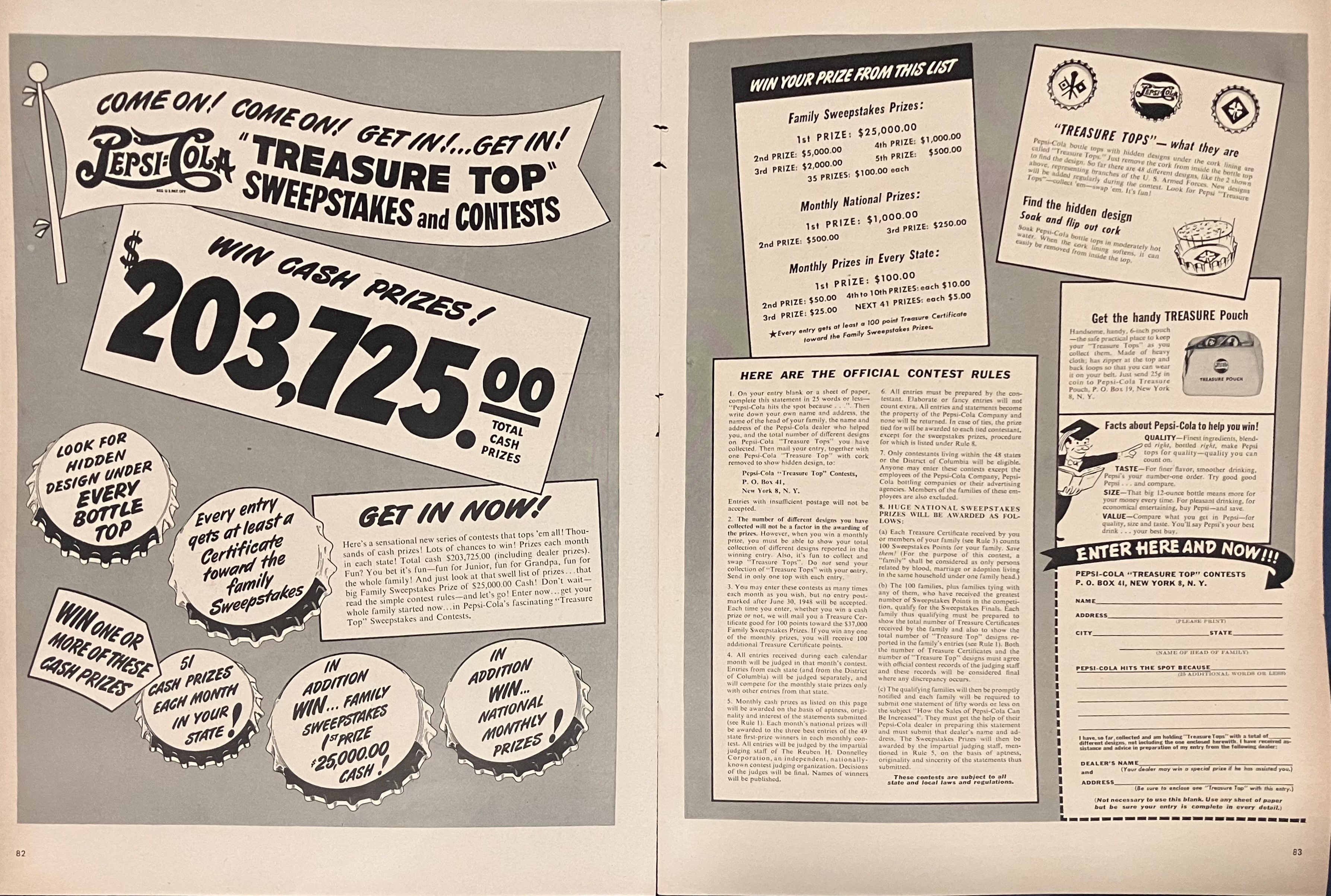
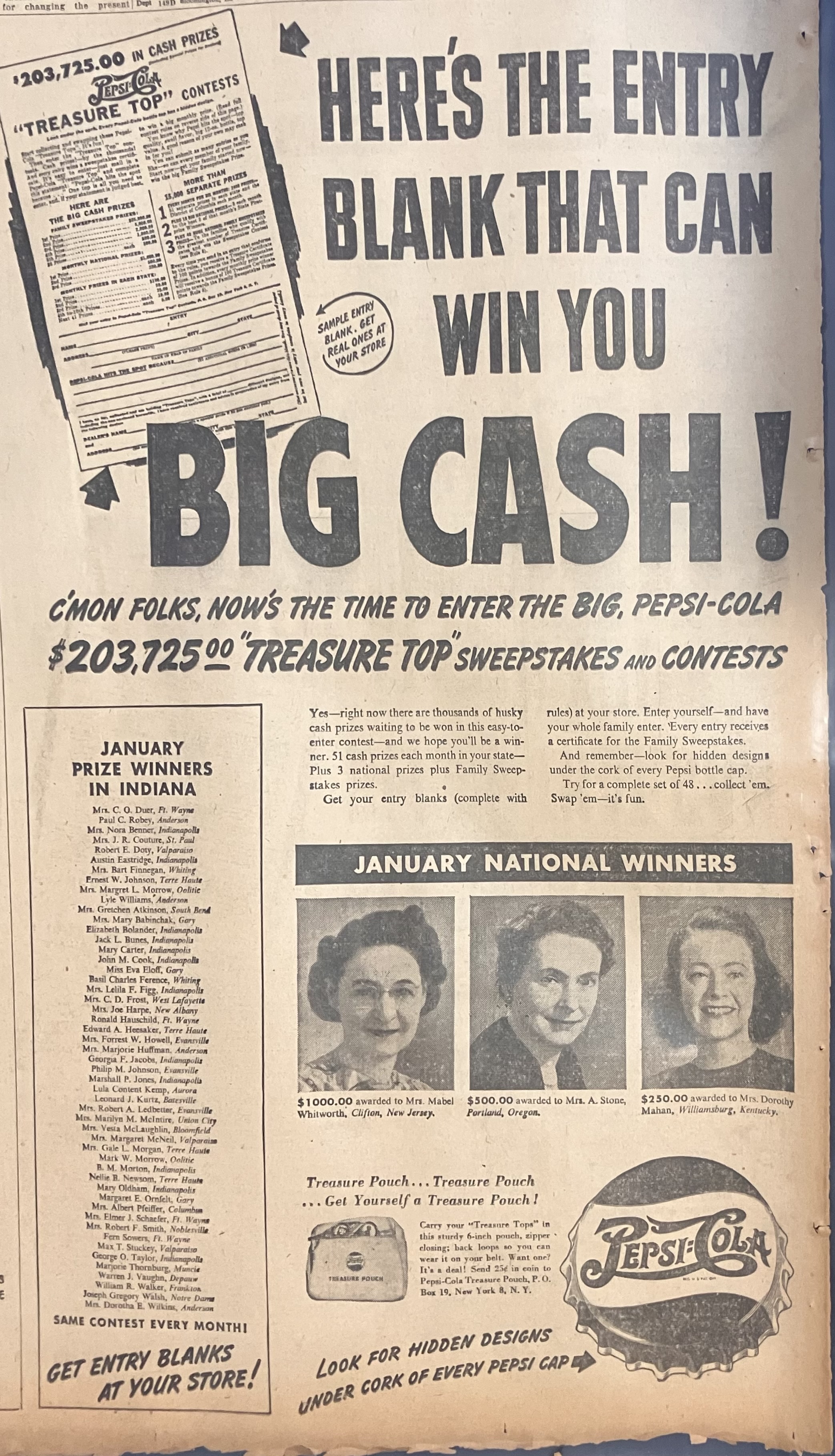
The Sunday Courier & Press, Evansville, IN, March 14, 1948 - page 14C
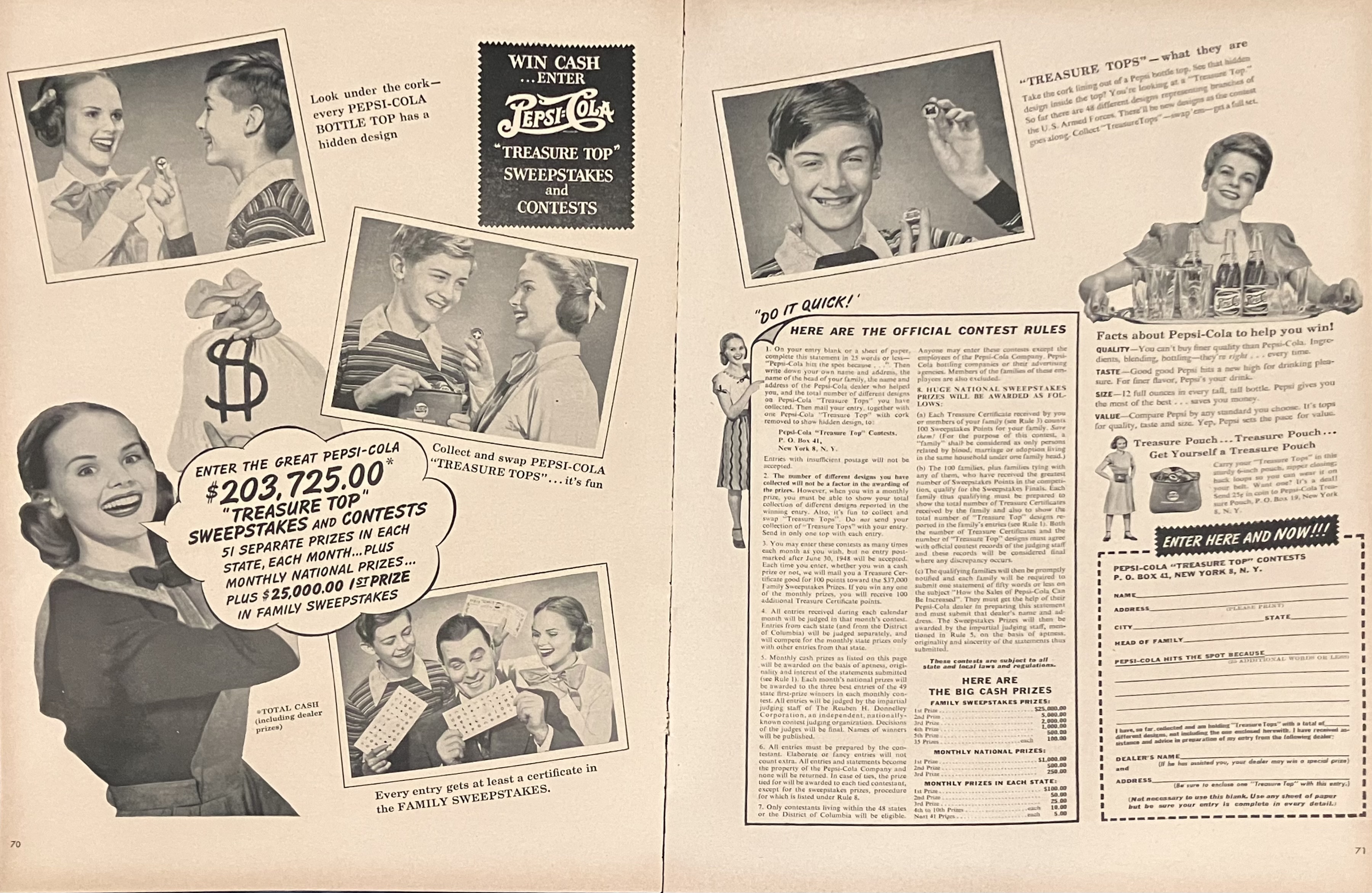
LIFE Magazine, March 22, 1948 - pages 70 & 71
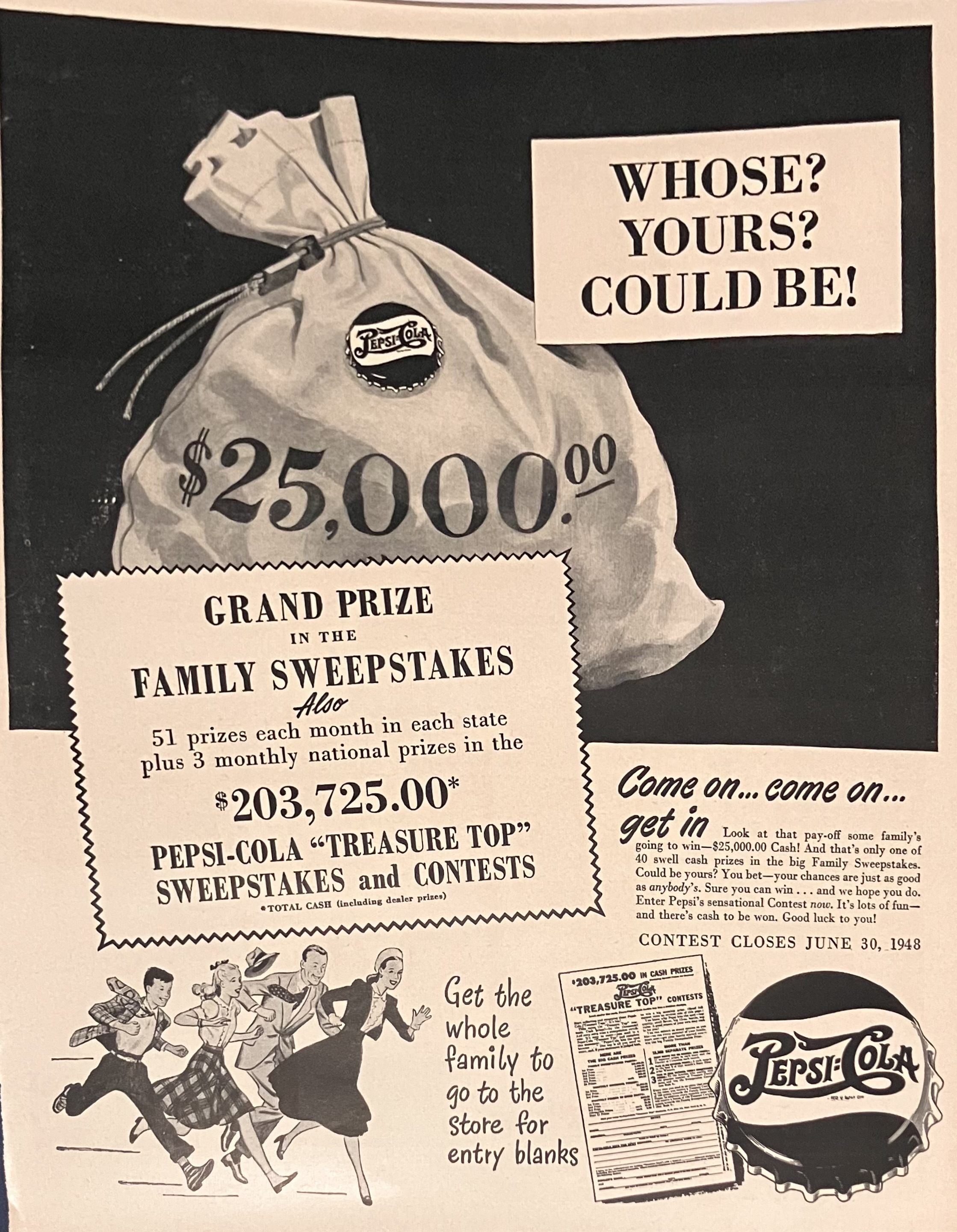
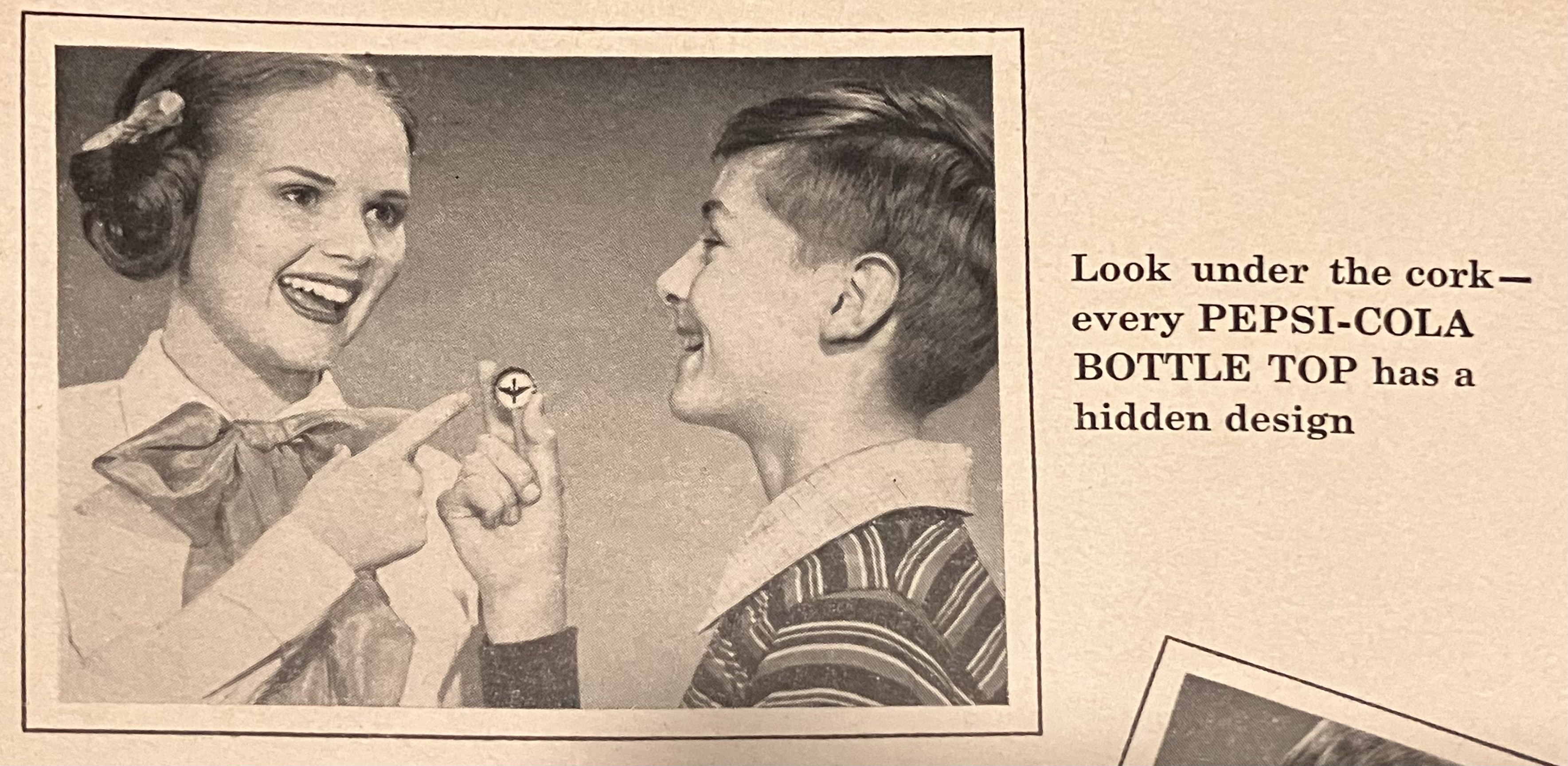
If only the reality of removing the cork liner was this smile-inducing.
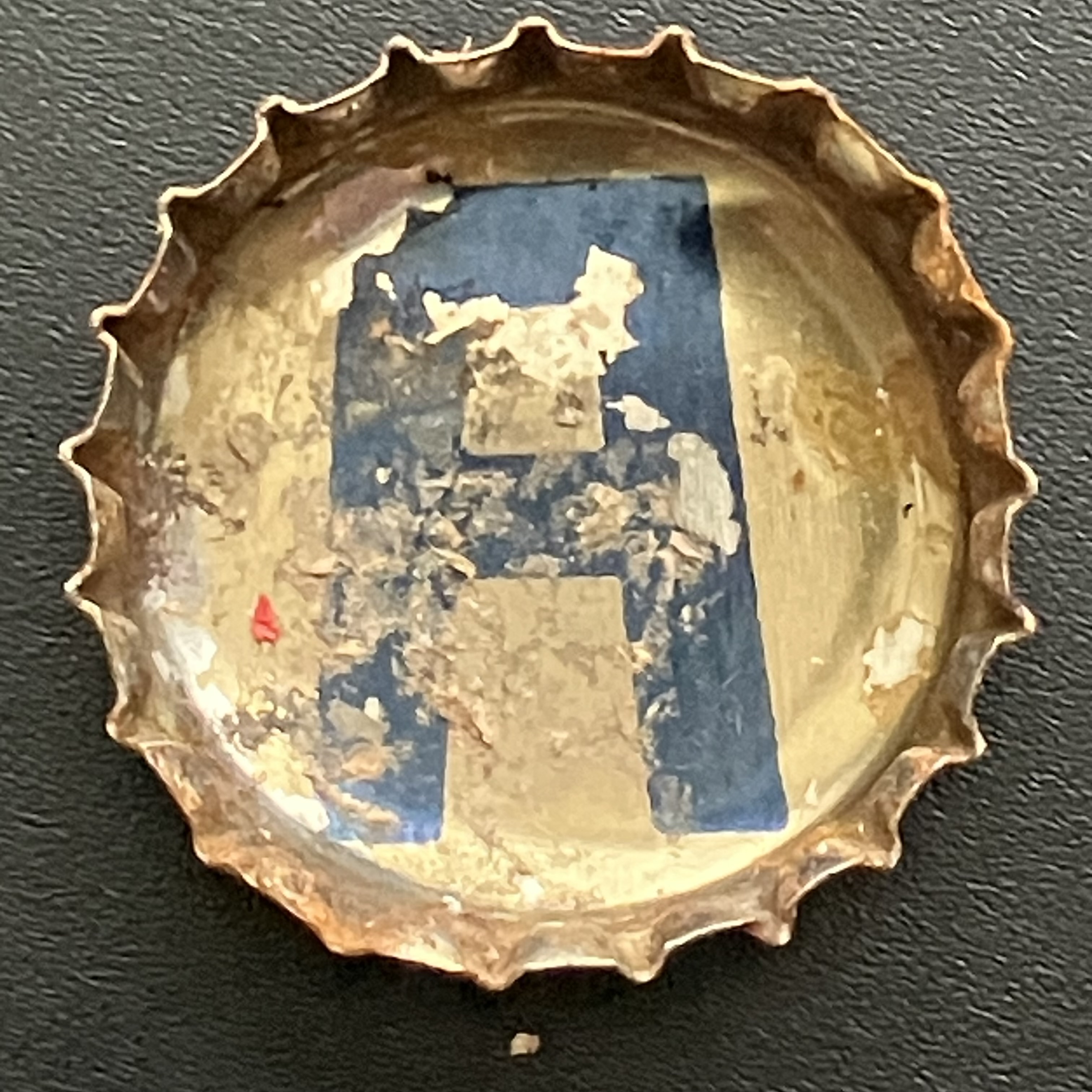
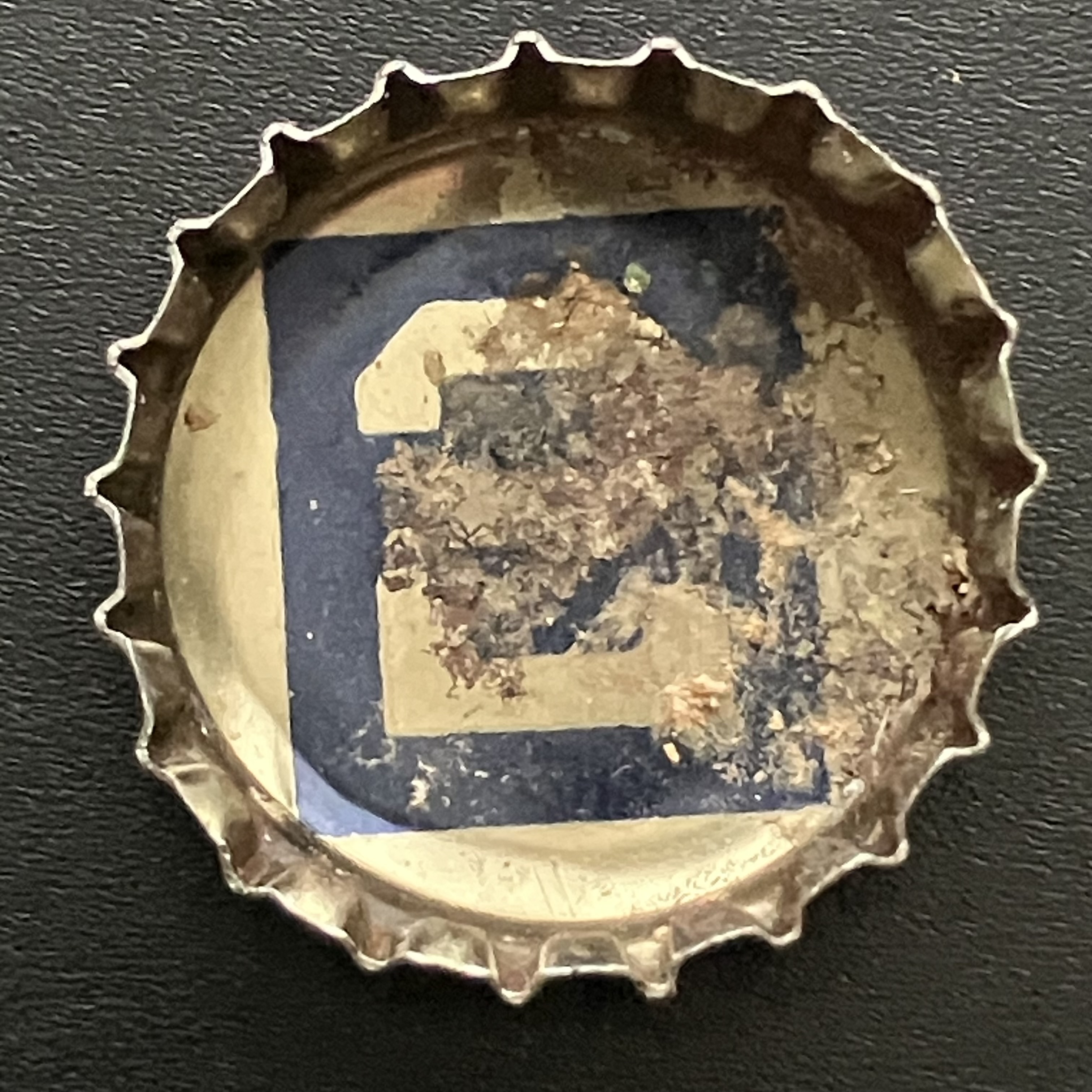
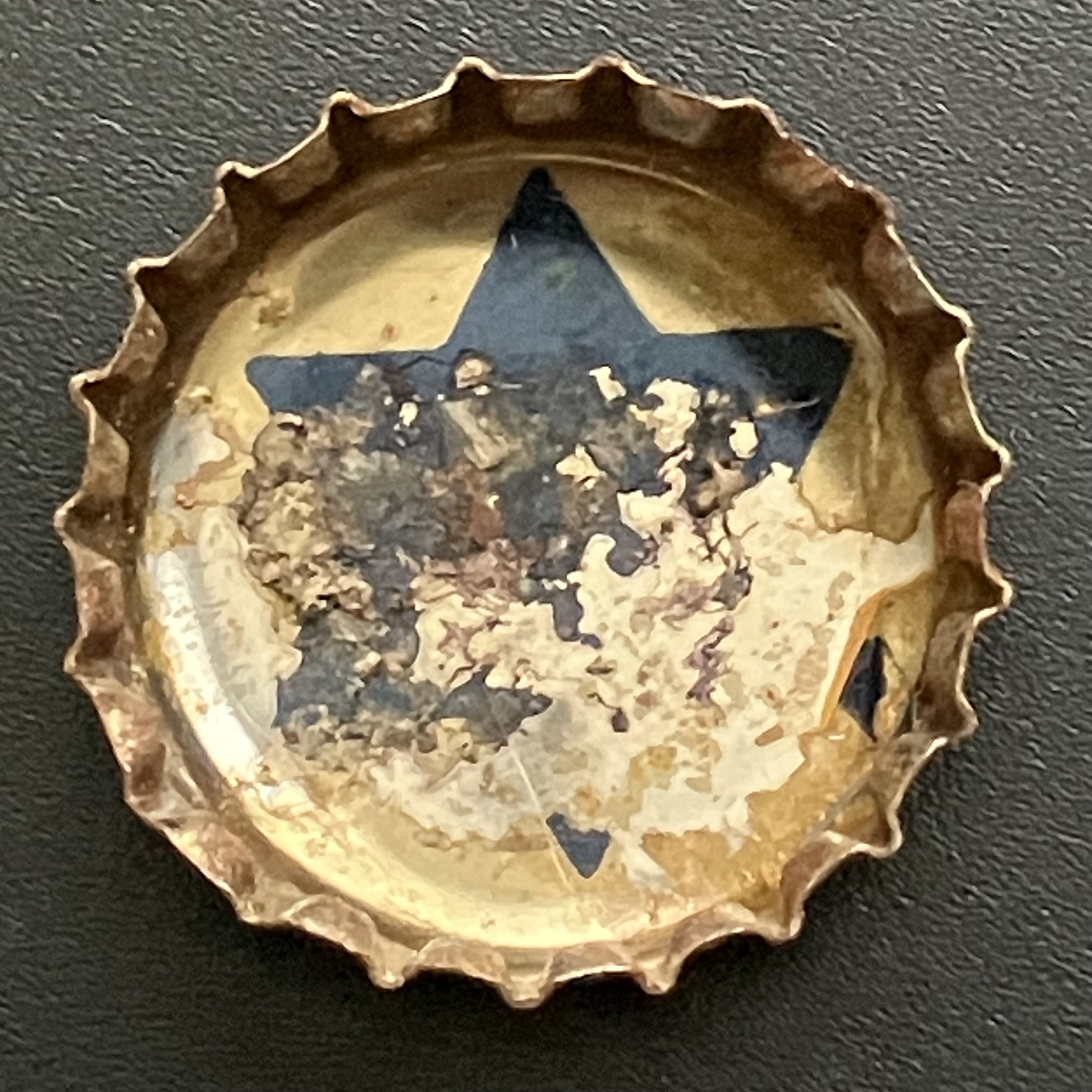
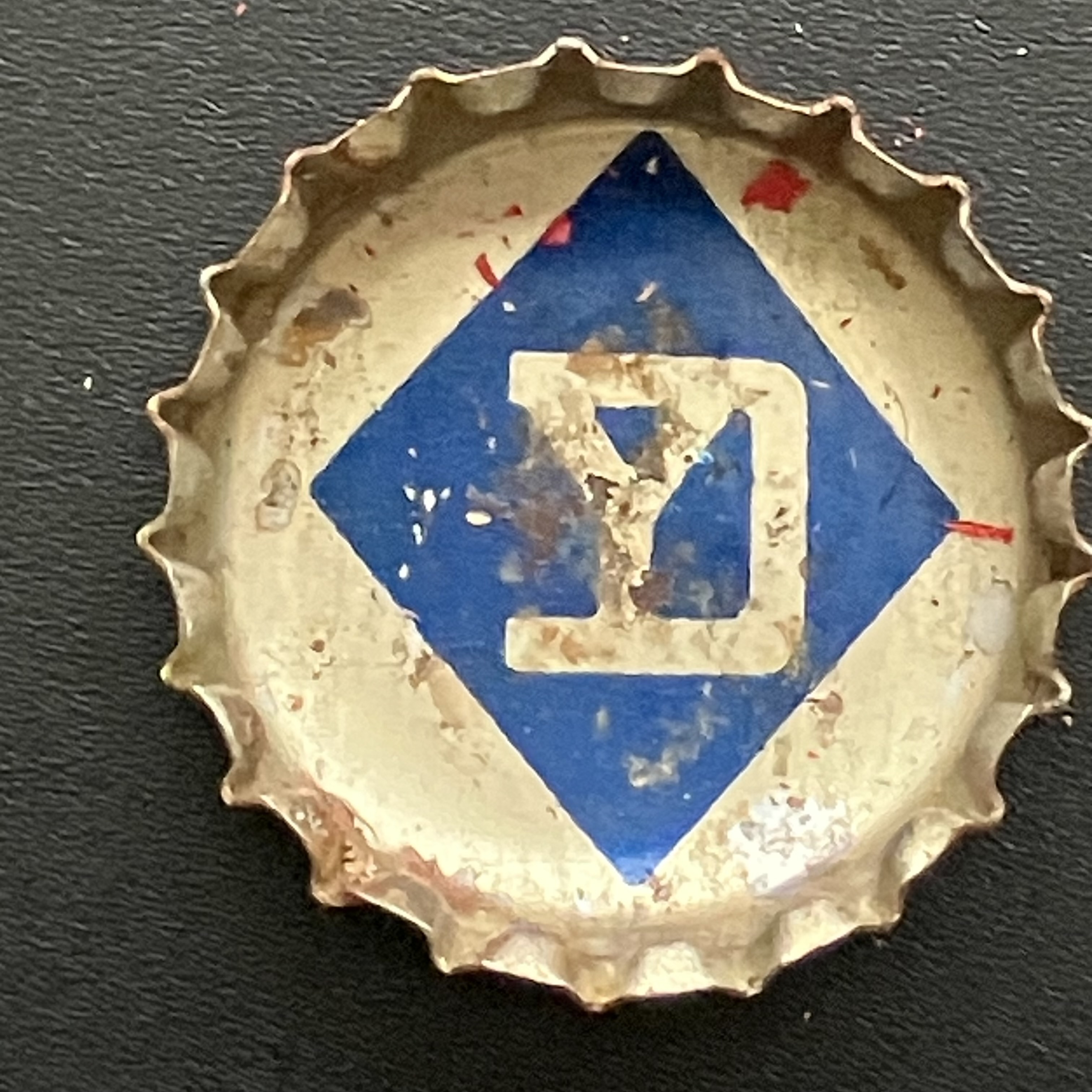
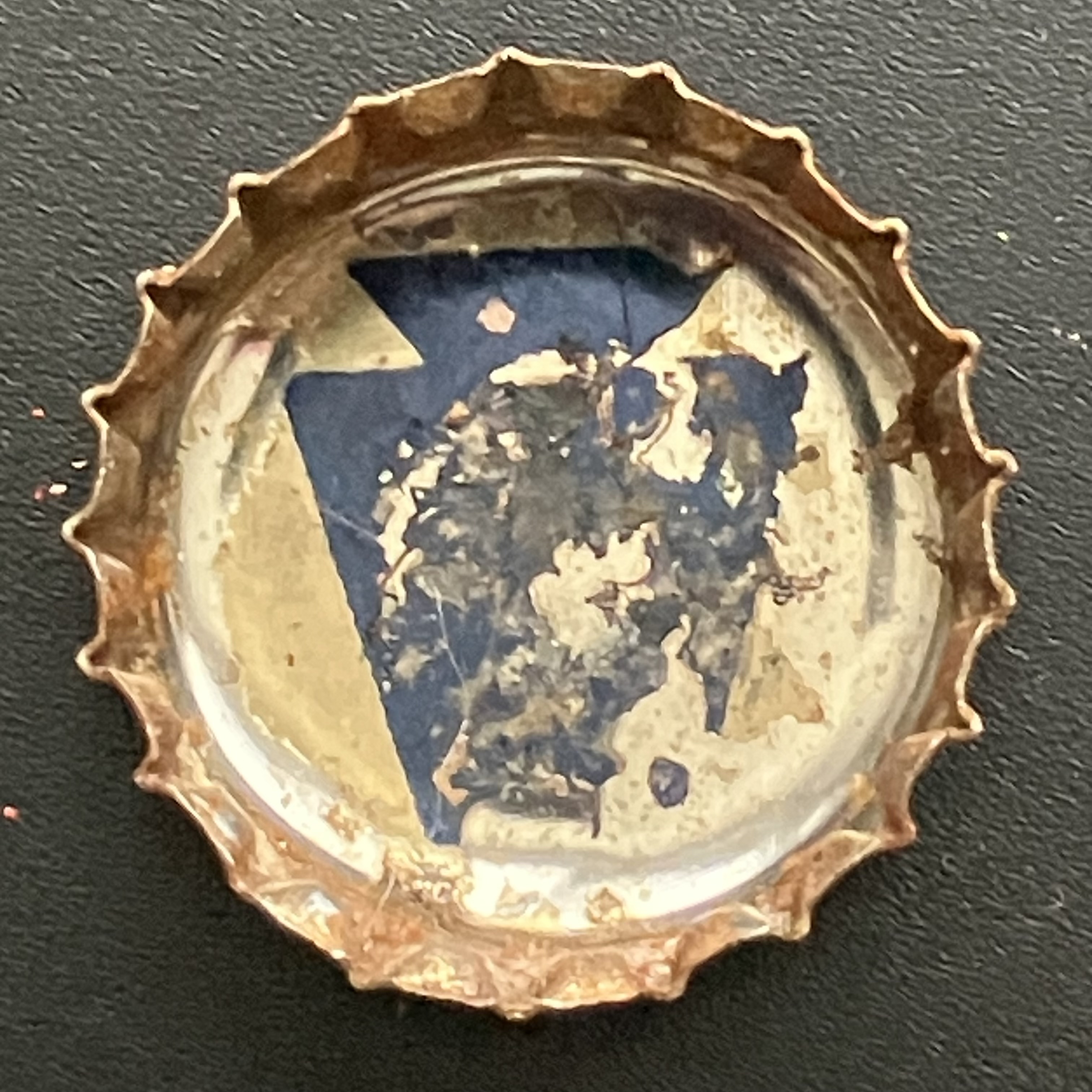
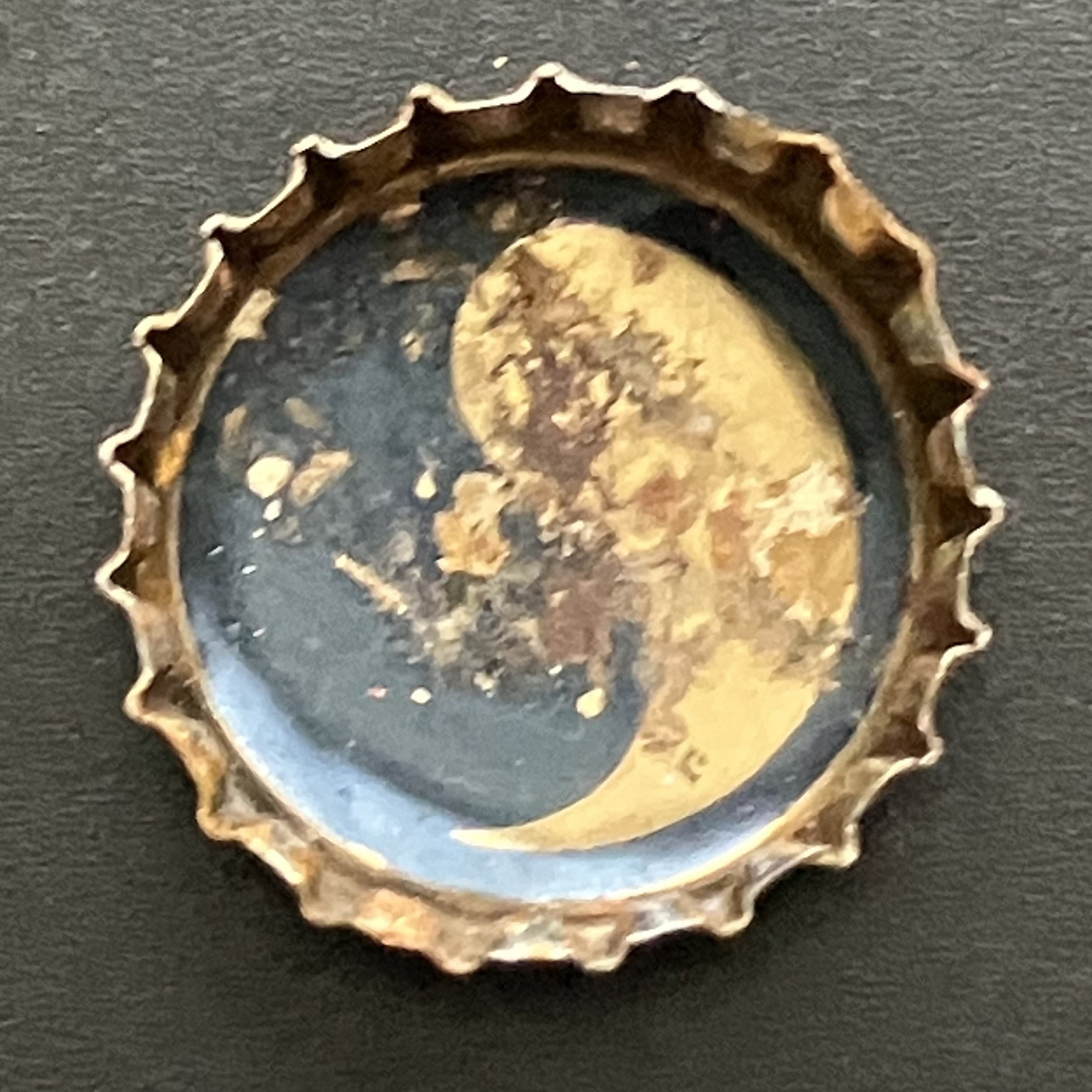
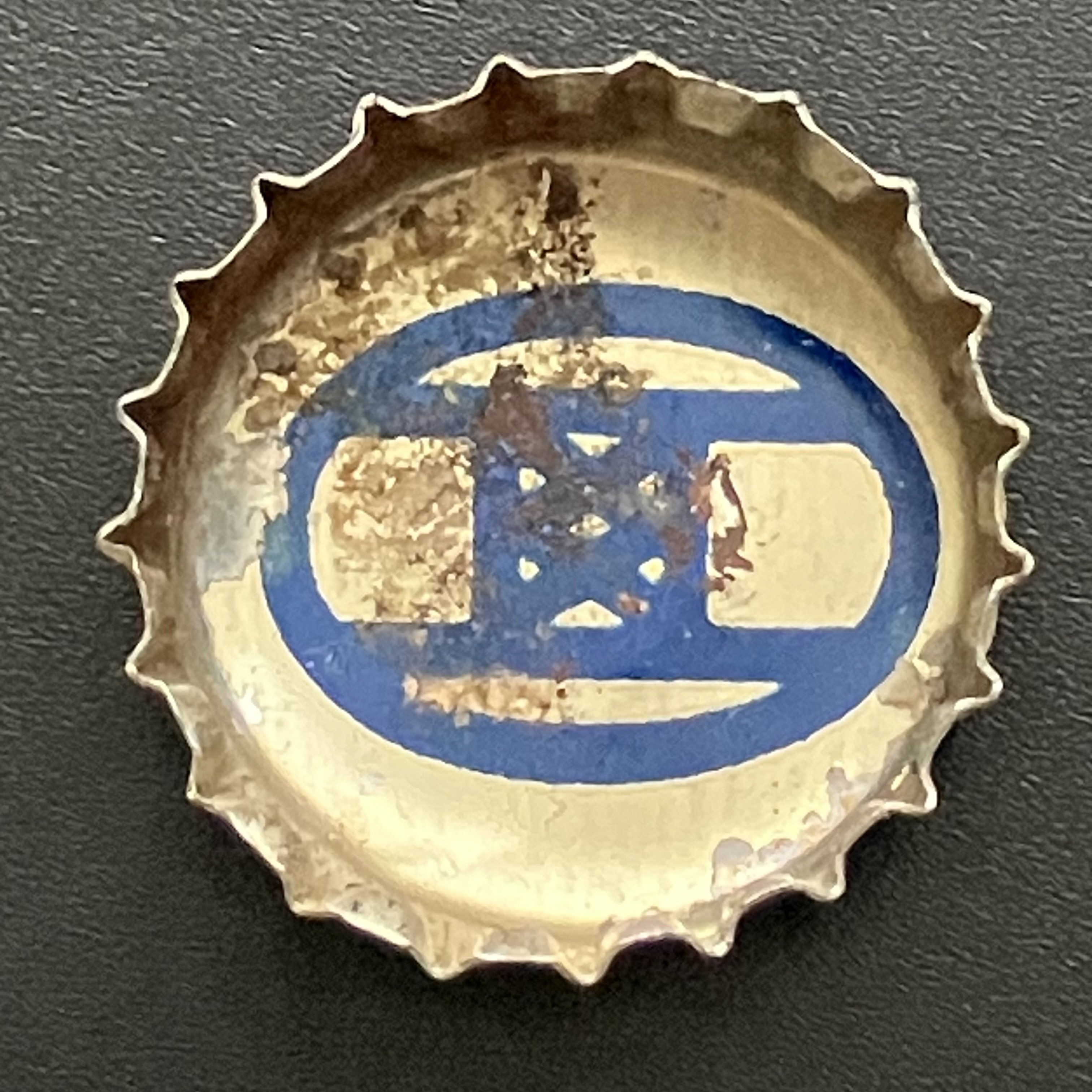
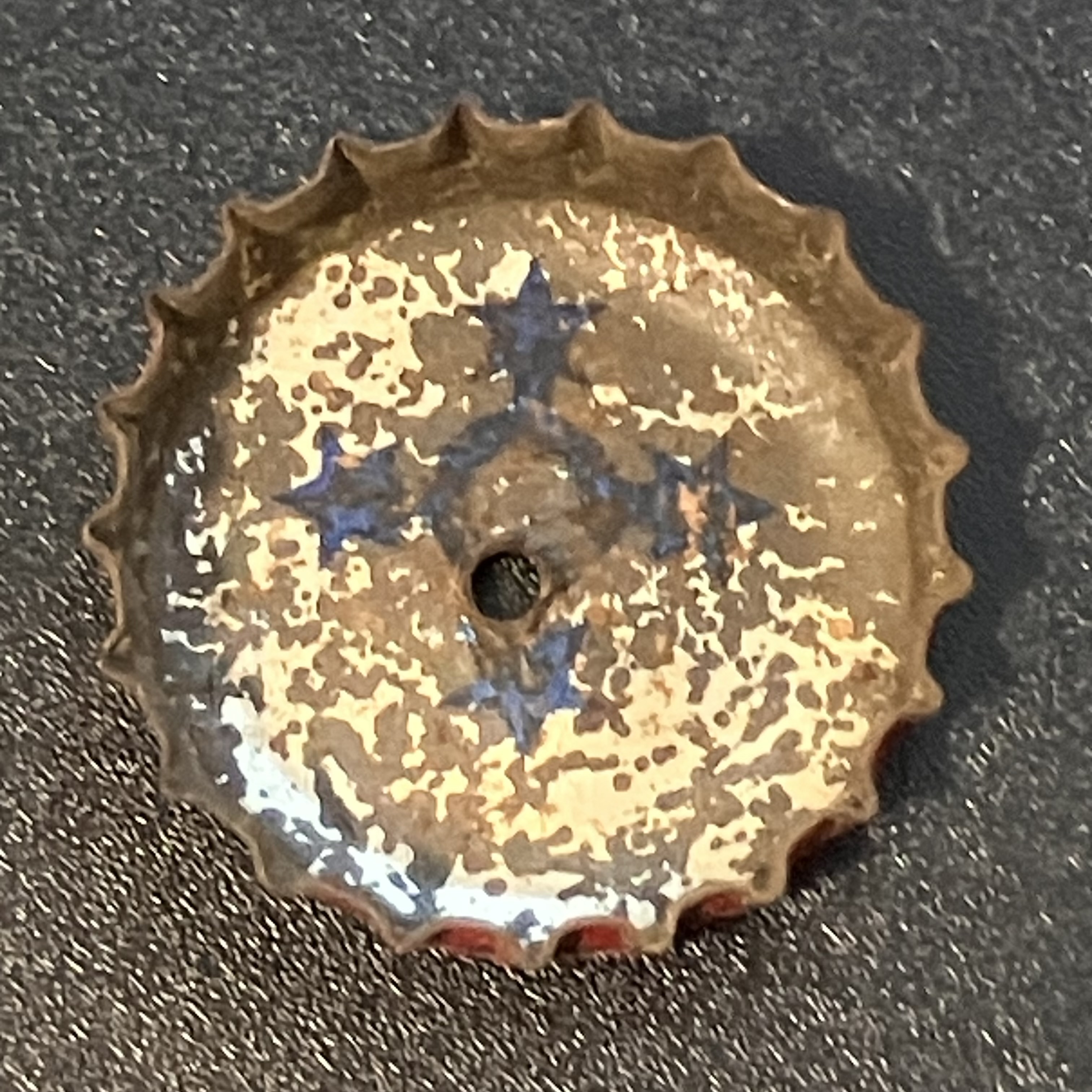
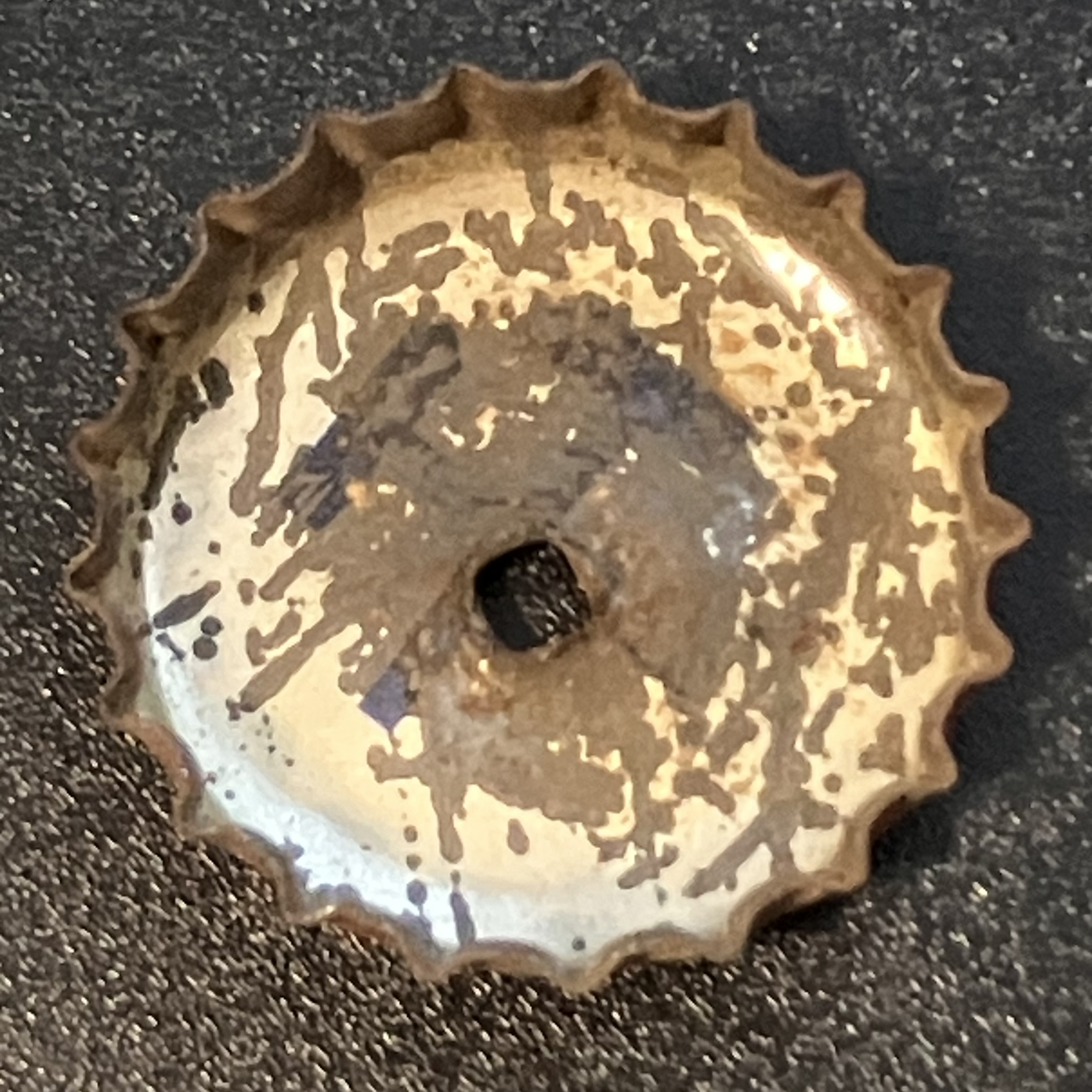
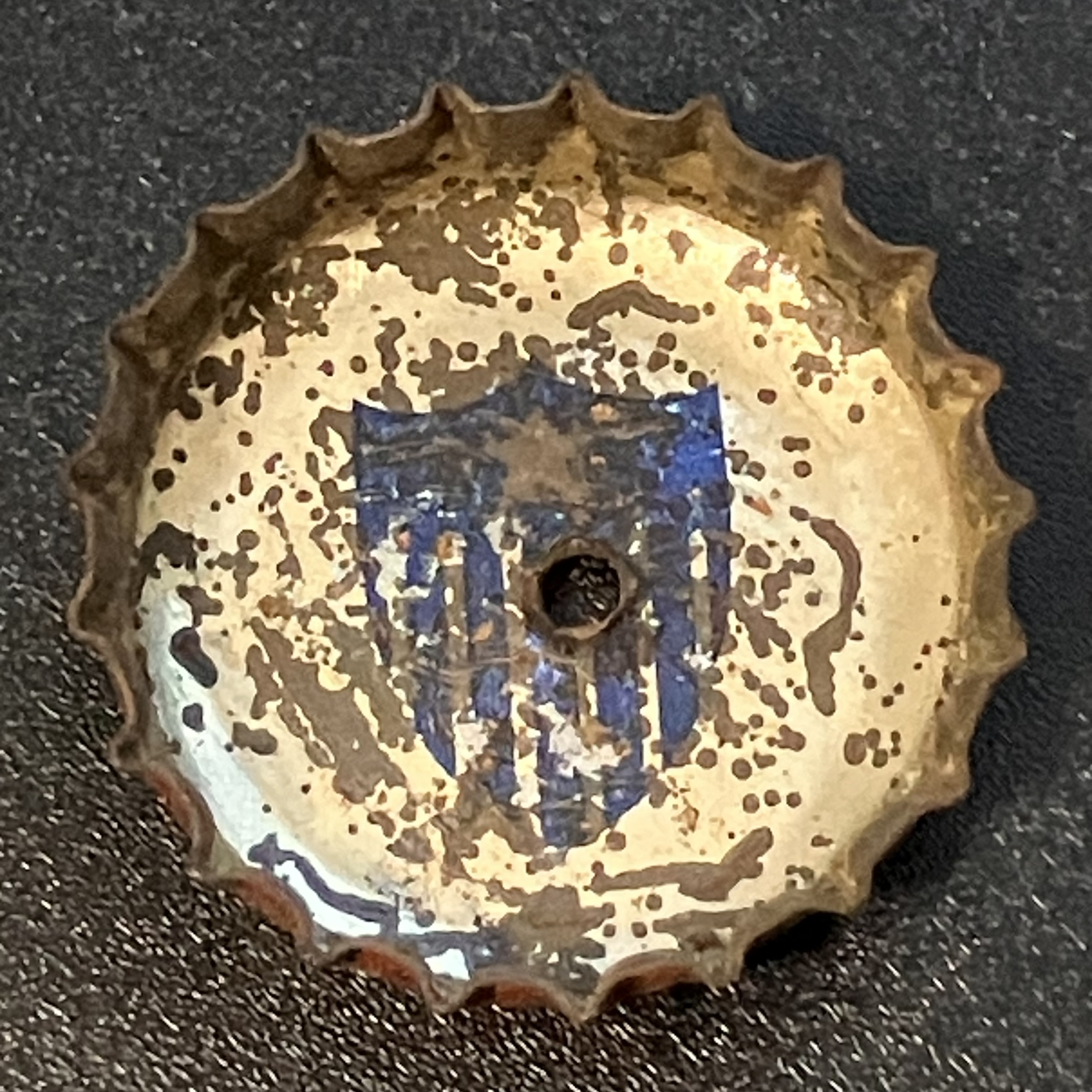
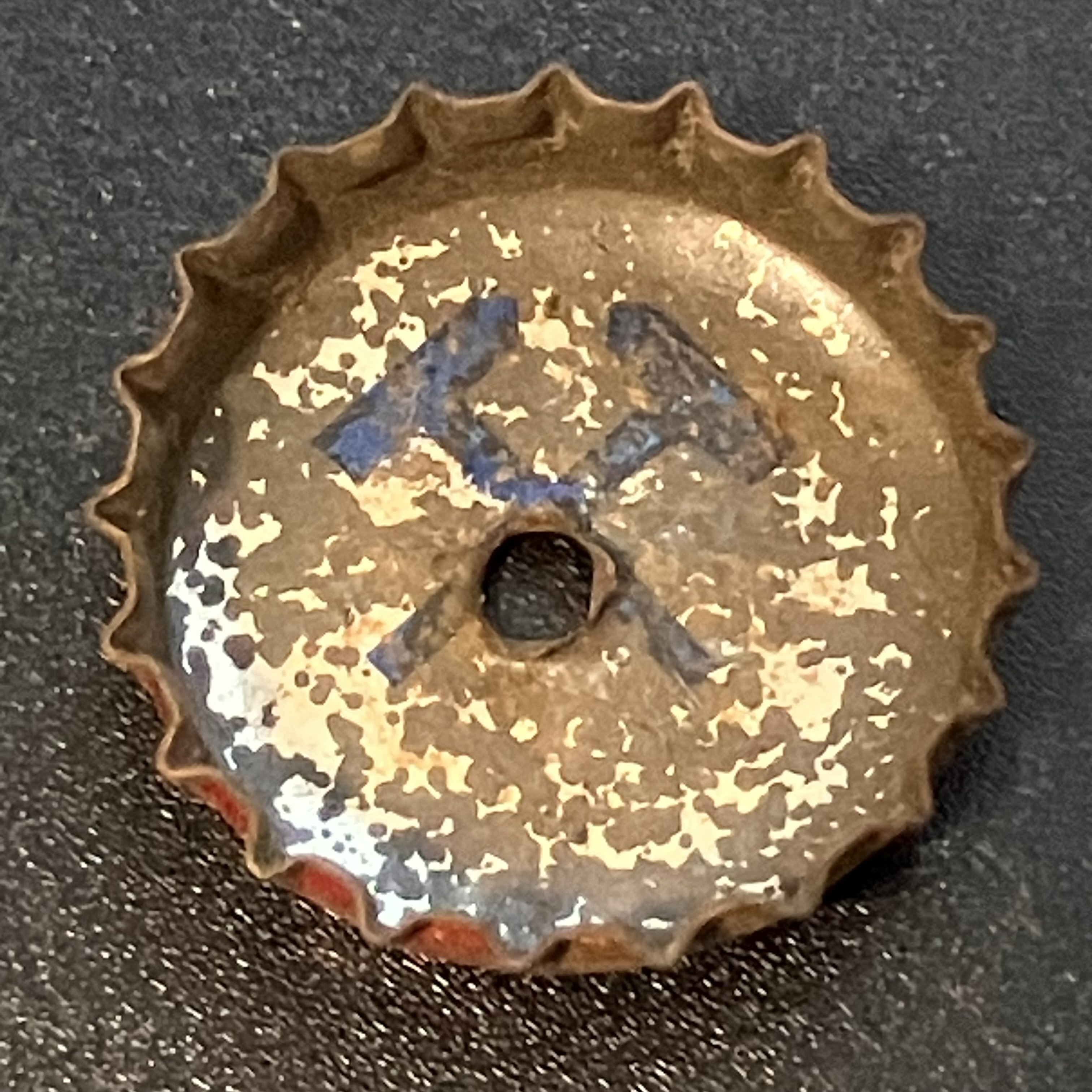
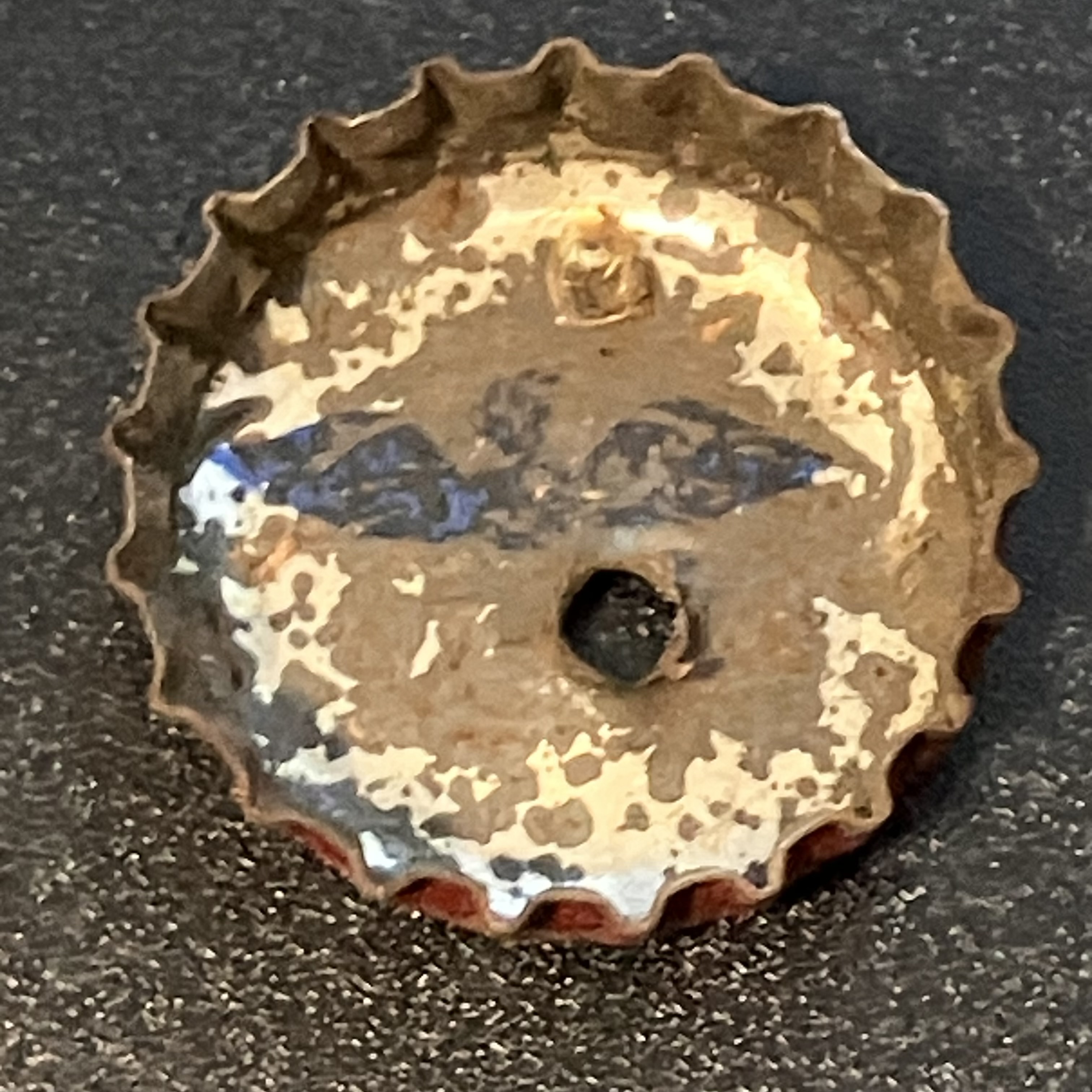
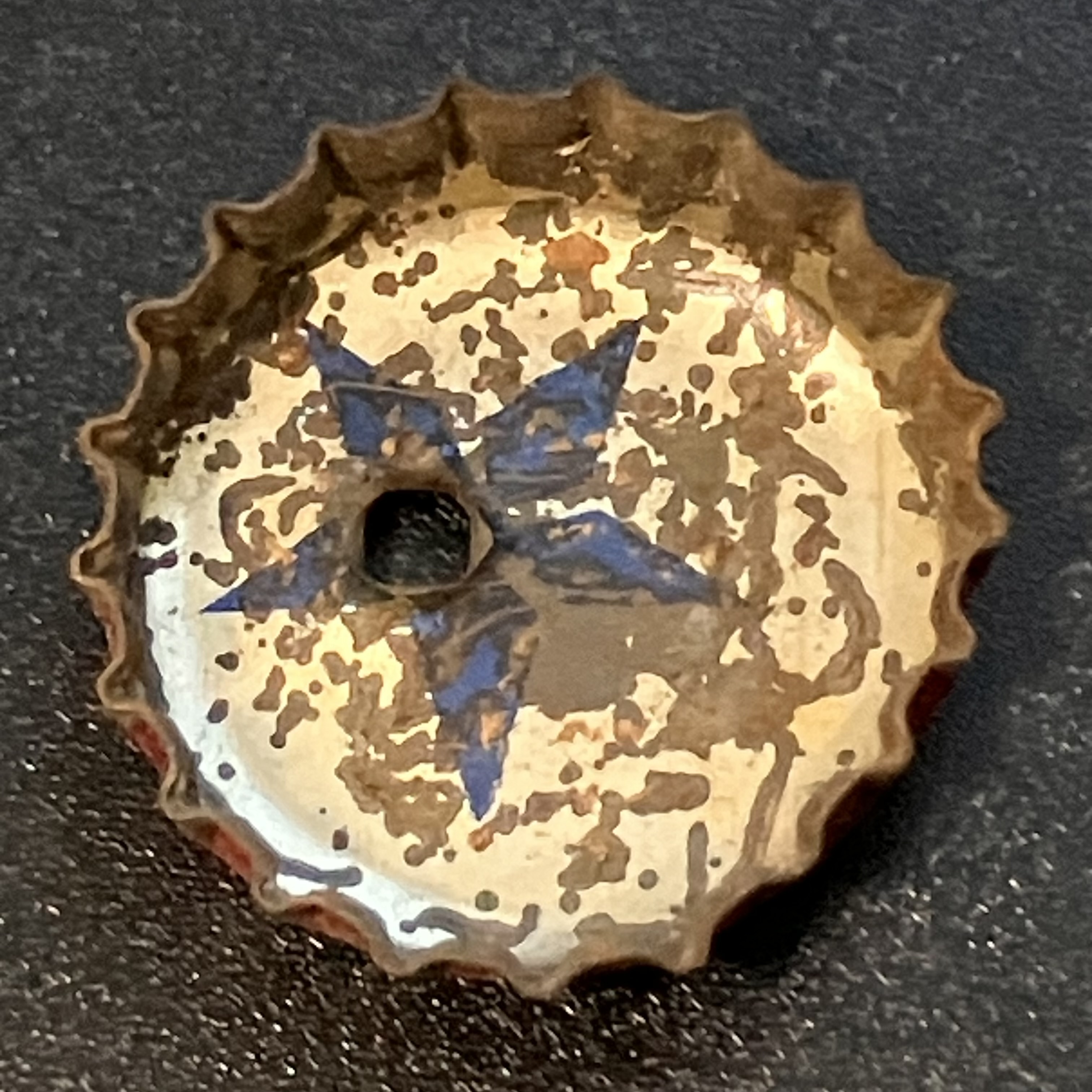
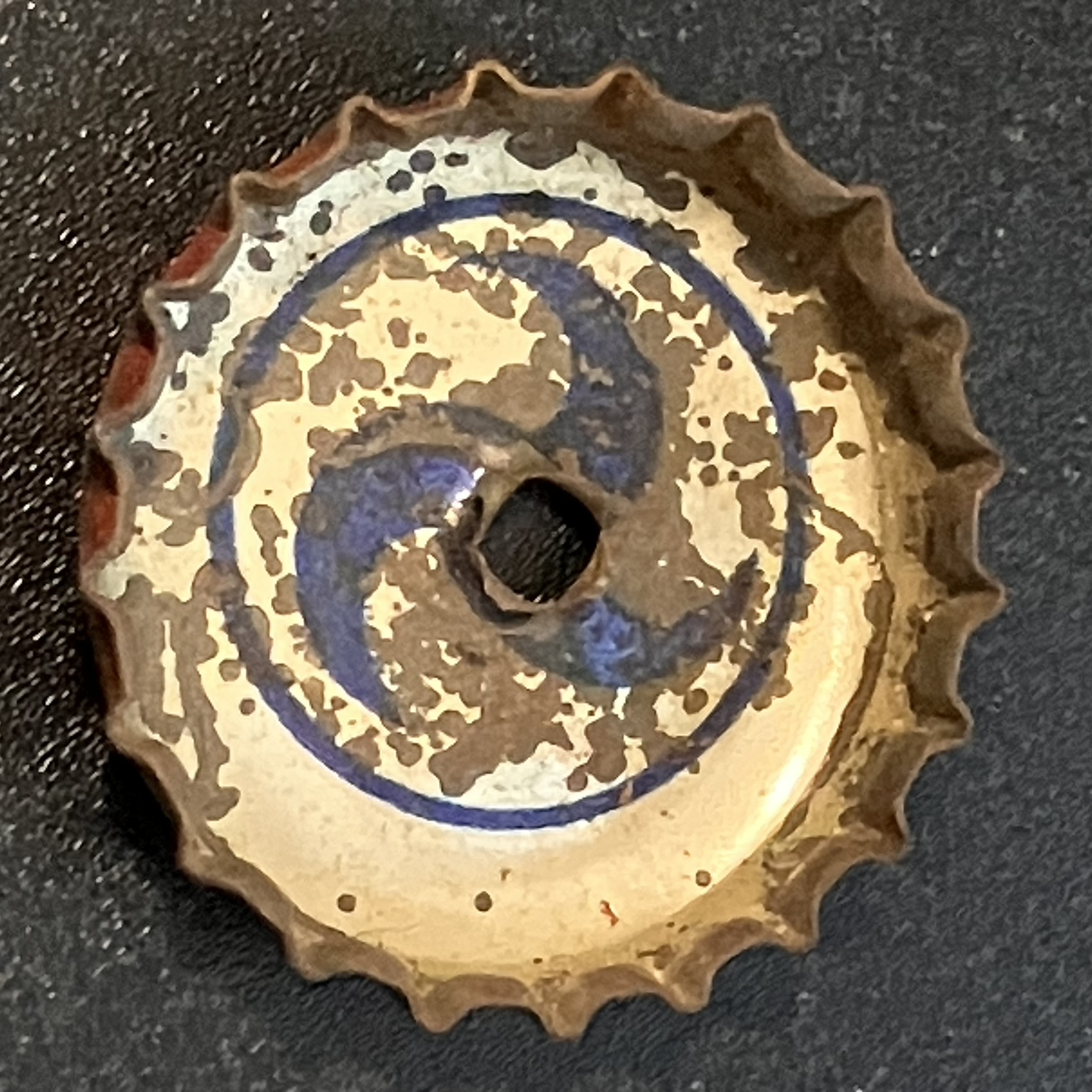
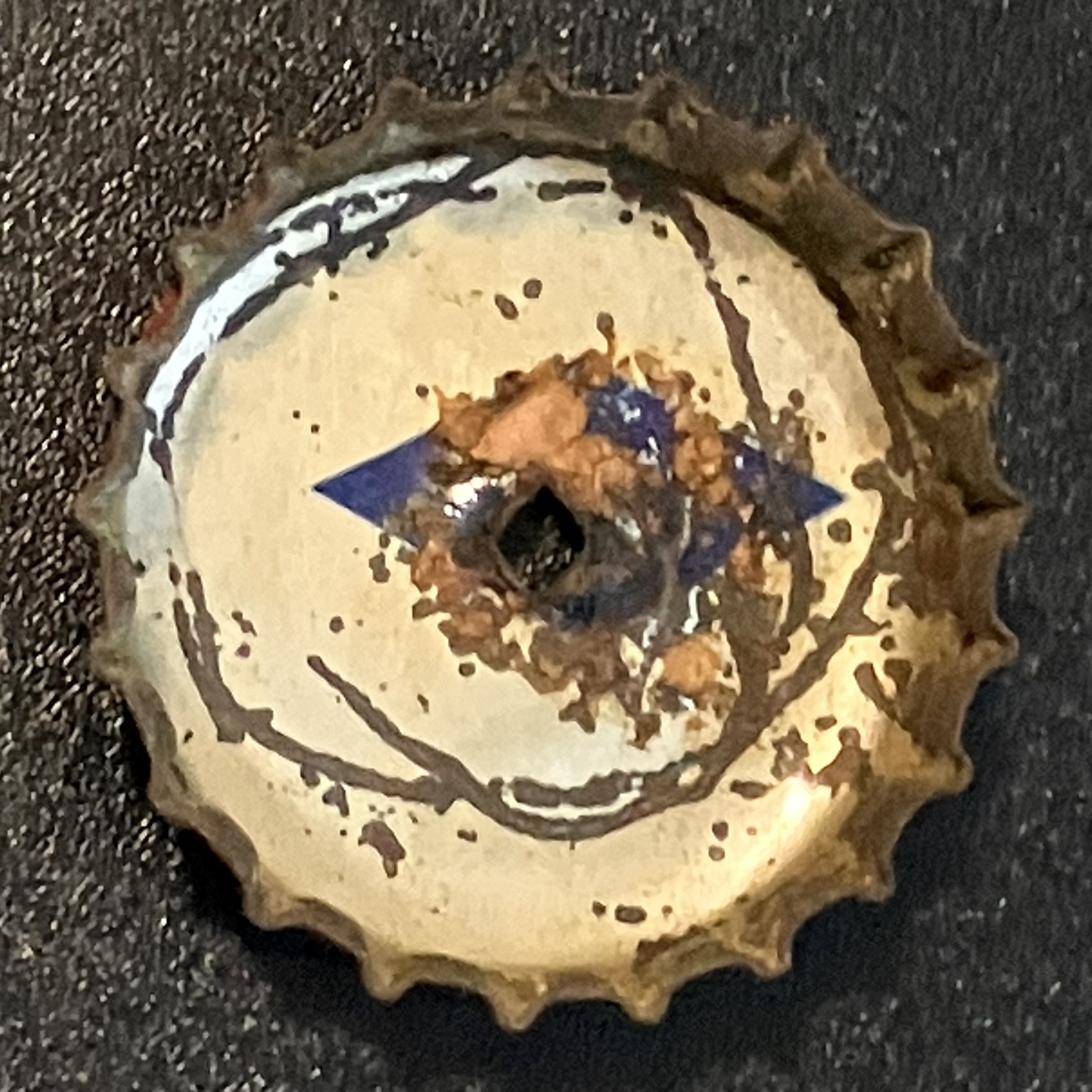
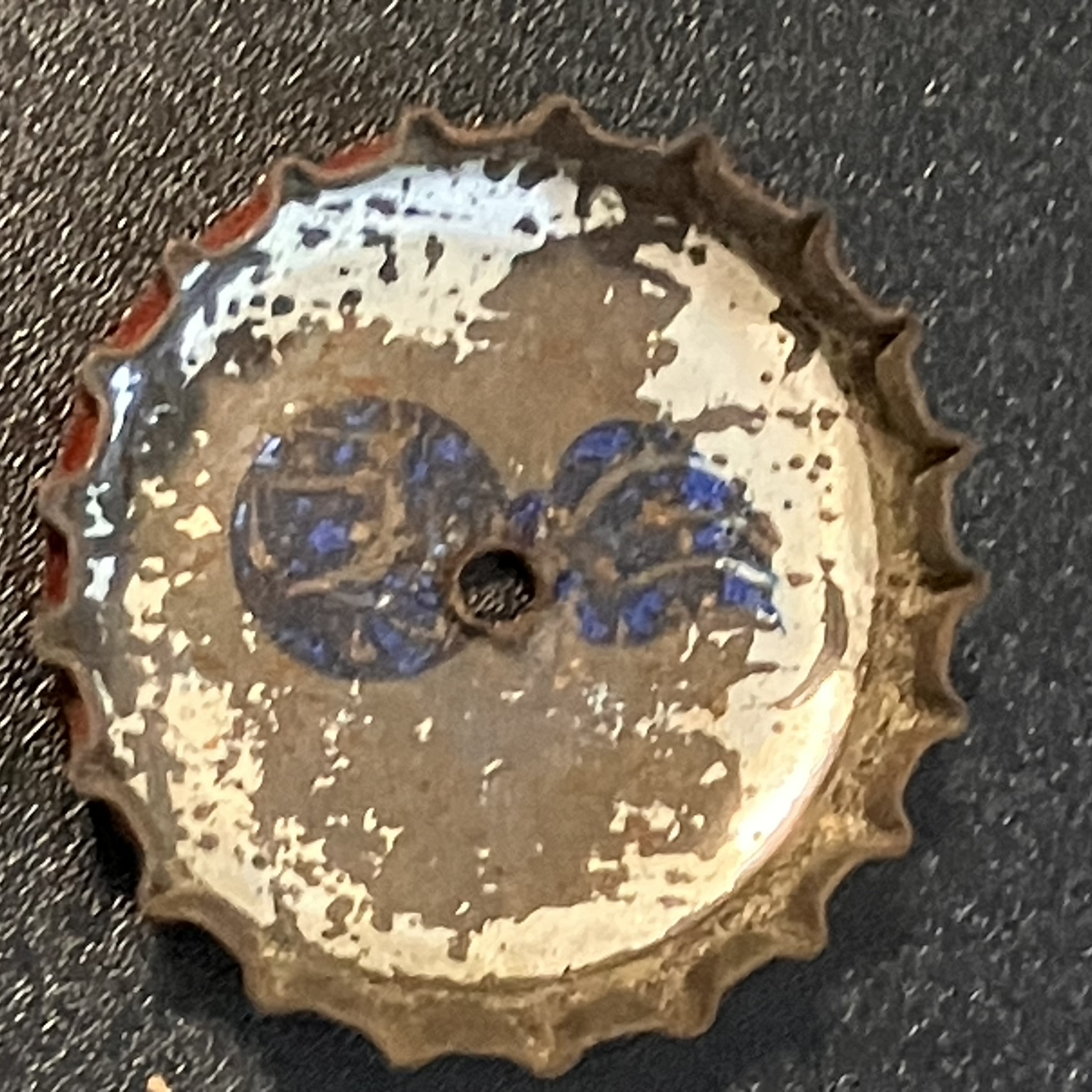
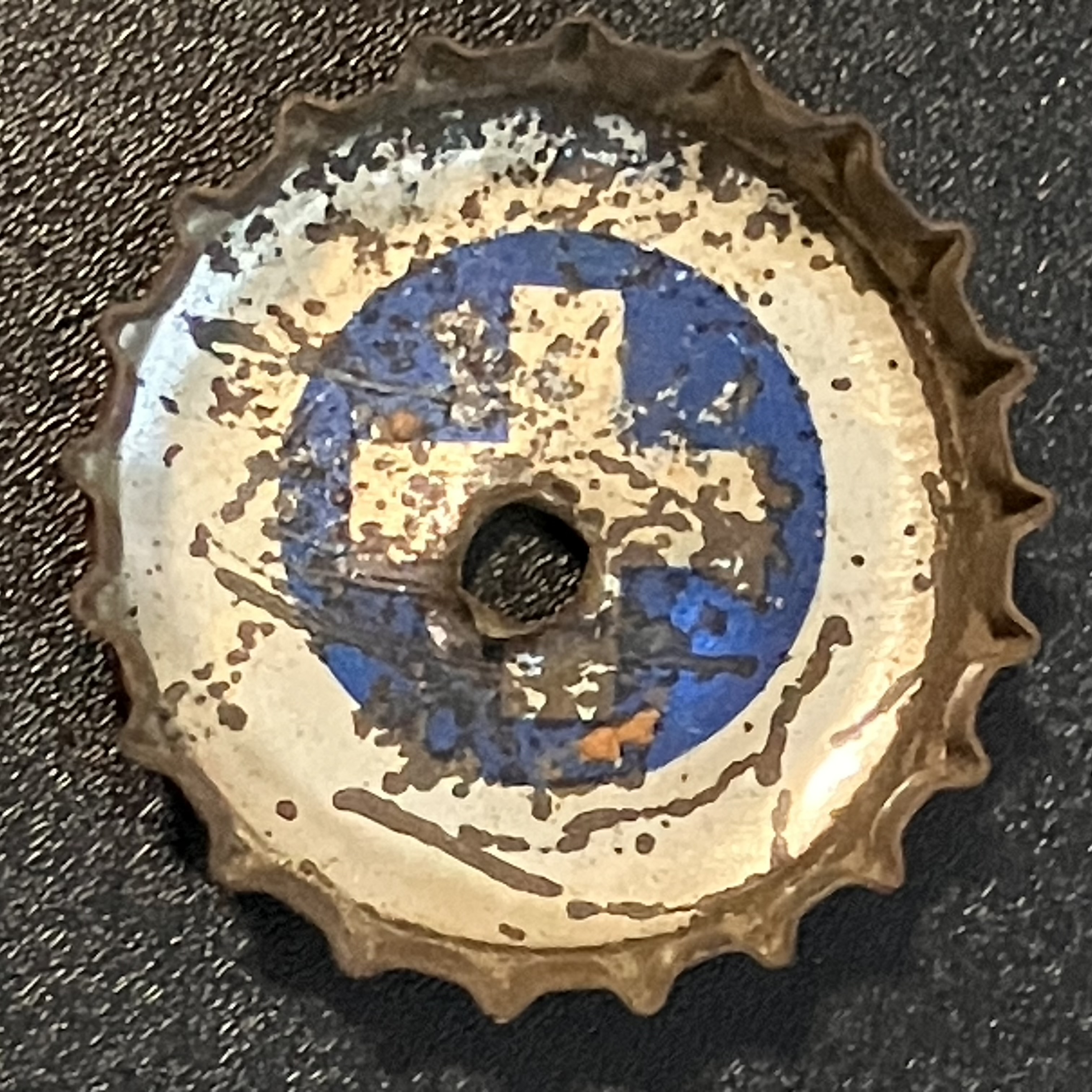
US Army insignia
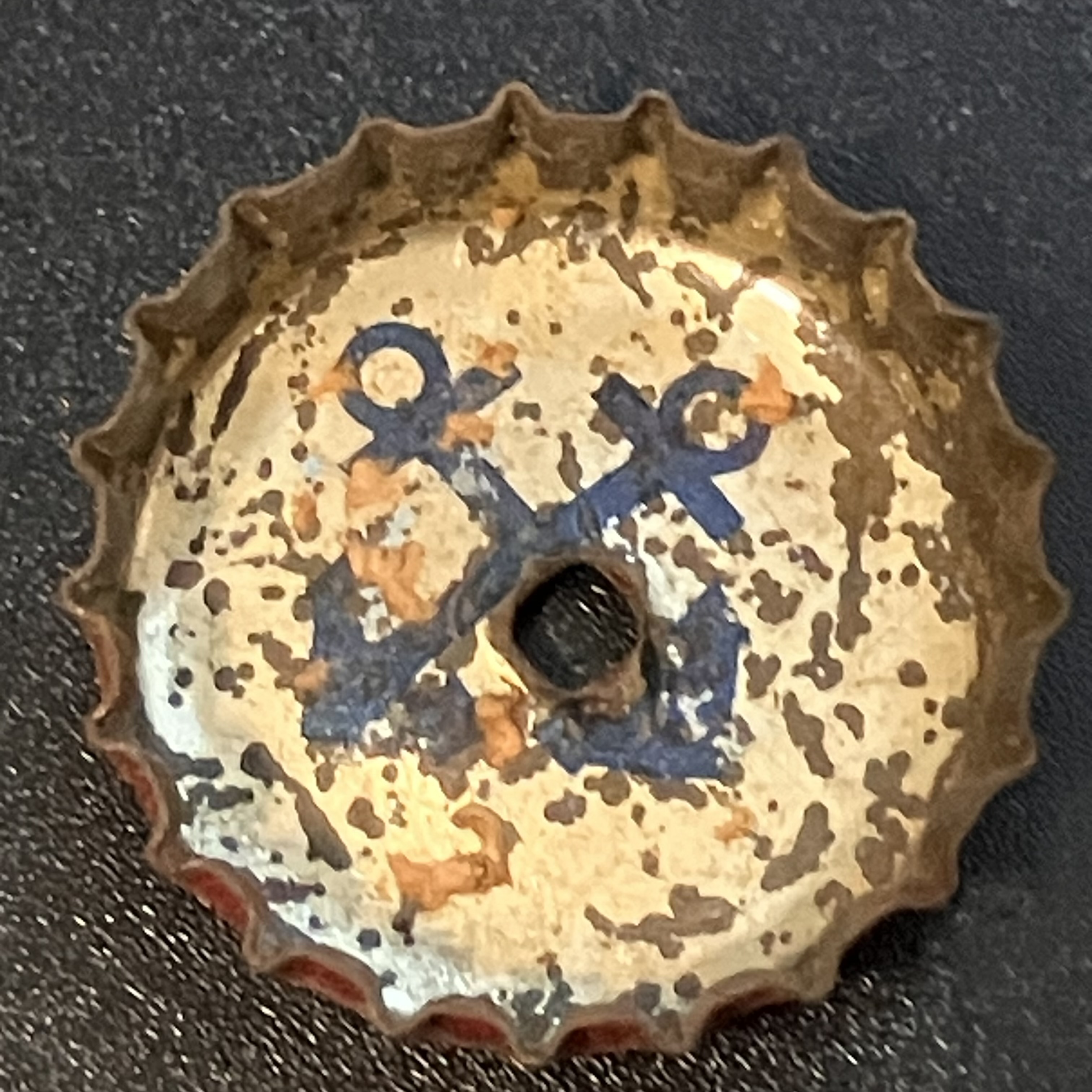
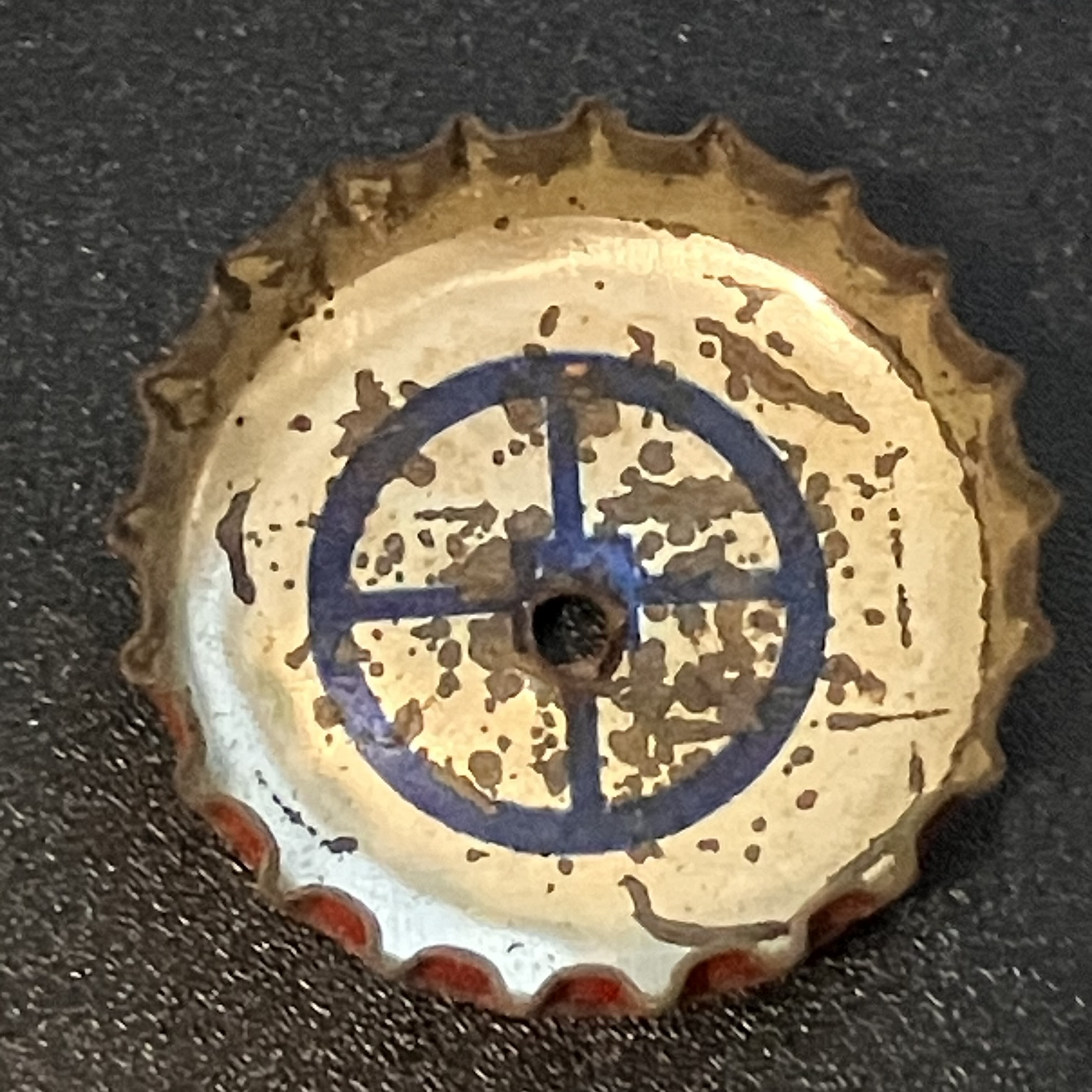
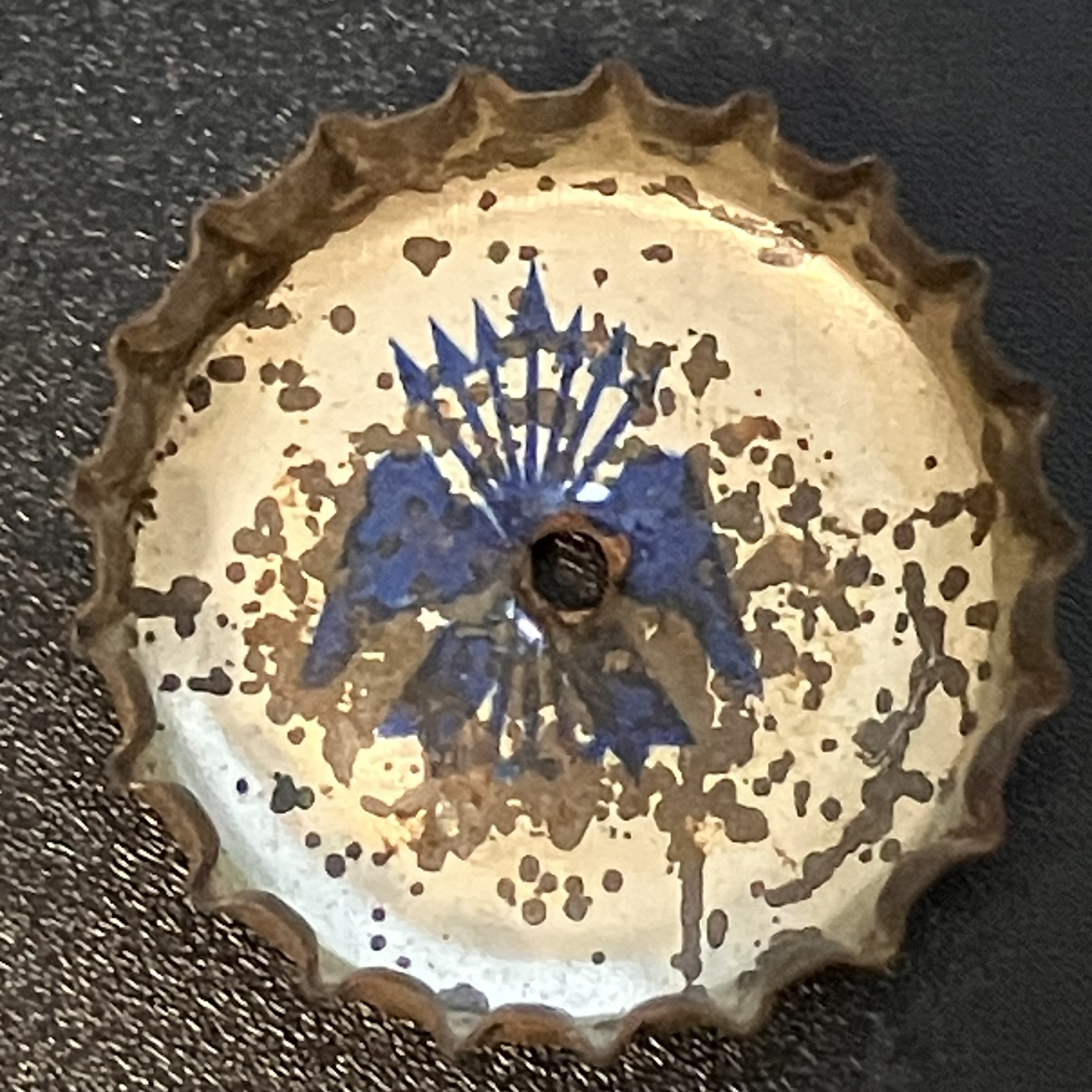
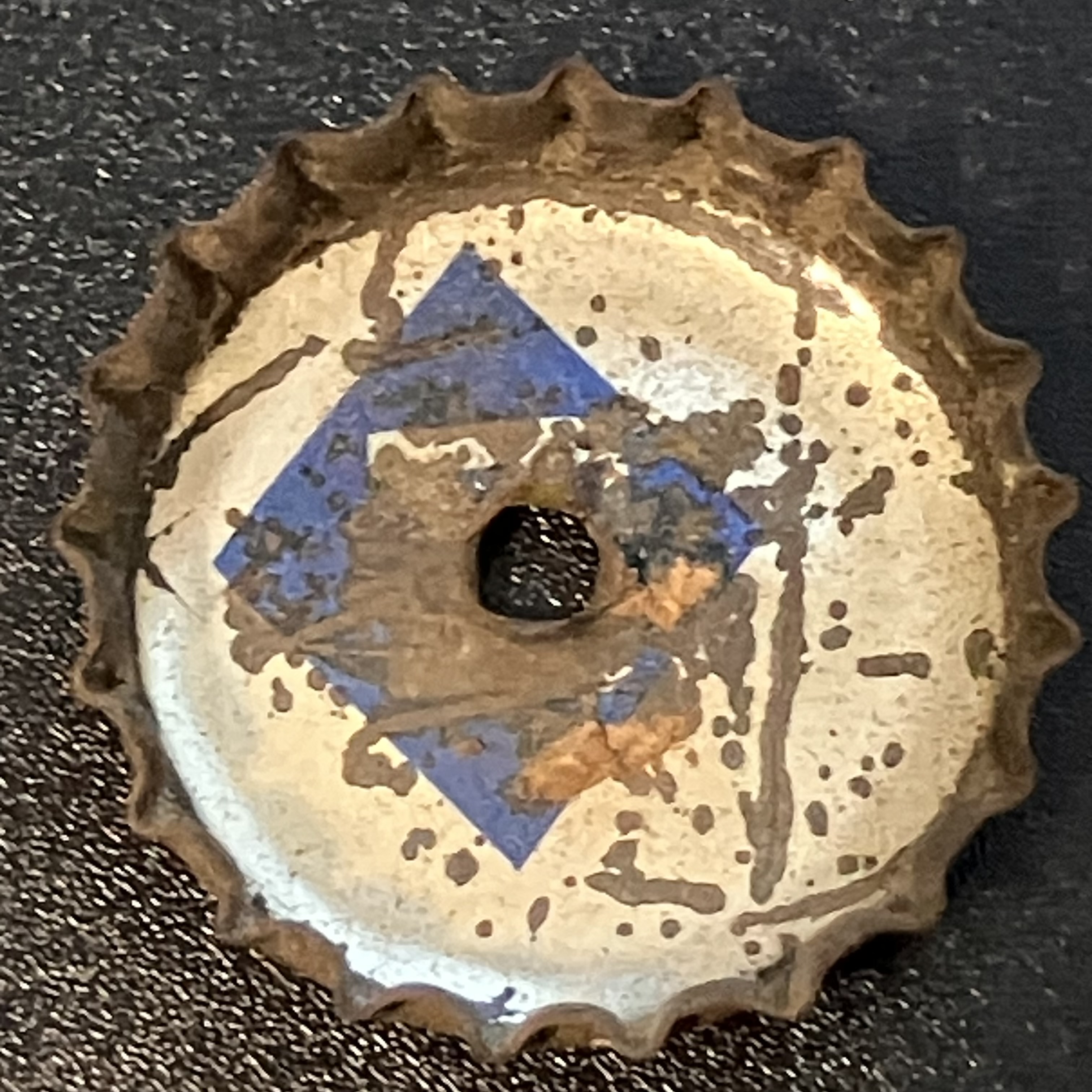
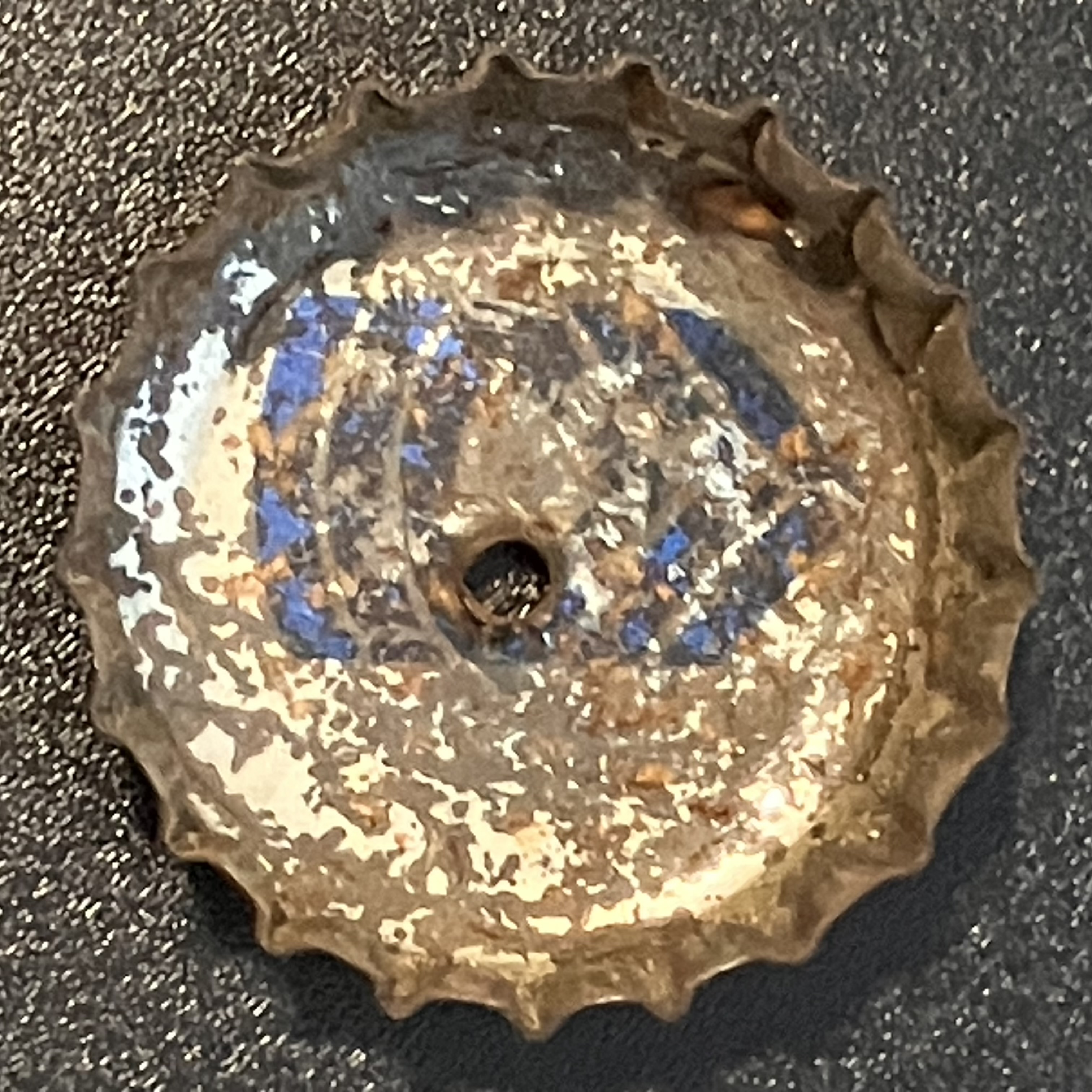
There are two confirmed errors in this liner art: it’s 90º off-axis & it contains only 2 Xs
Learn all about “Old Hickory” on Wikipedia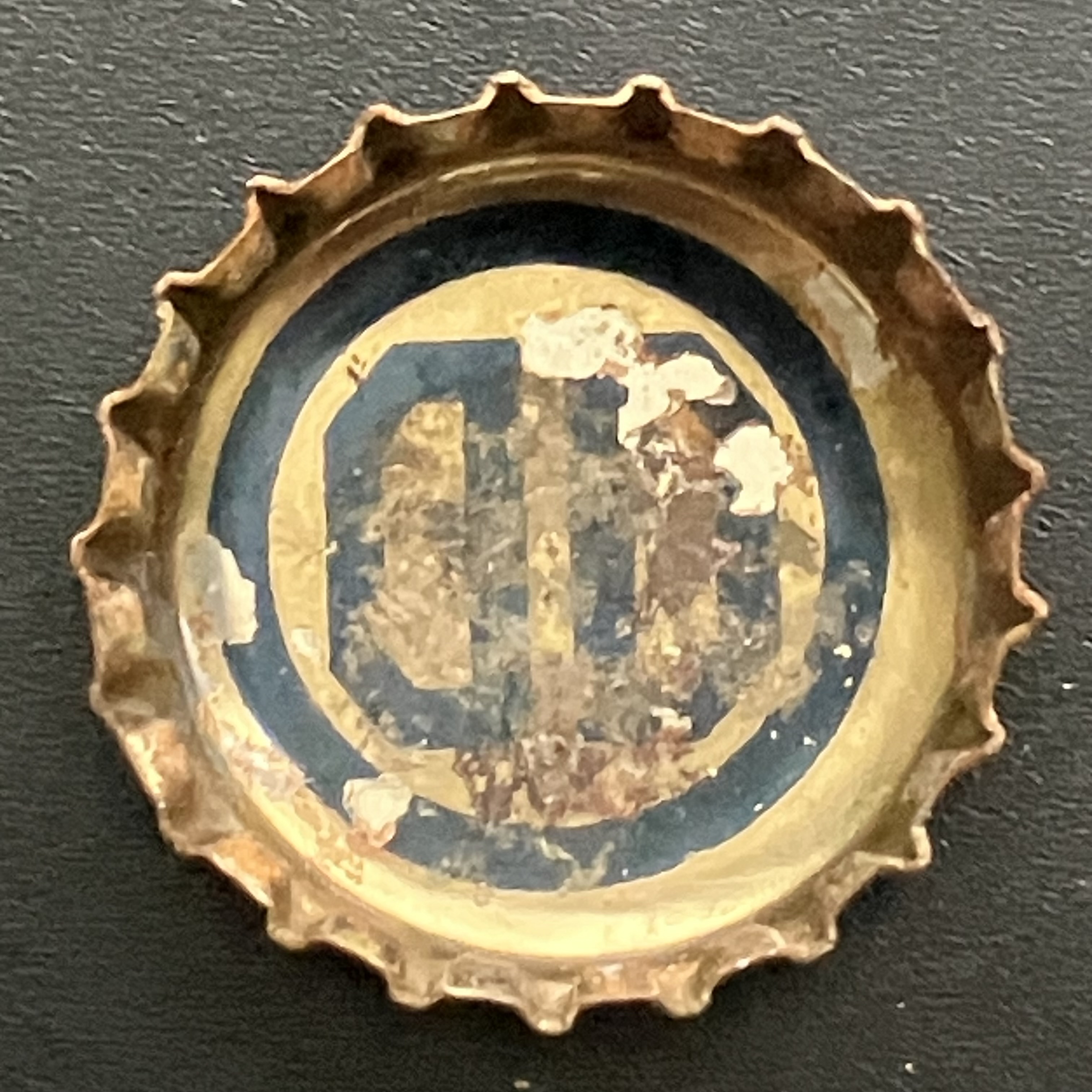
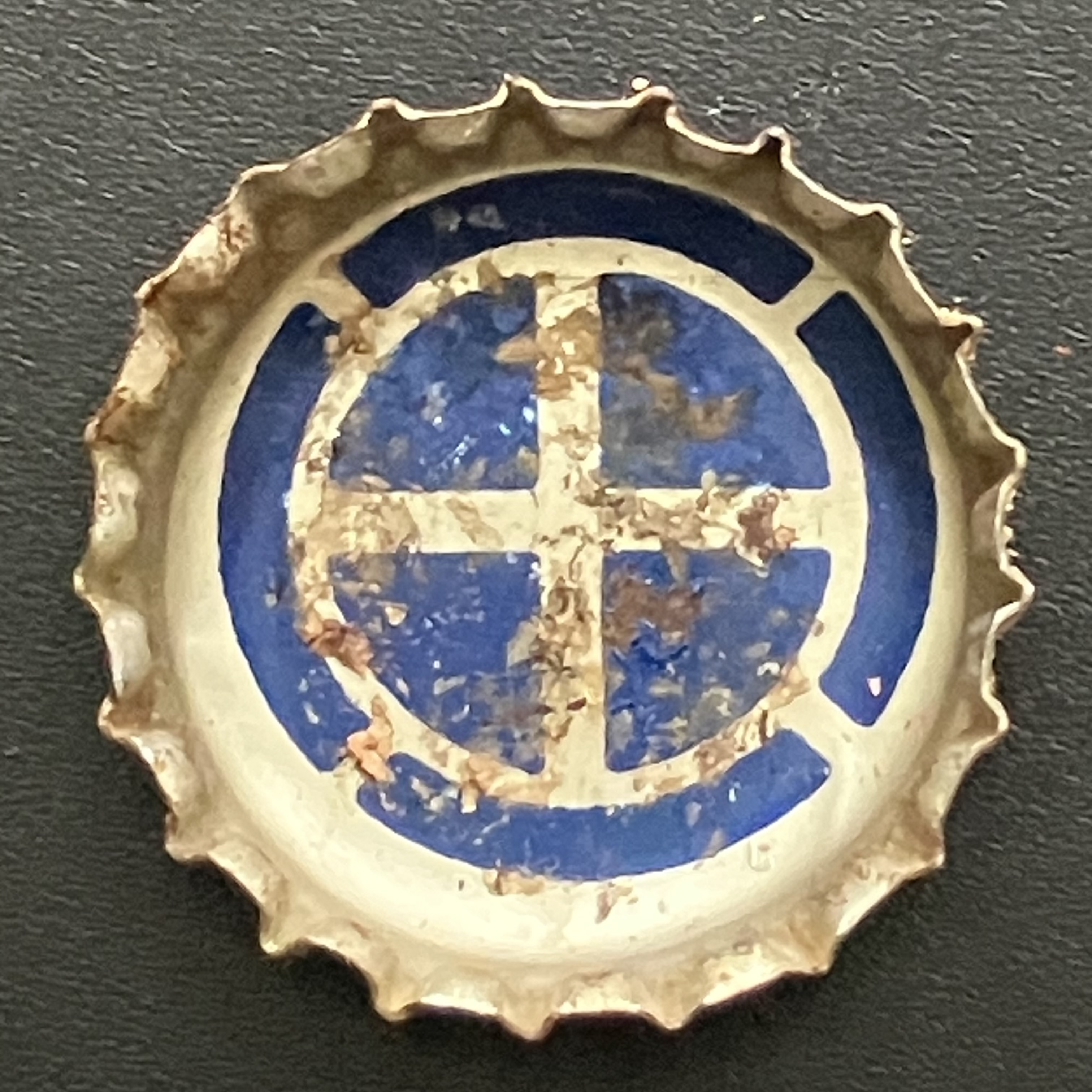
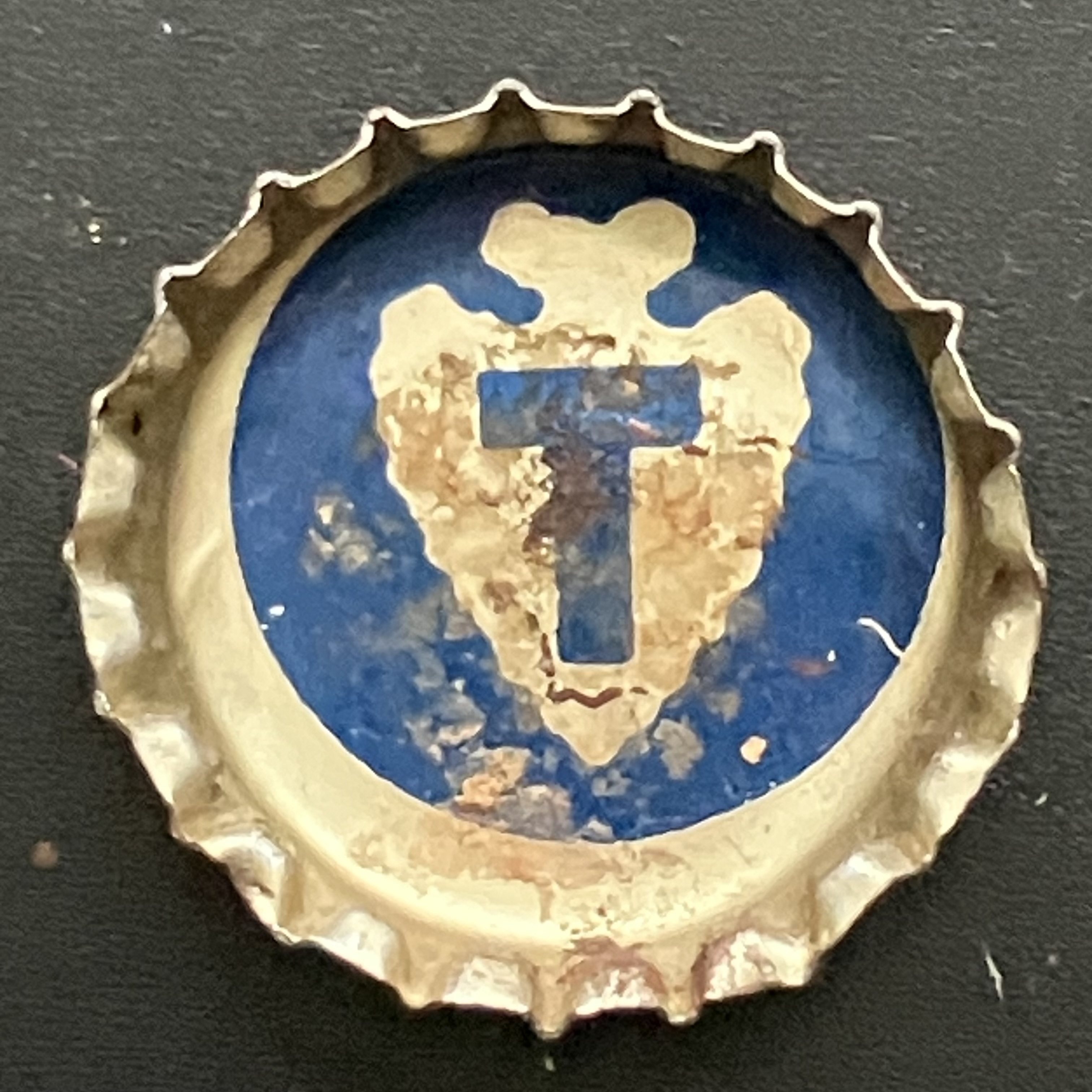
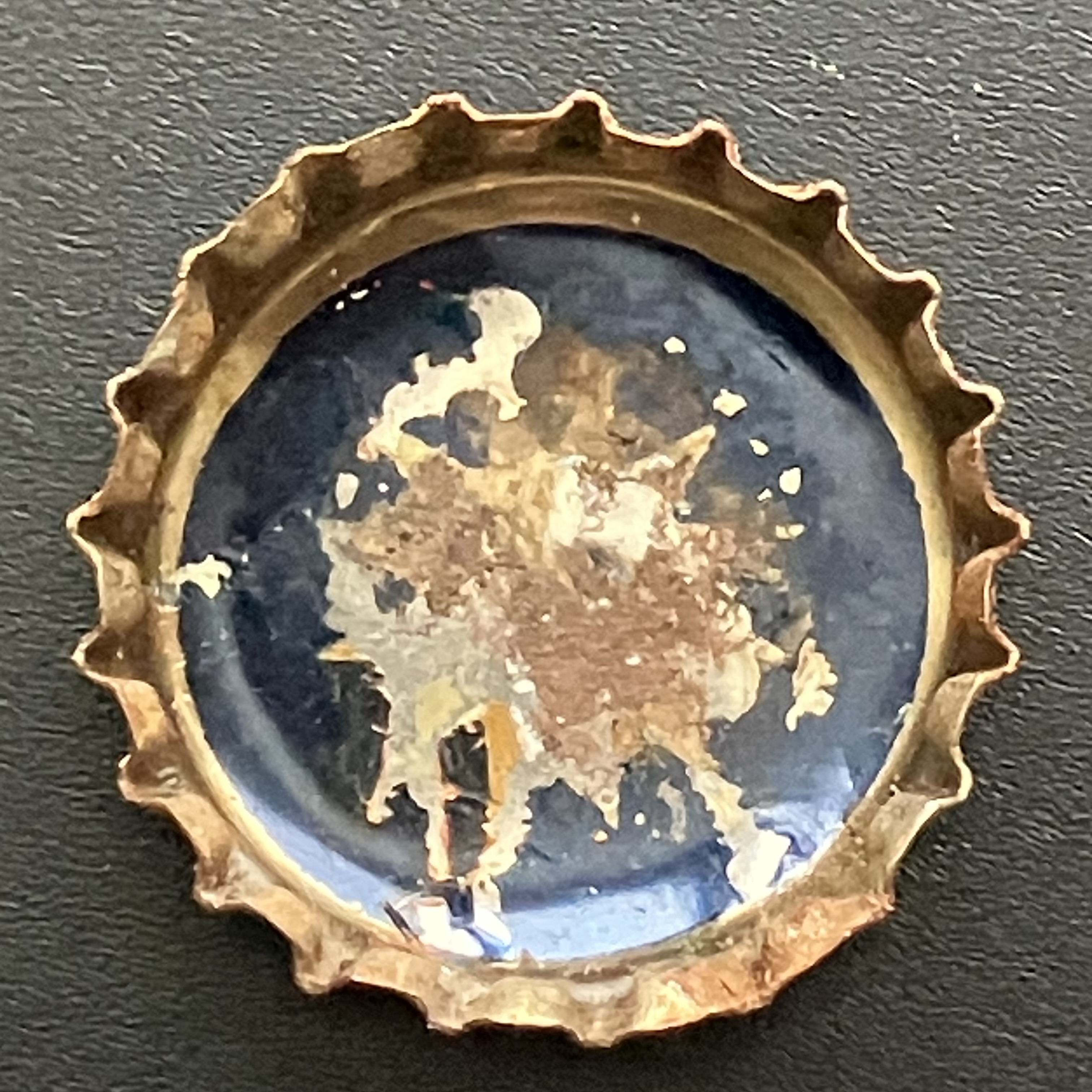
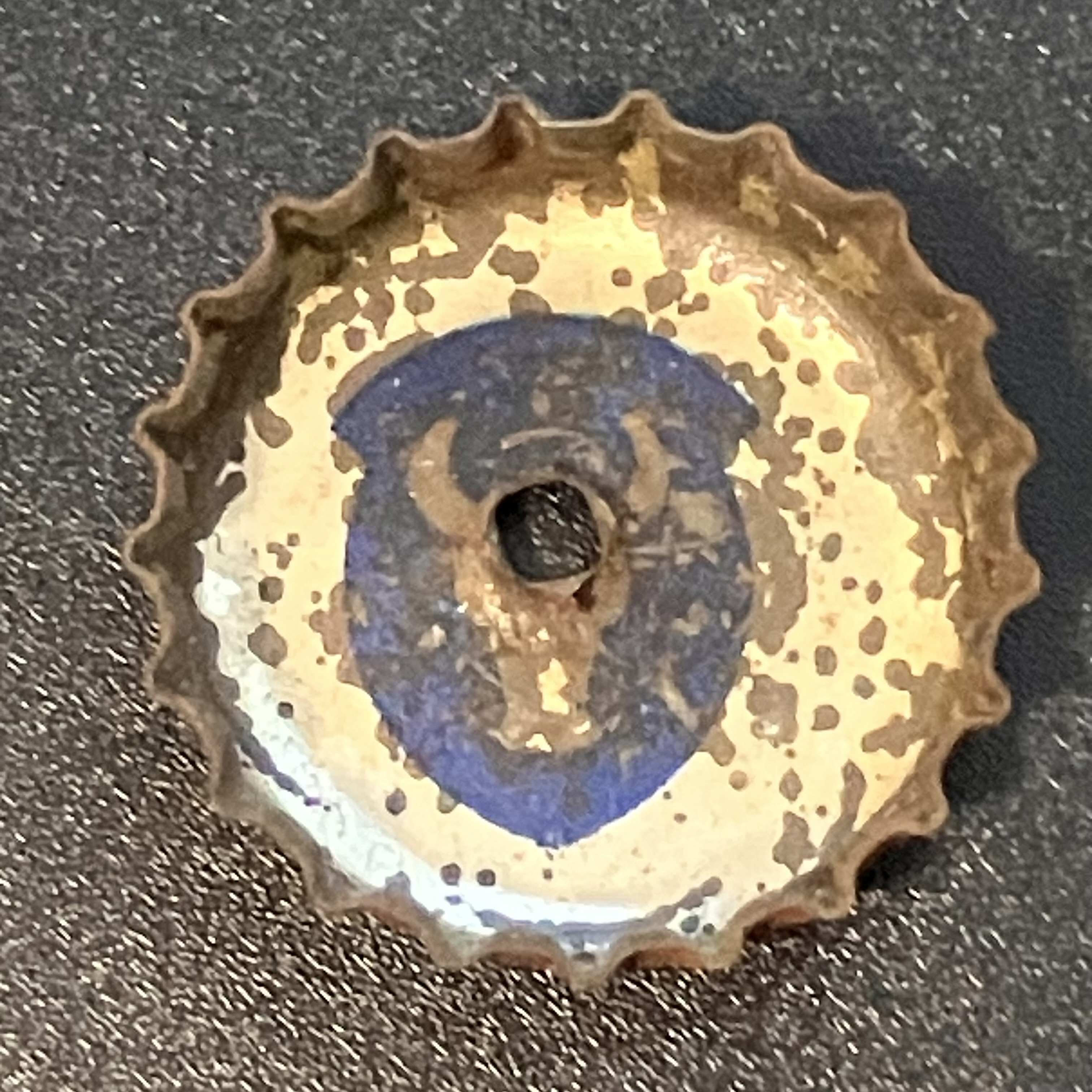
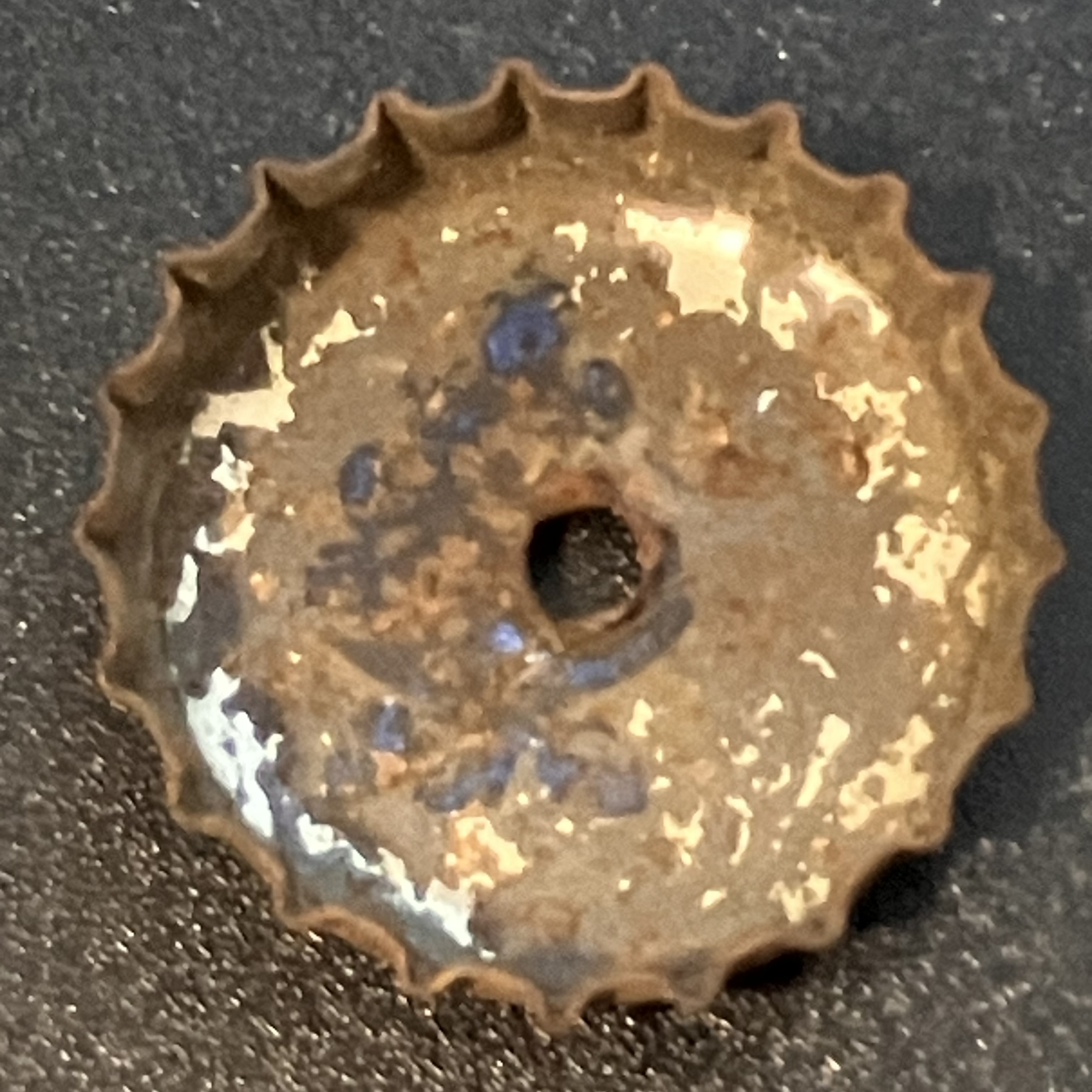
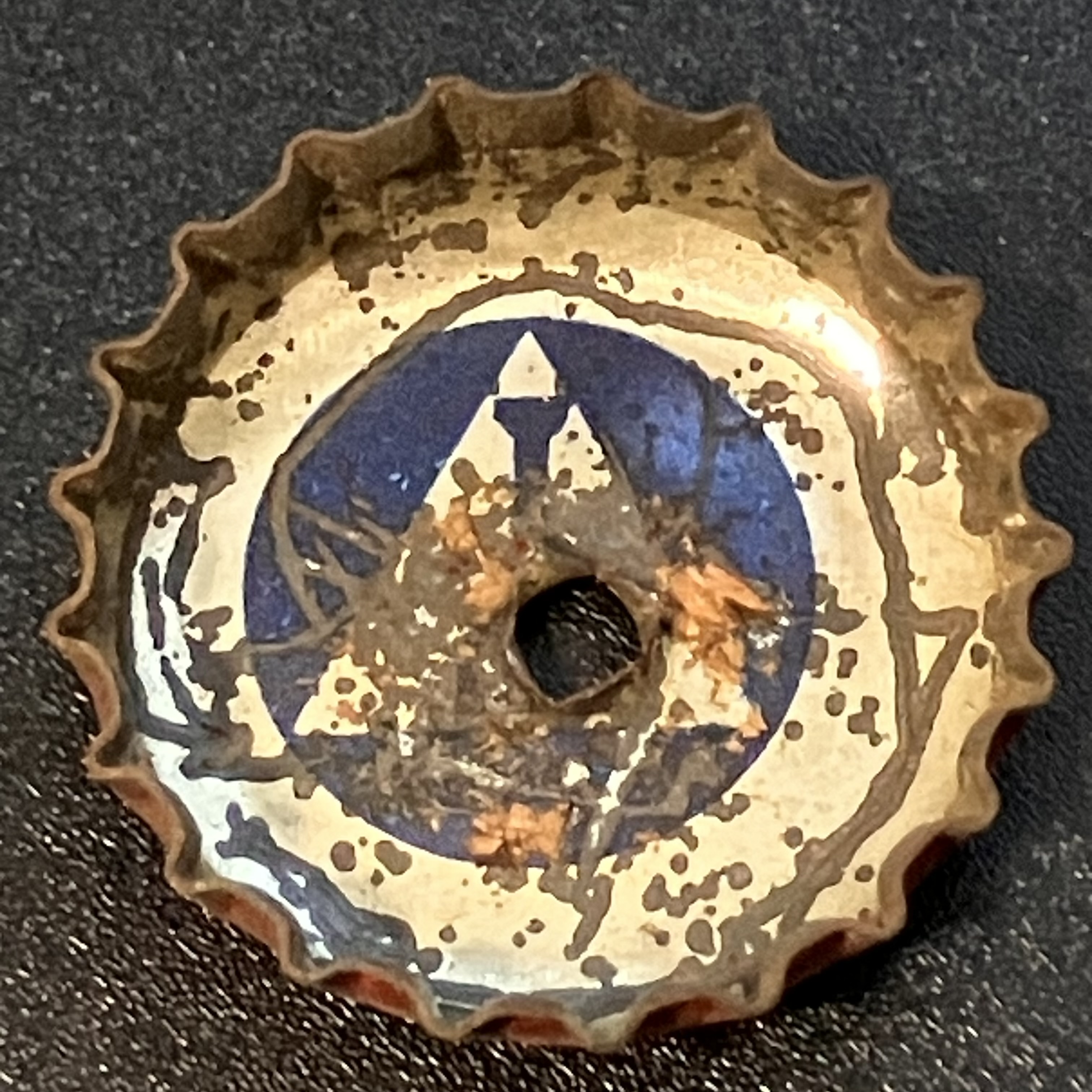
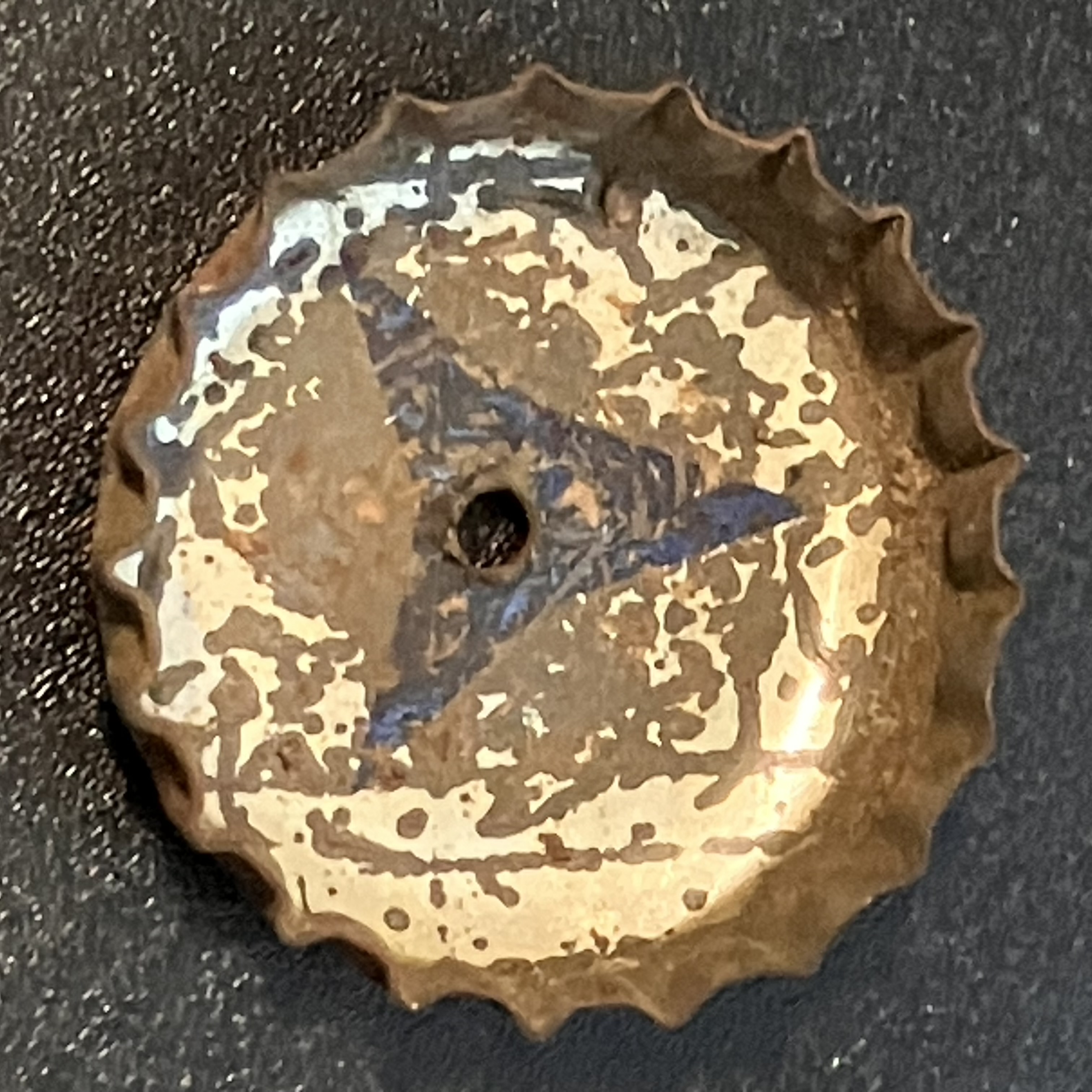
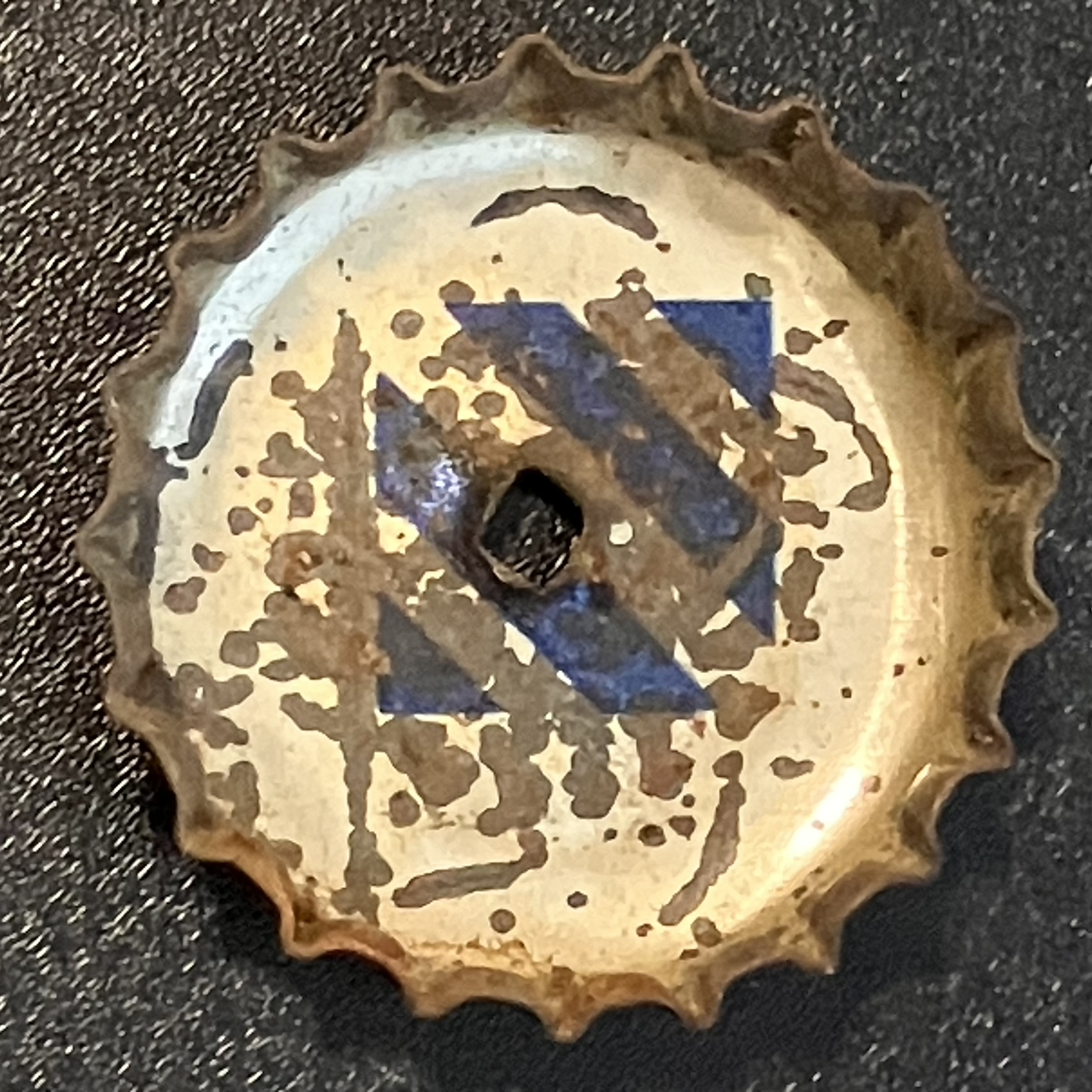
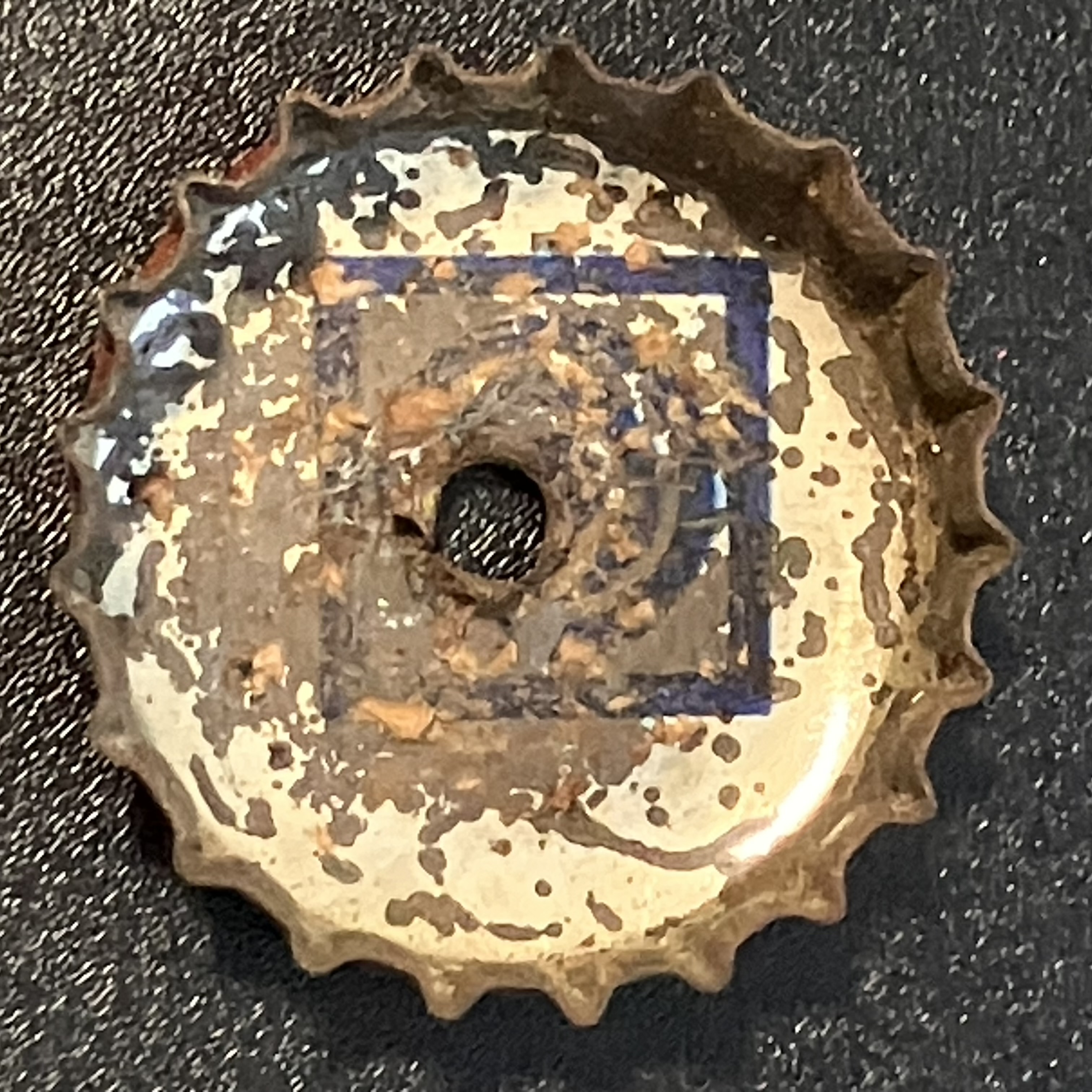
US Army insignia
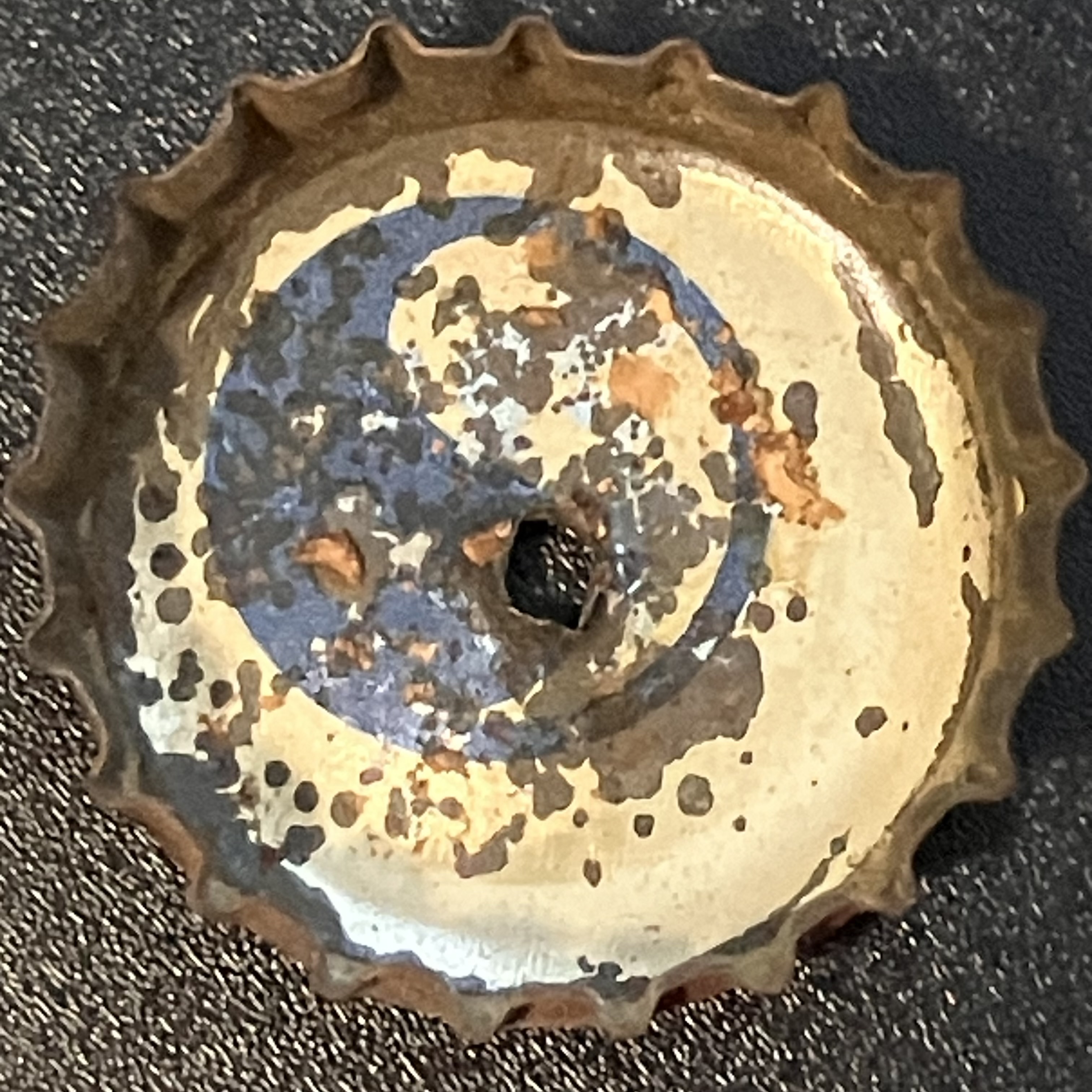
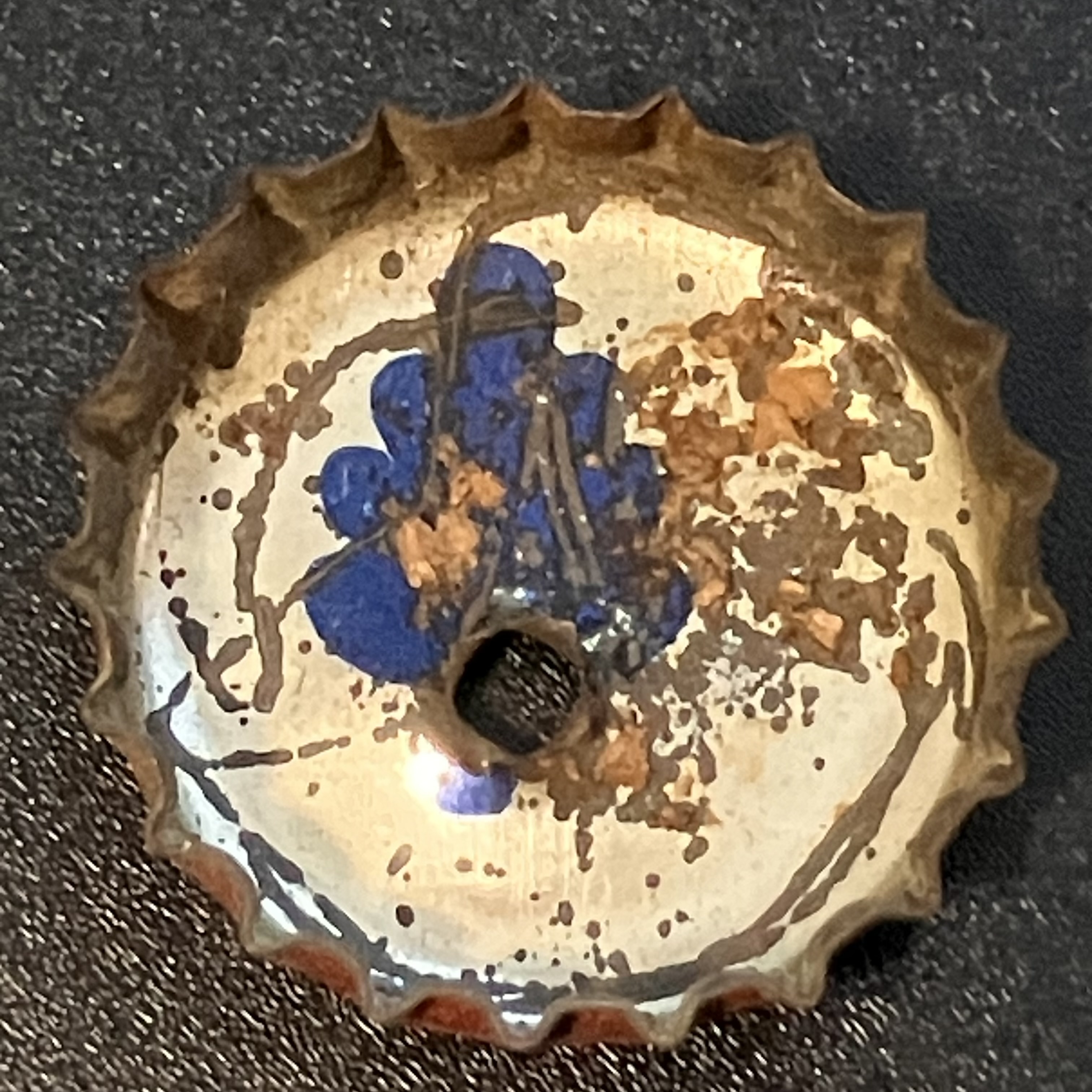
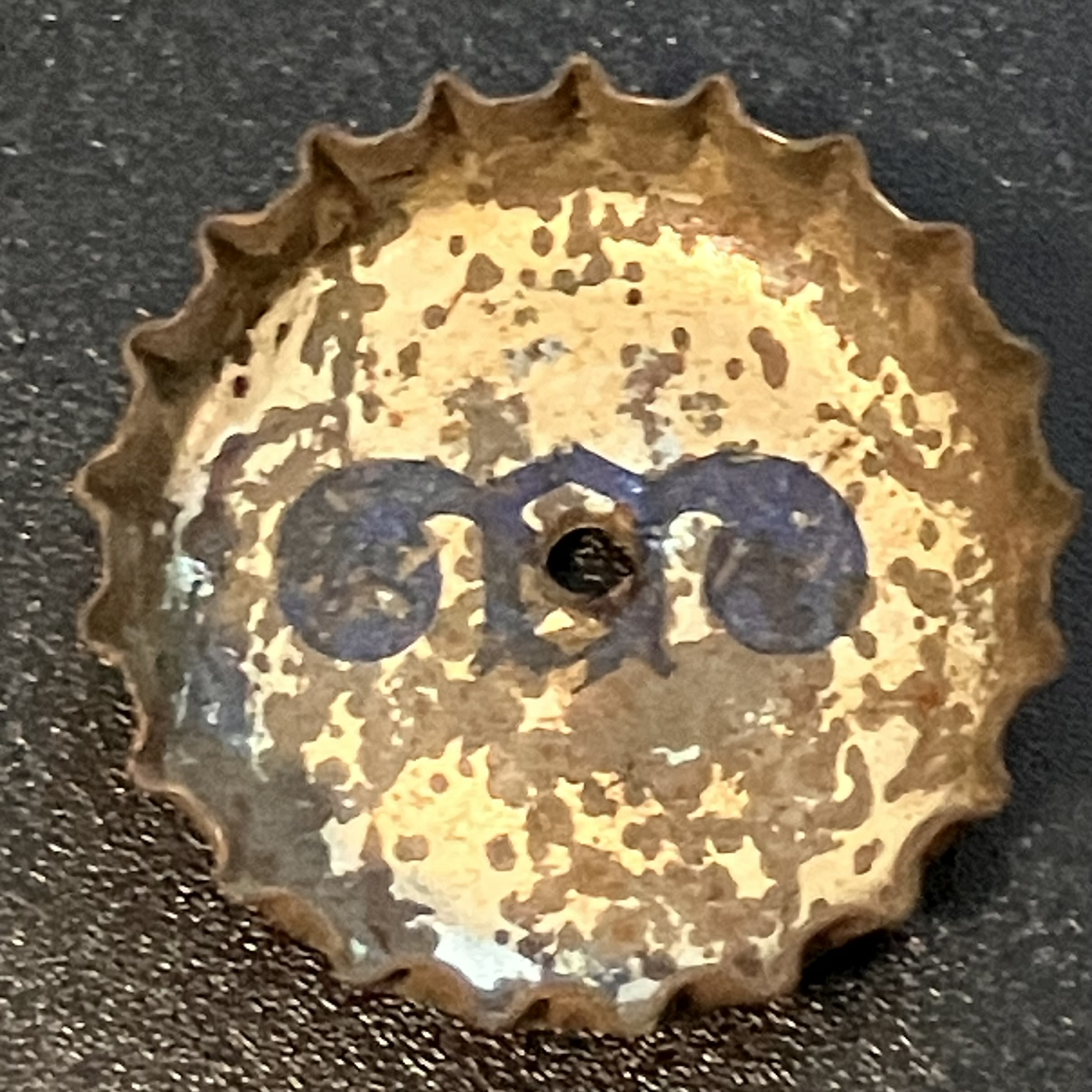
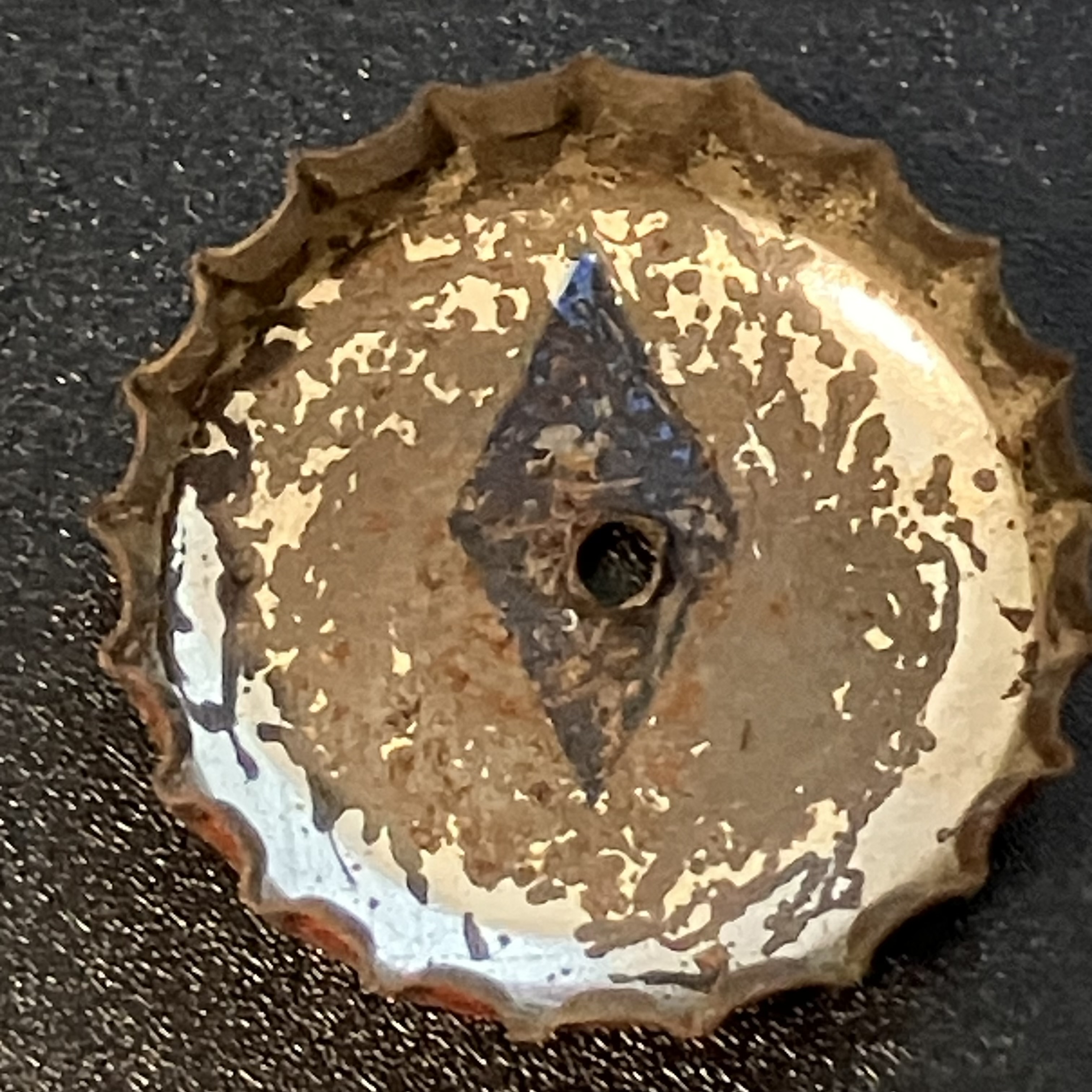
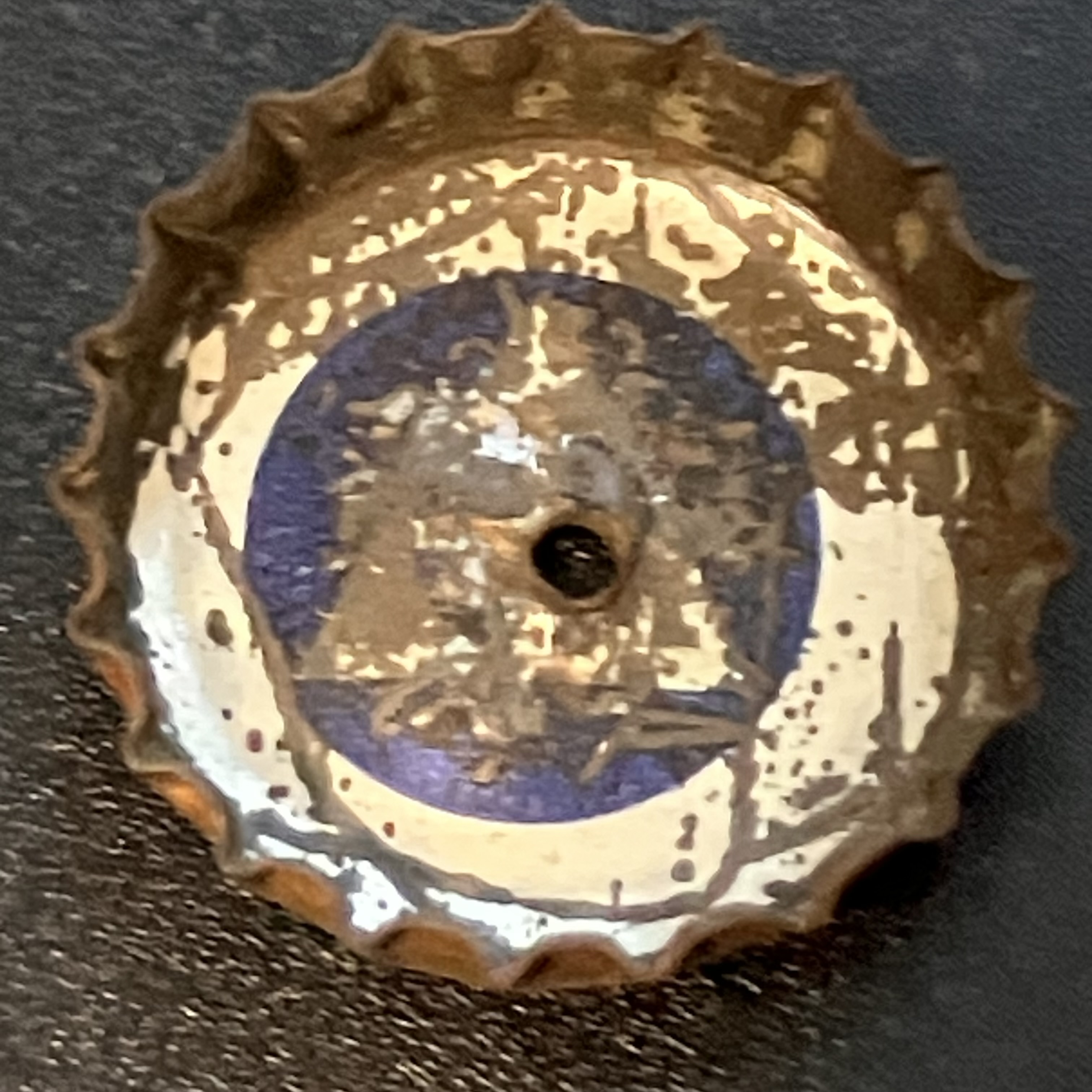
Liner art mostly destroyed, yet all 12 points of the sunburst remain marginally visible
Learn all about “Sunburst Division” on Wikipedia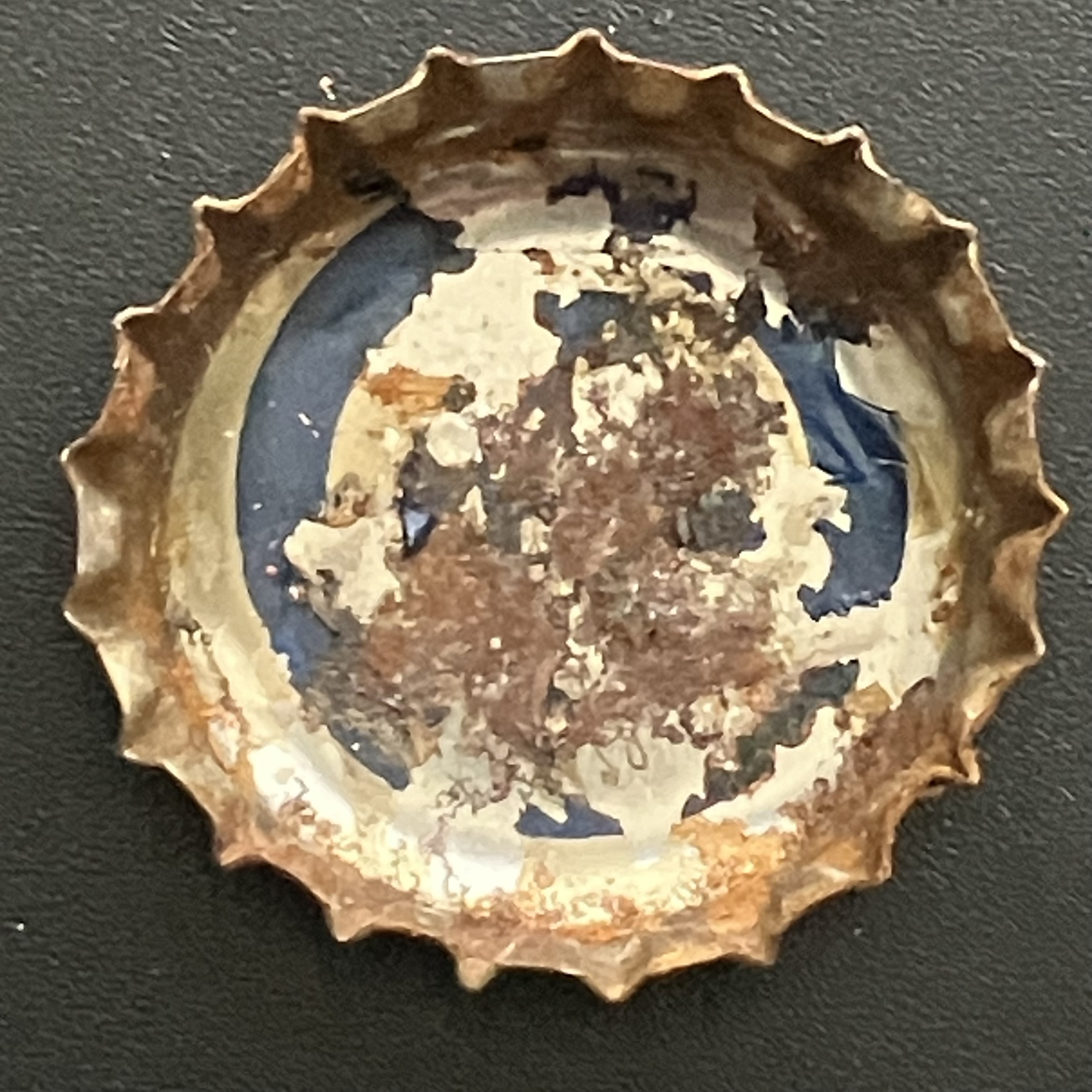
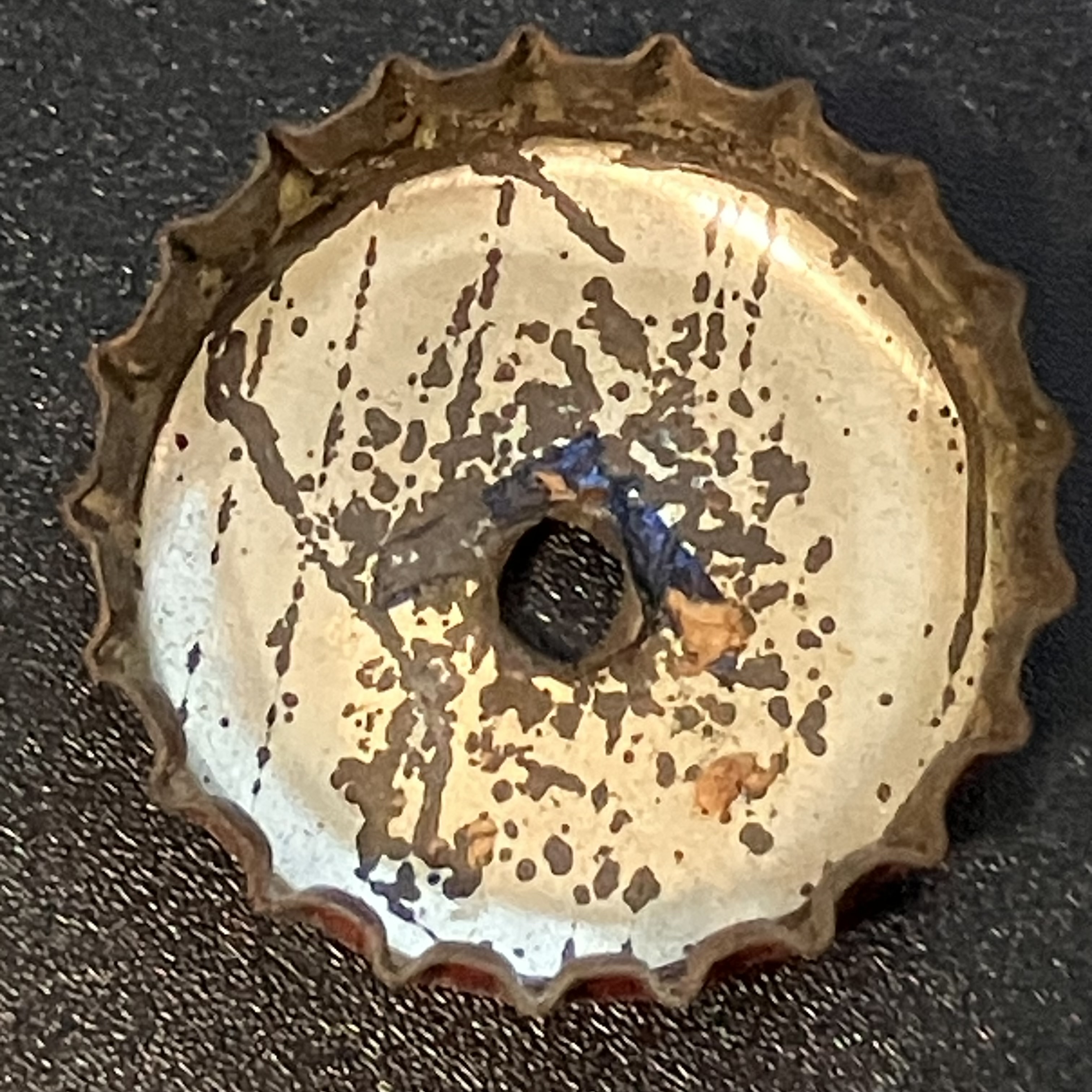
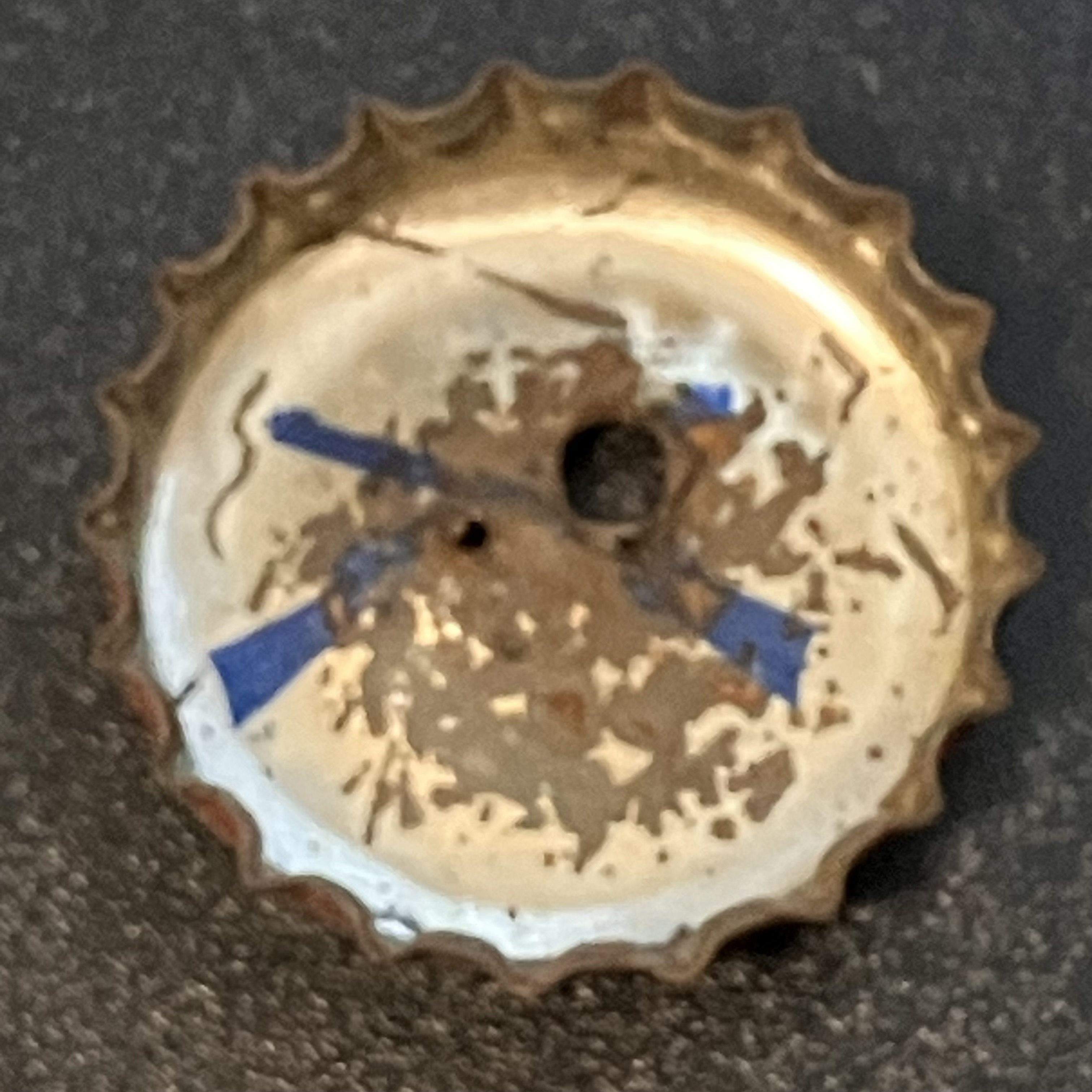
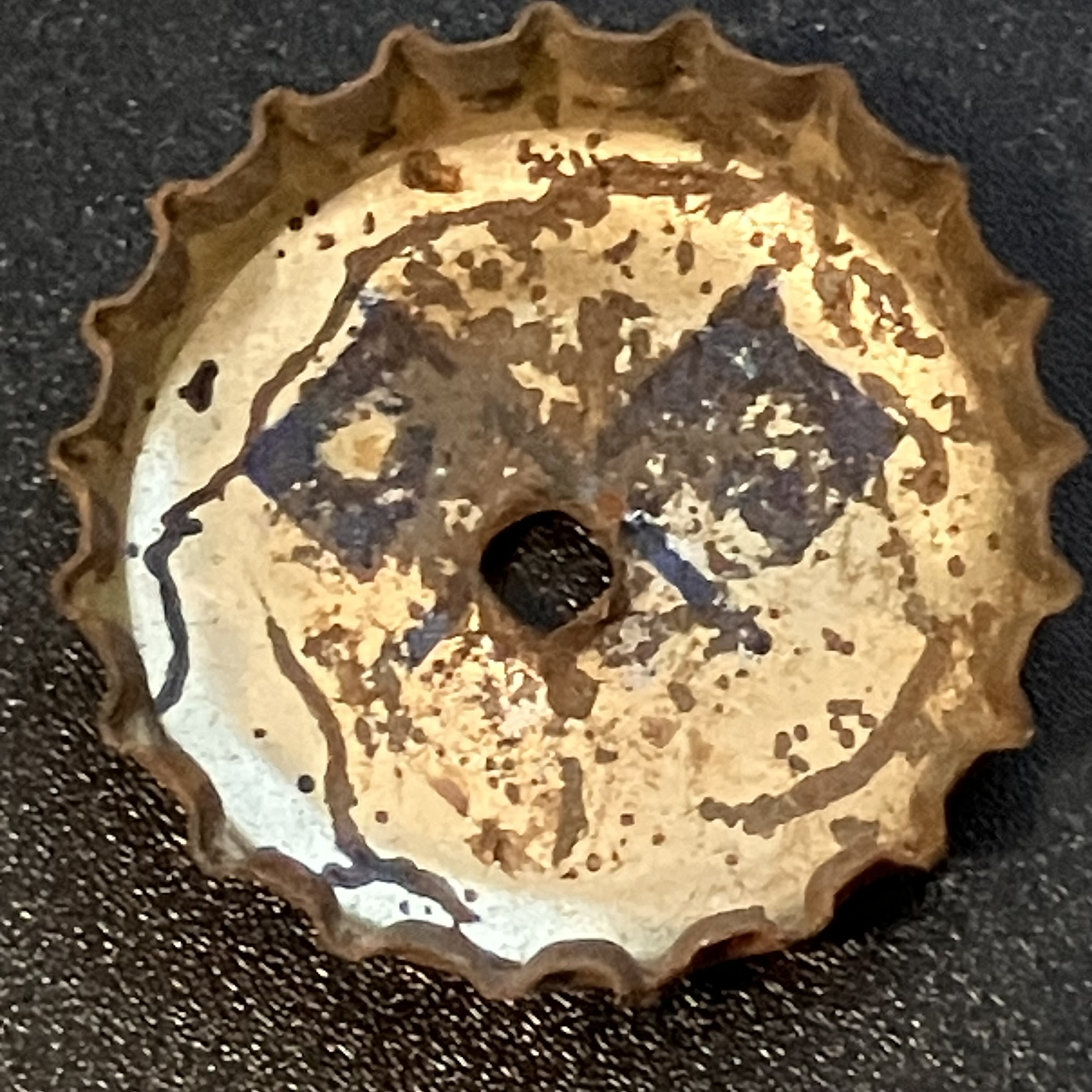
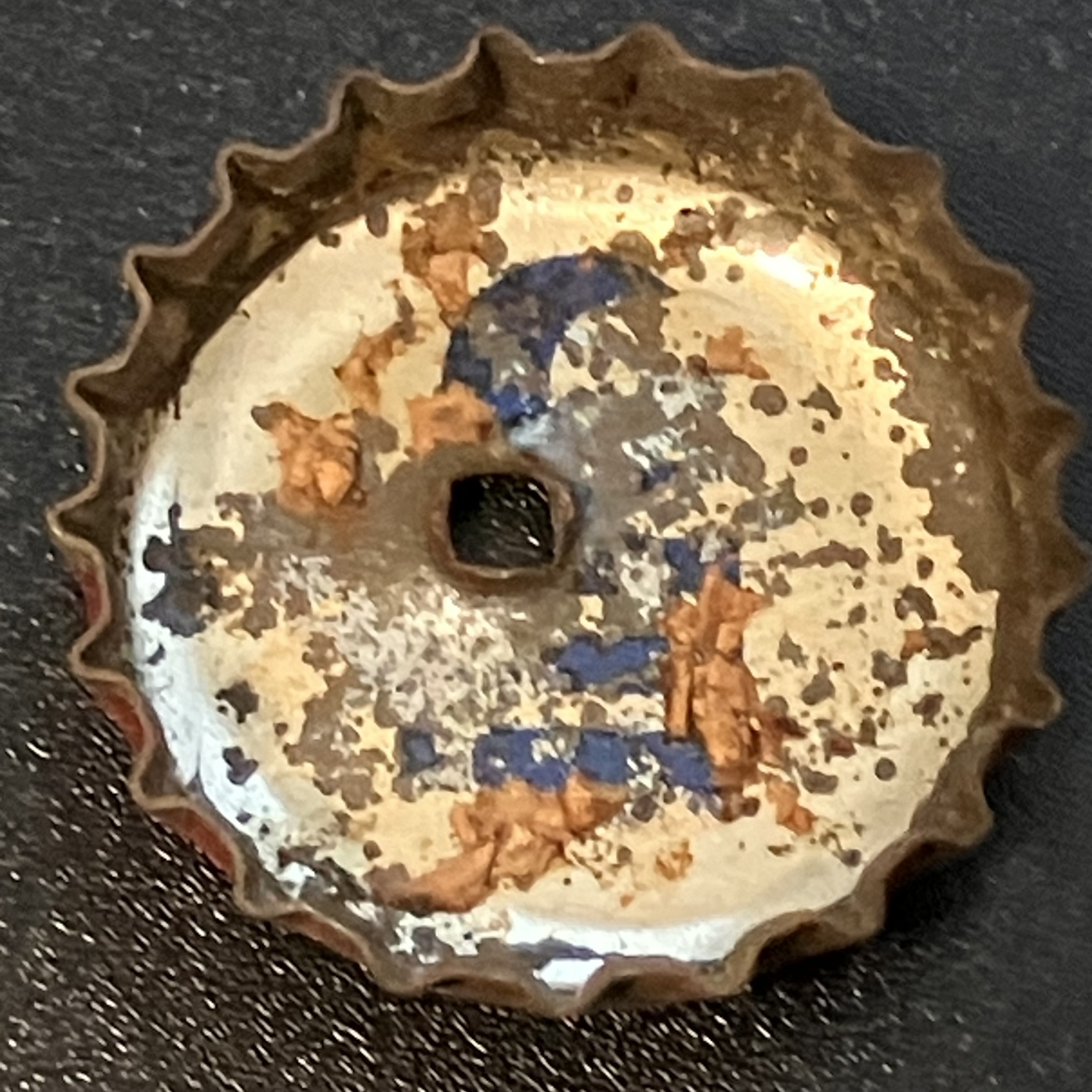
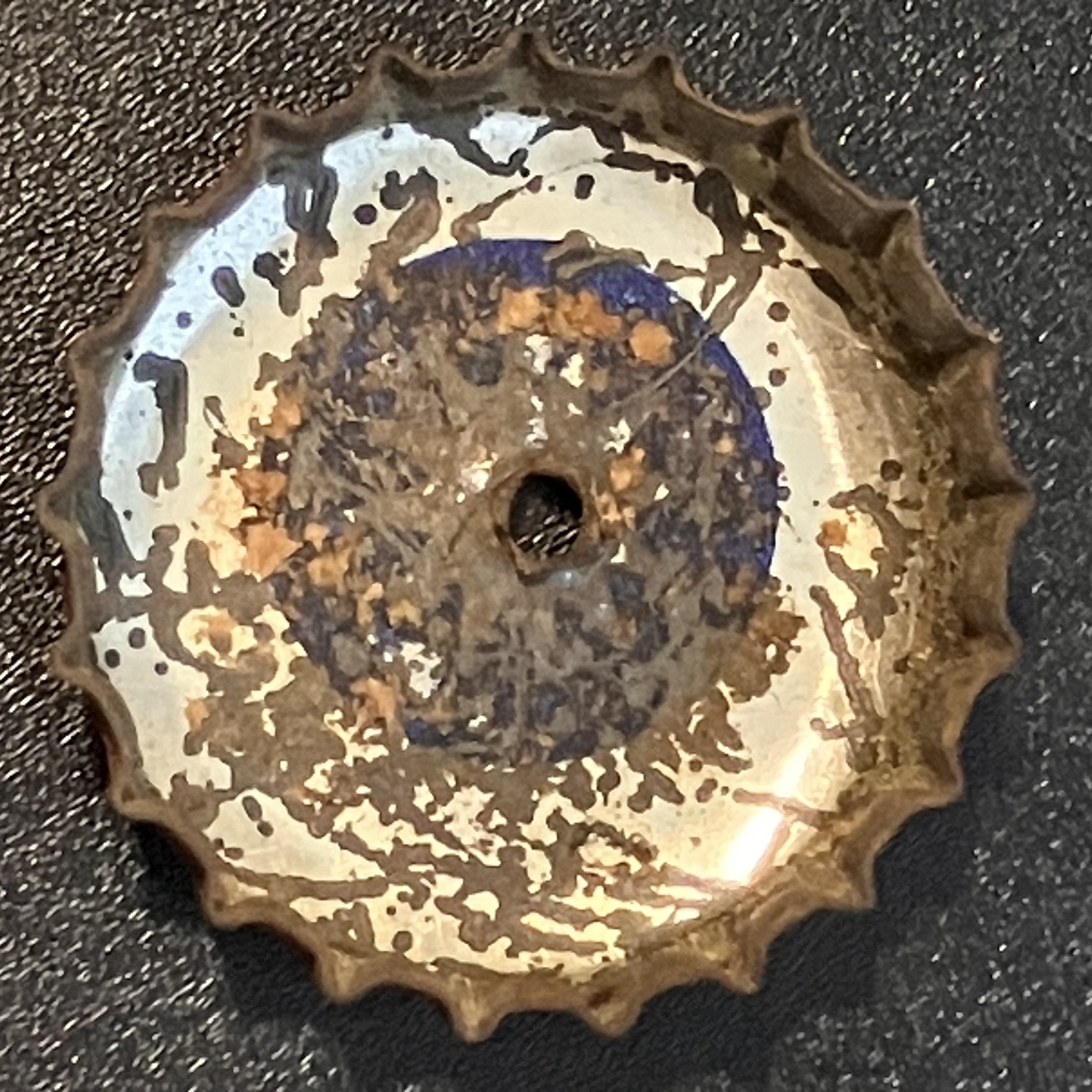
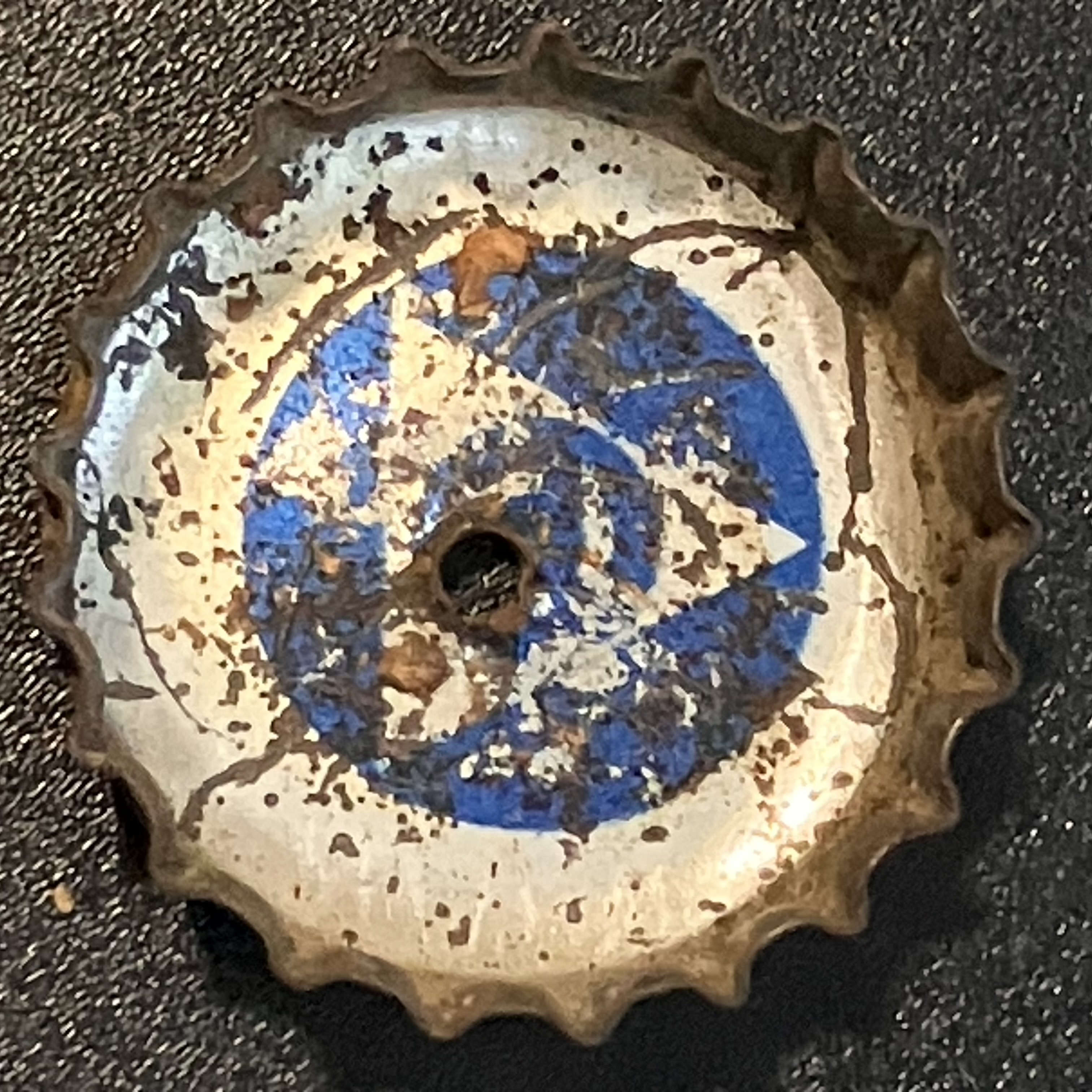
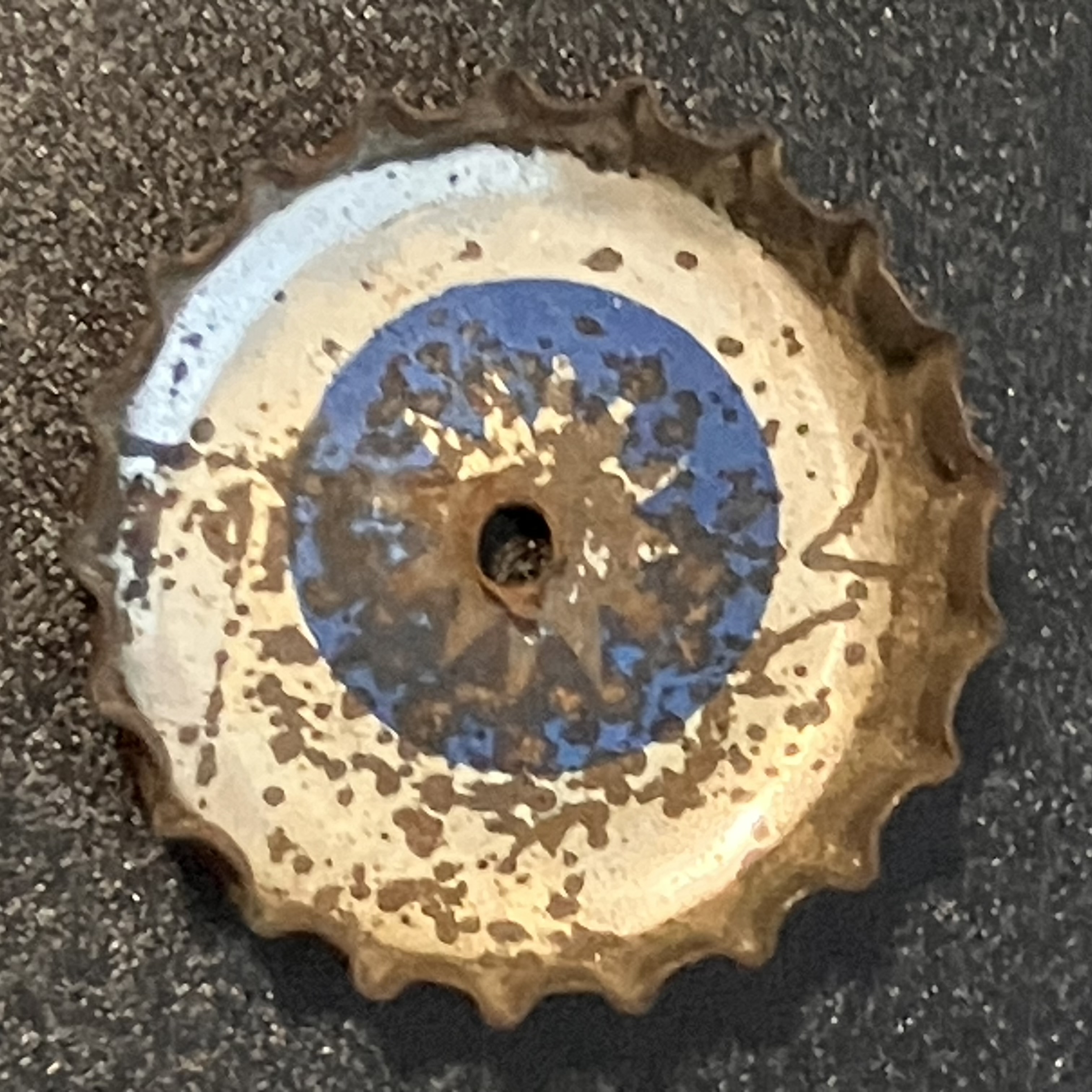
US Army insignia
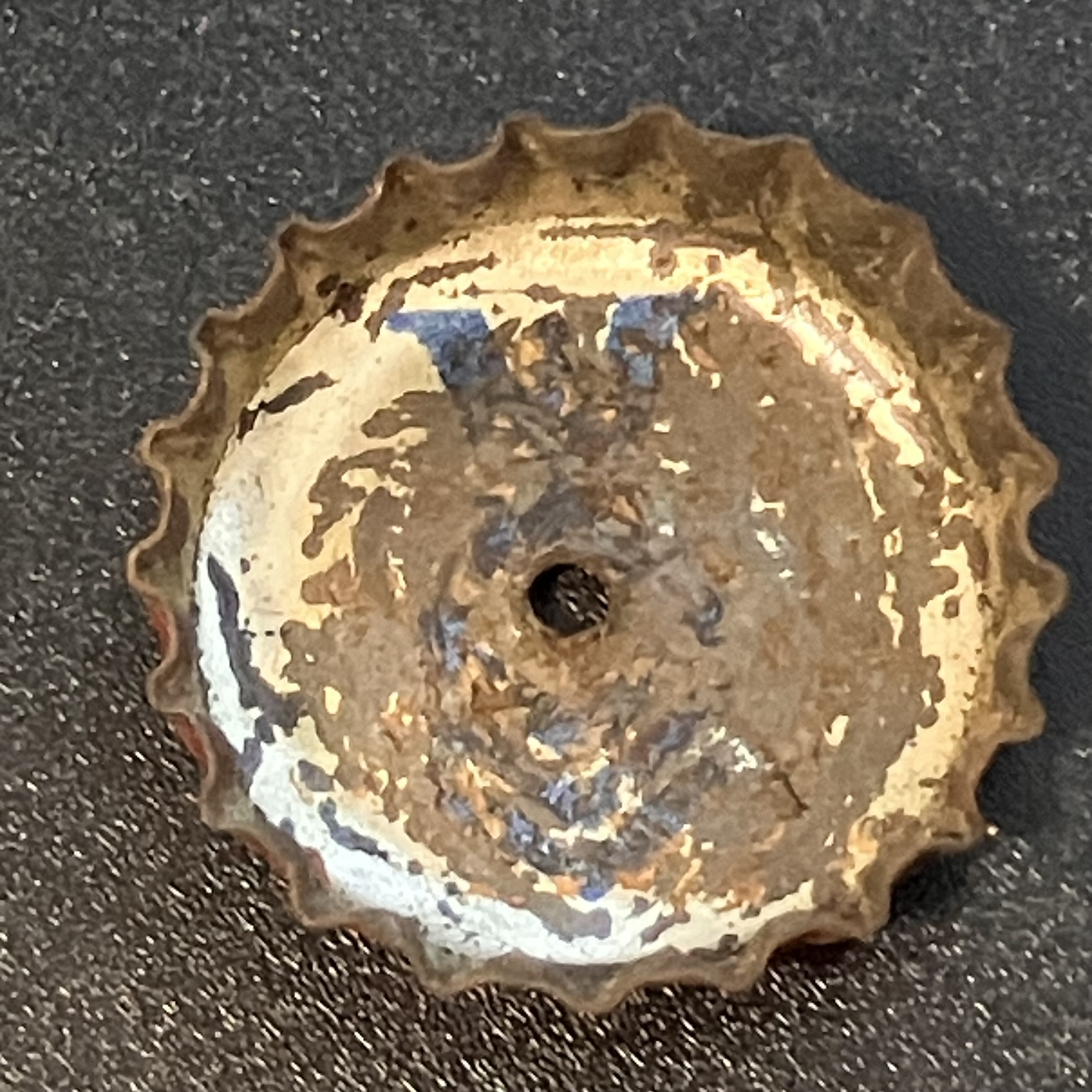
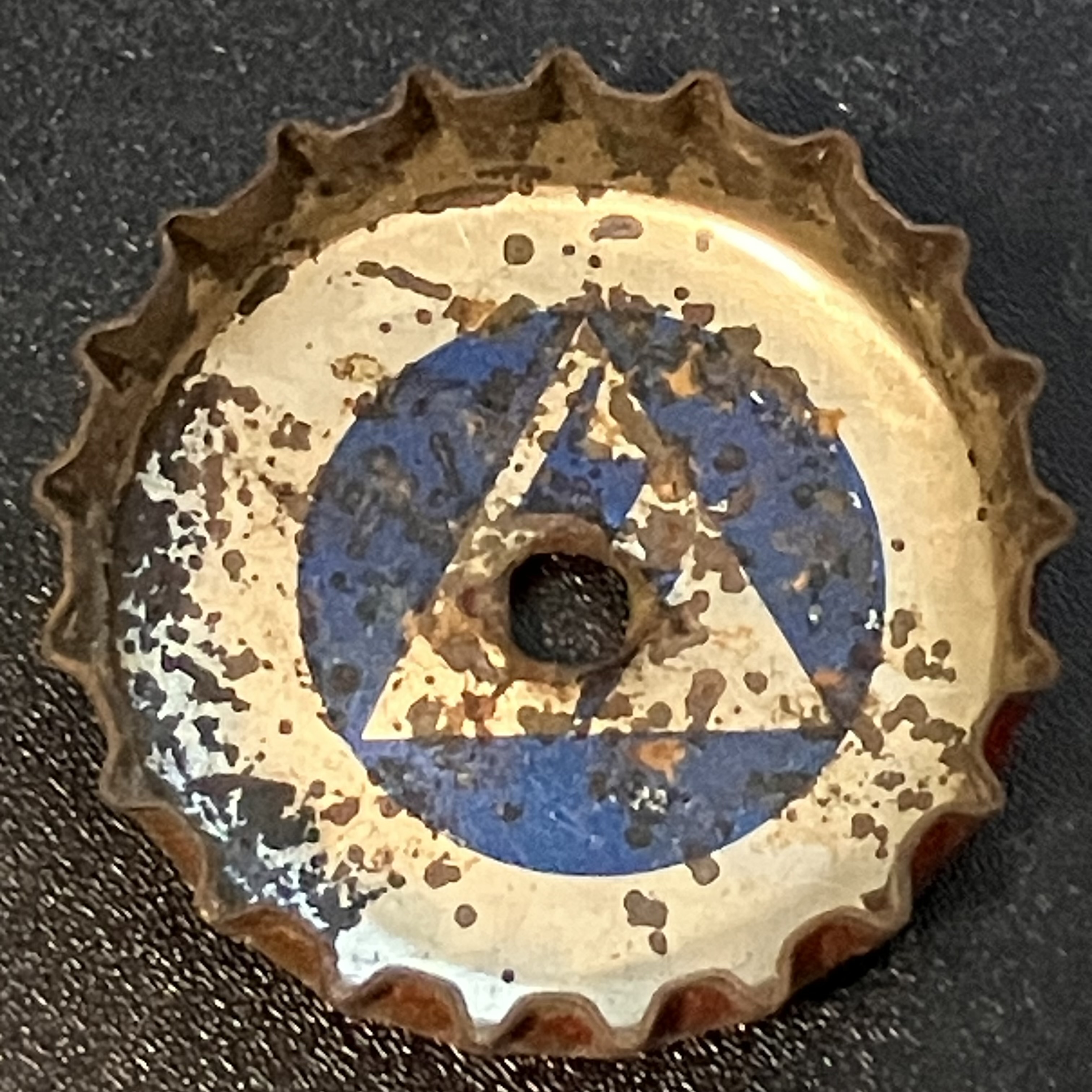
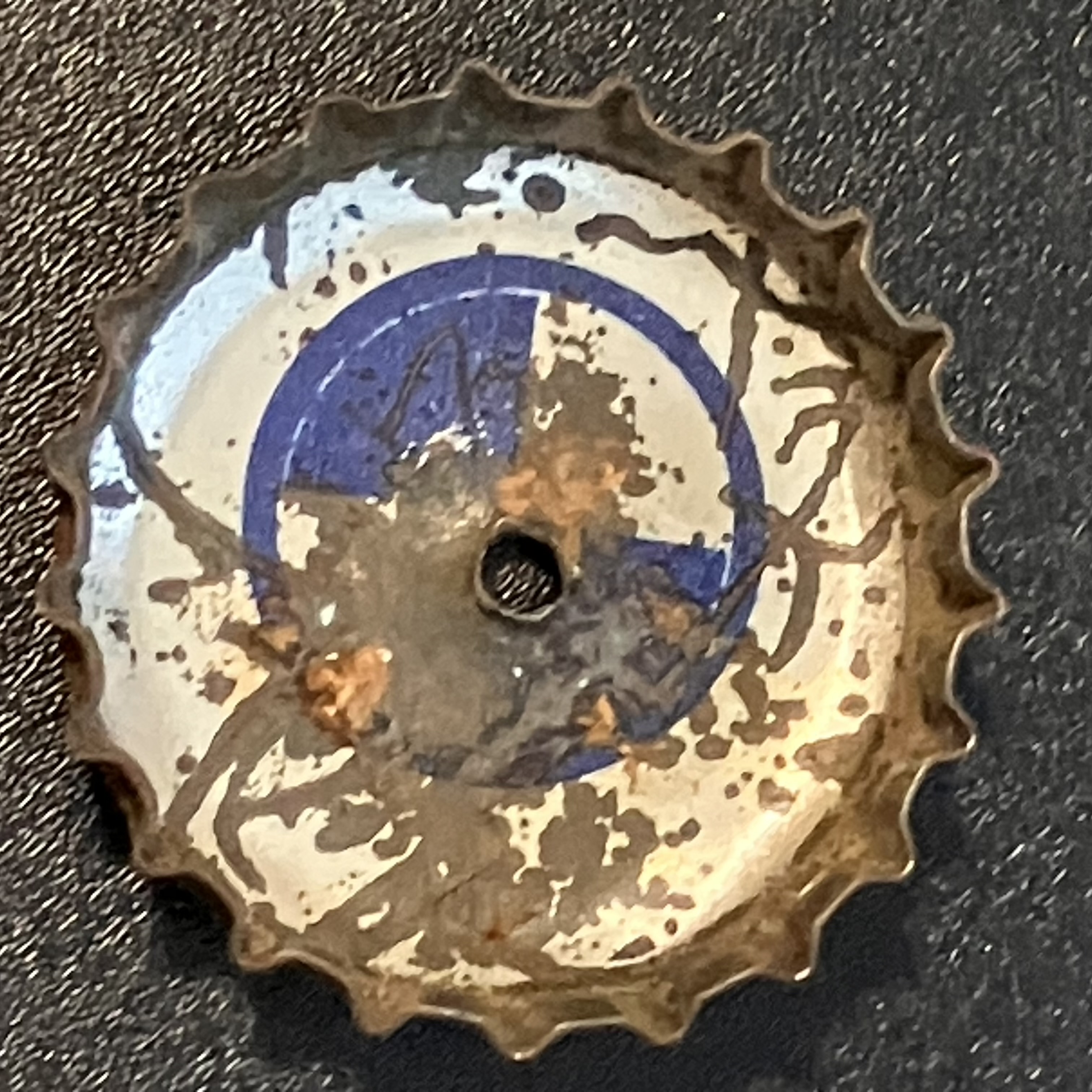
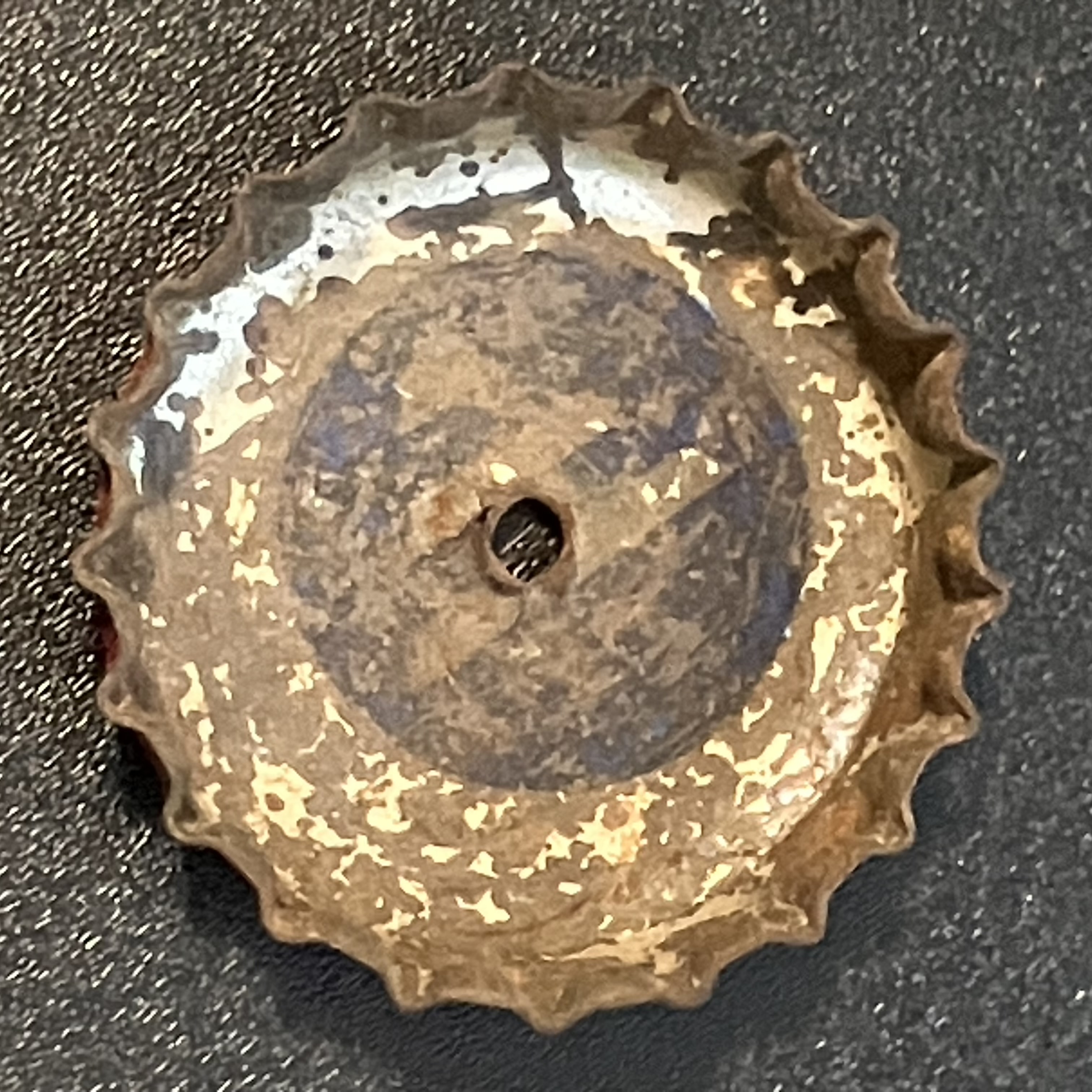
Nearly obliterated, but the heavy outer circle, open areas inside the circle are indicative
Learn all about 44th Division on Wikipedia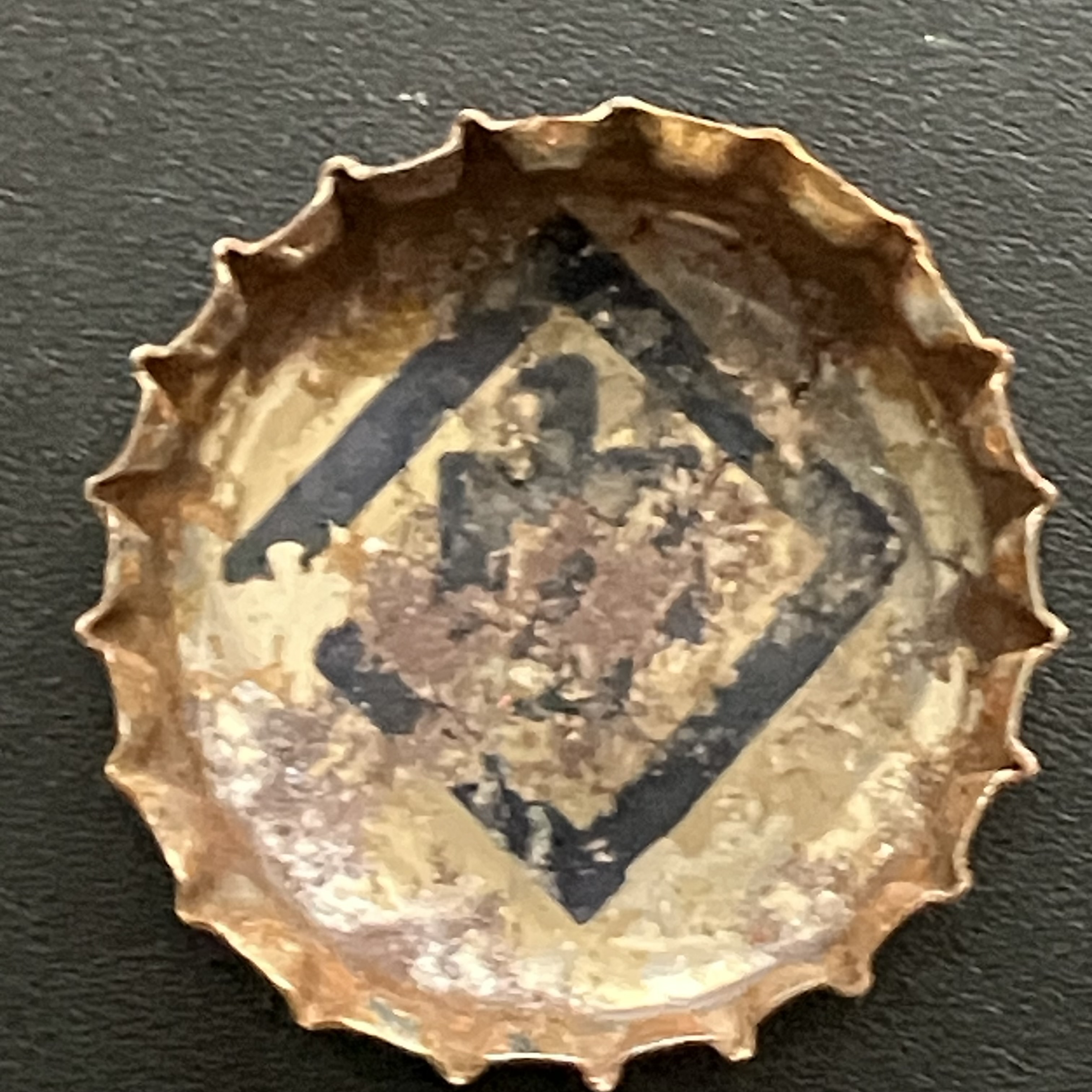
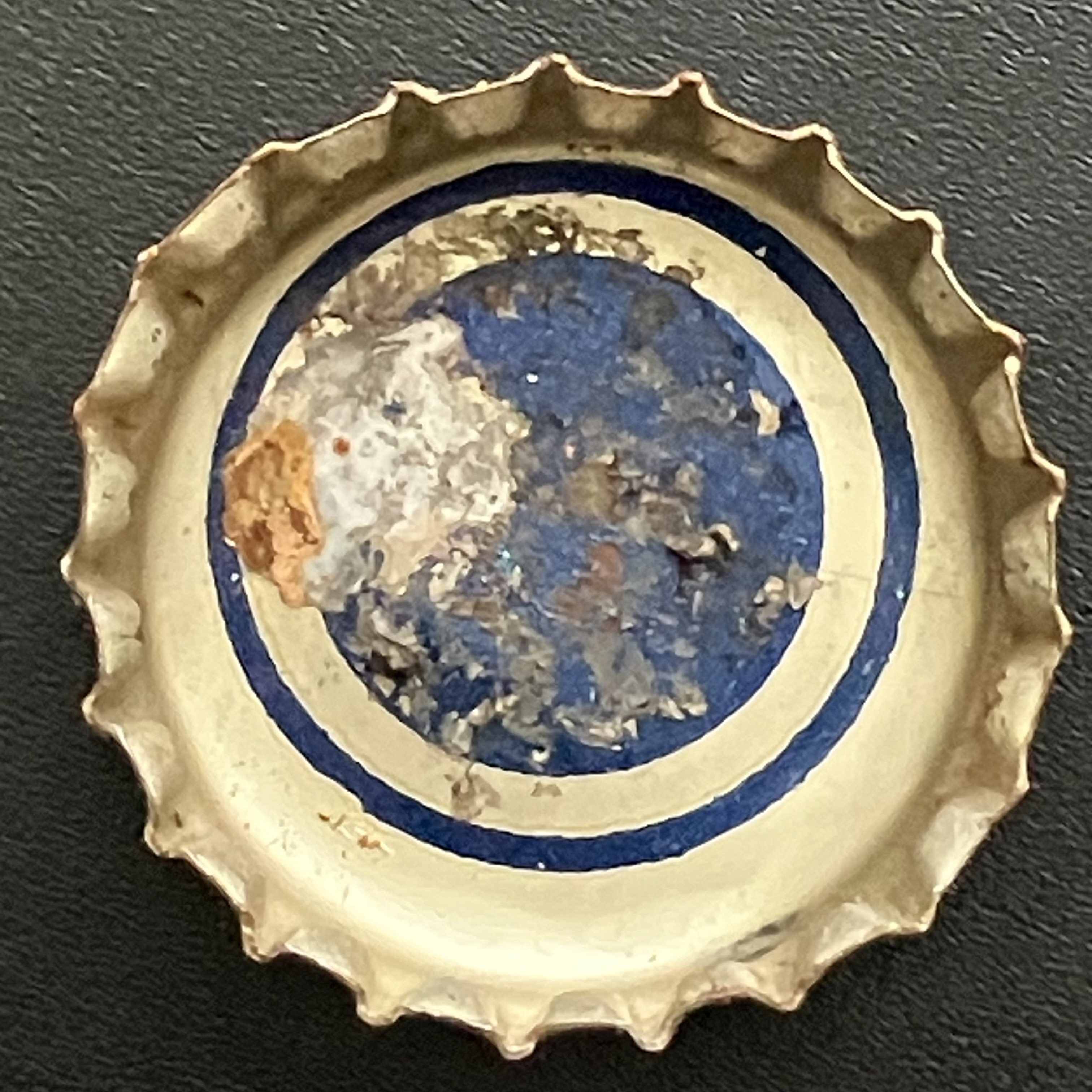
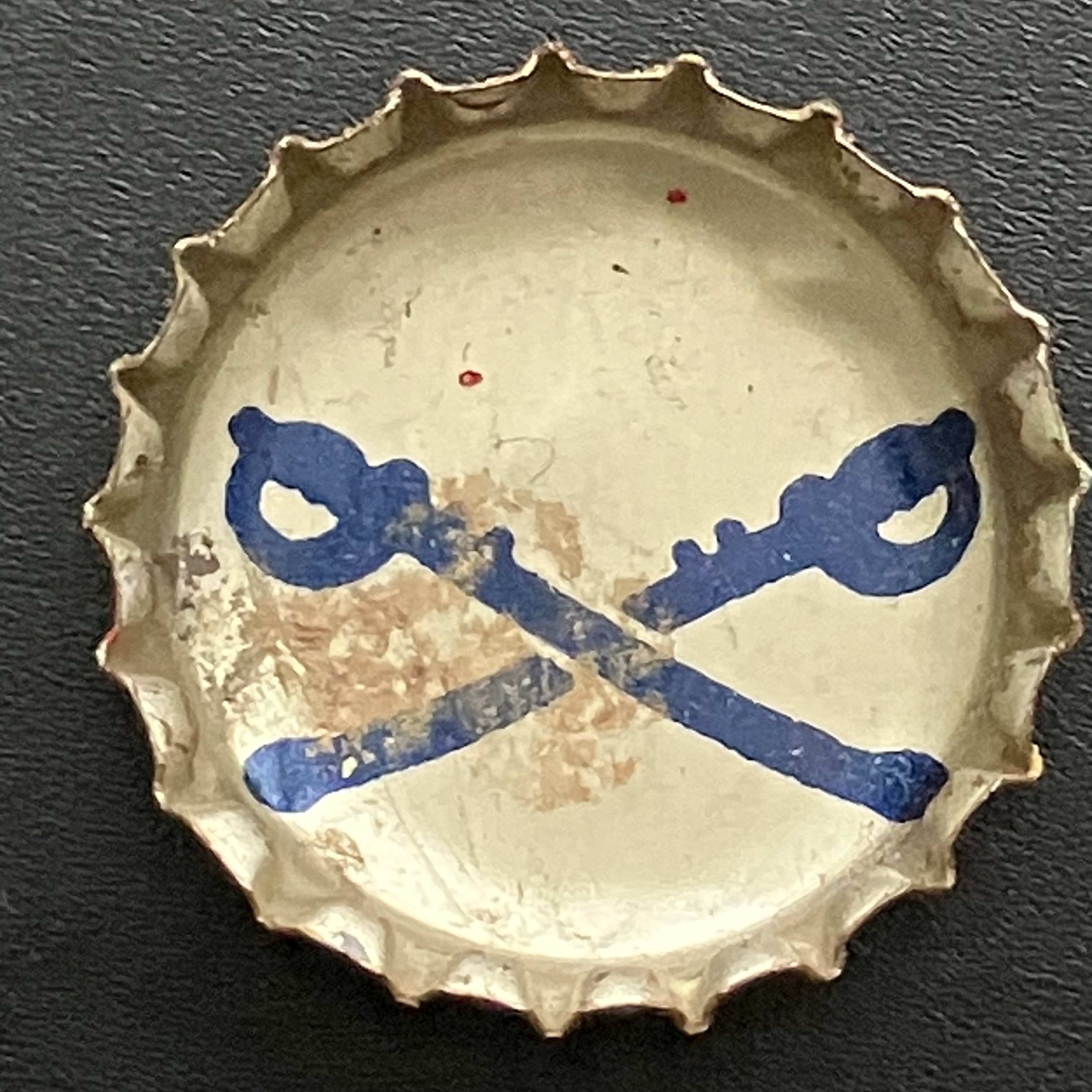
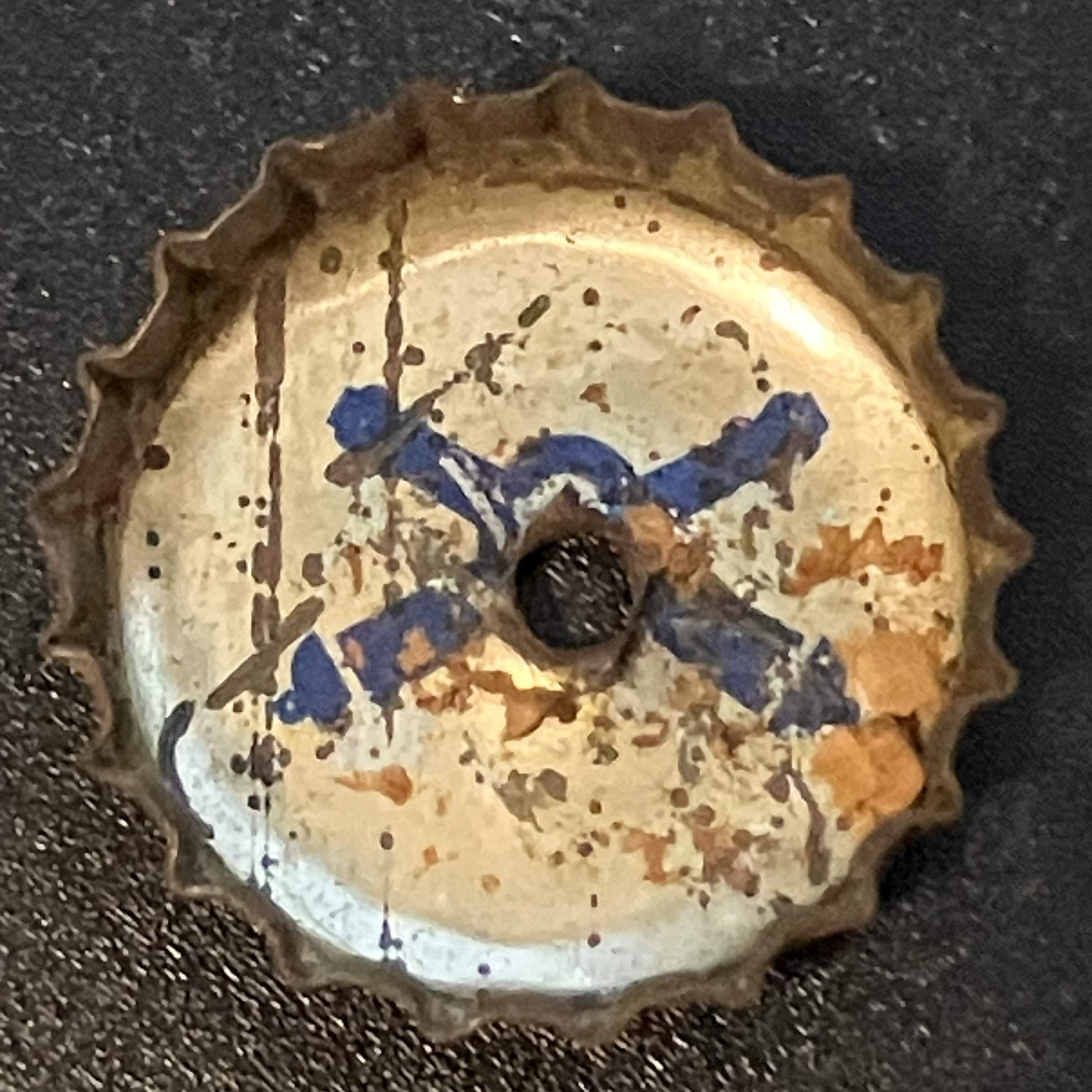
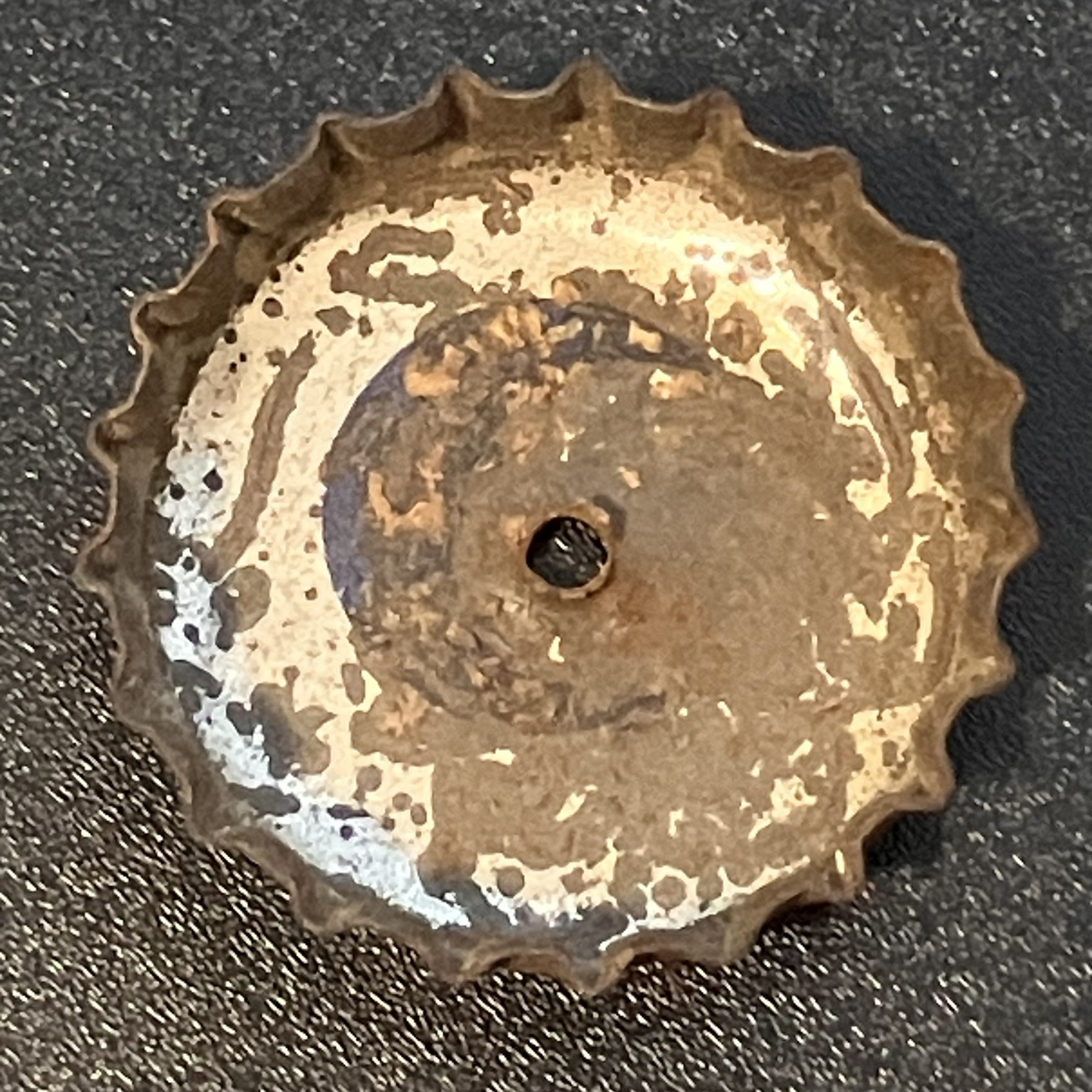
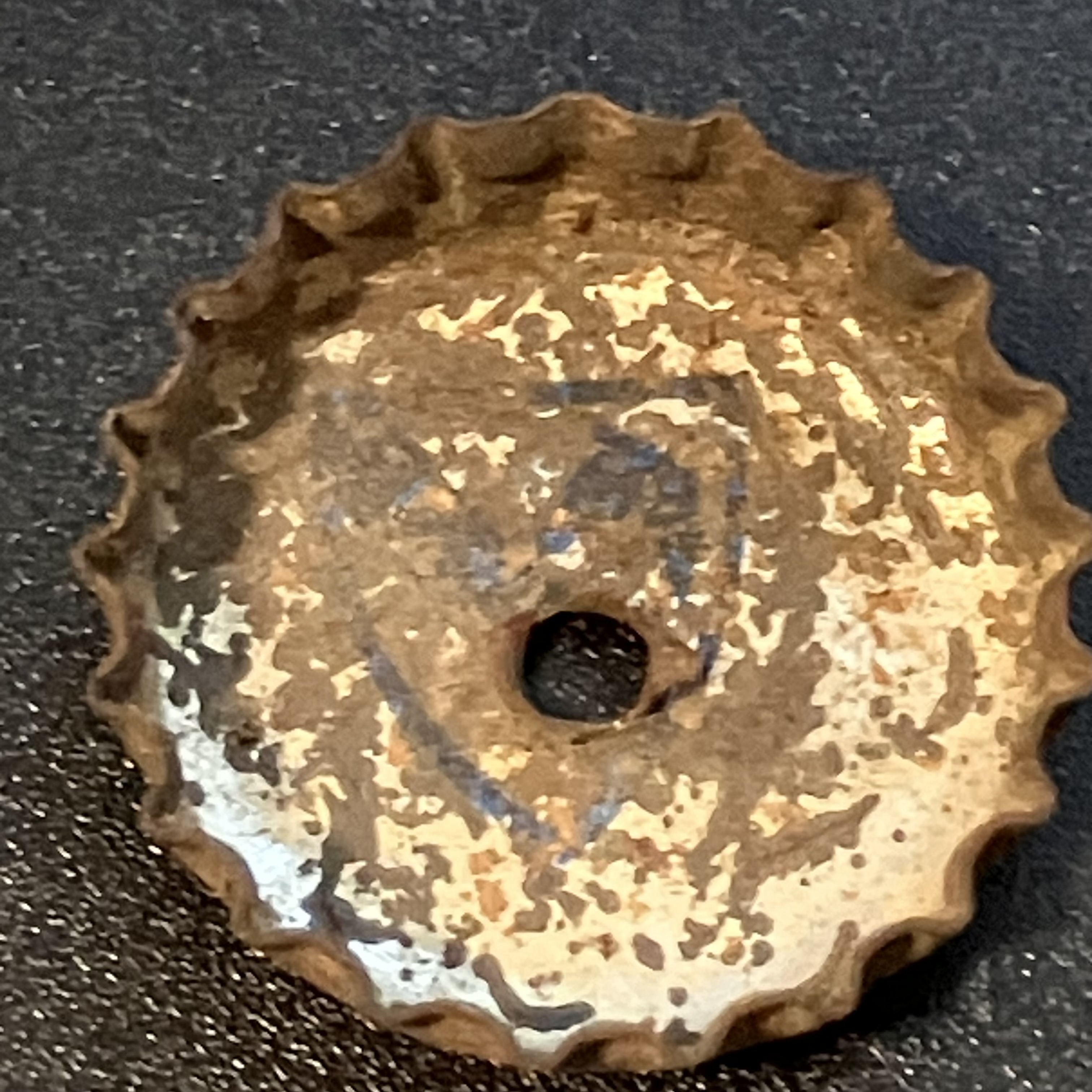
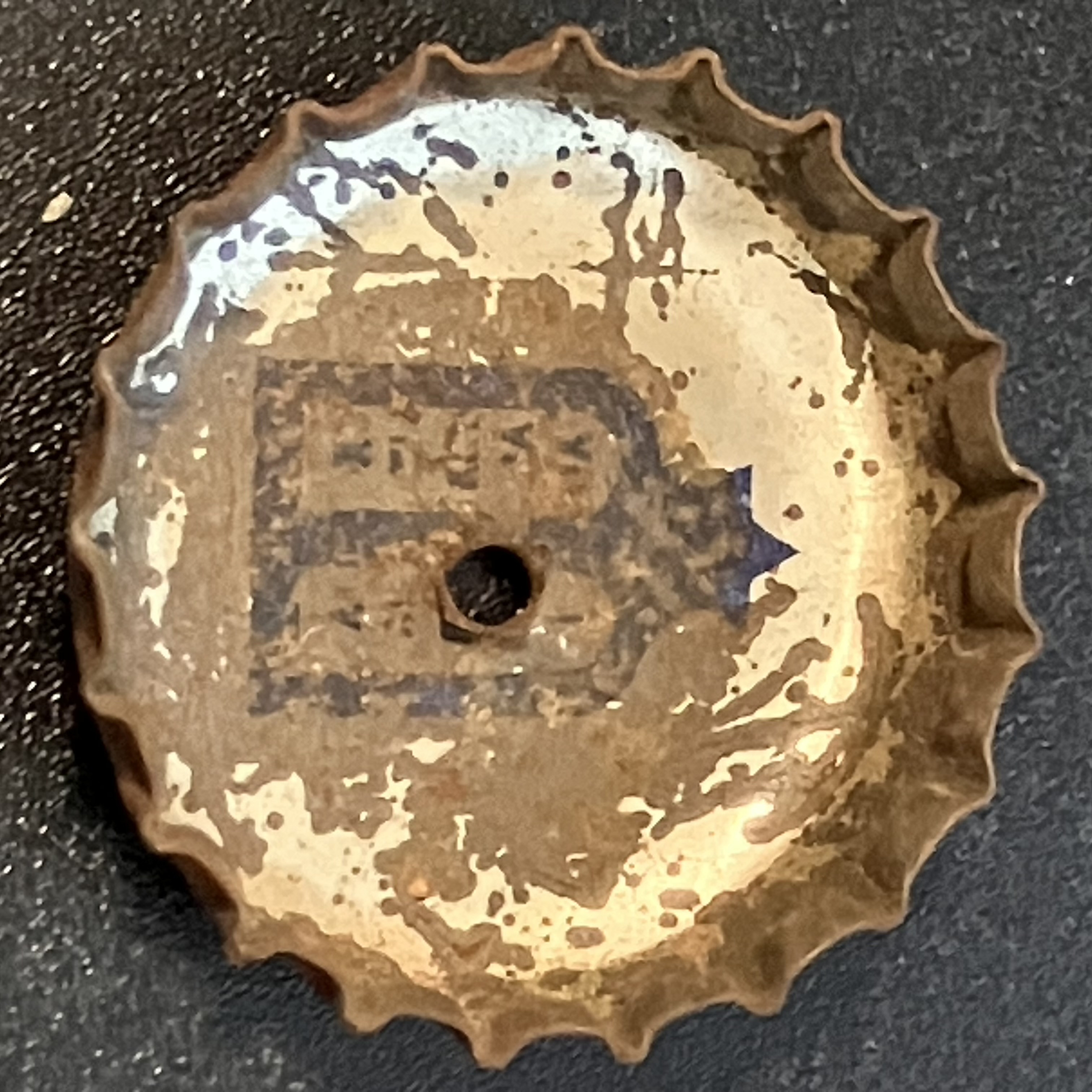
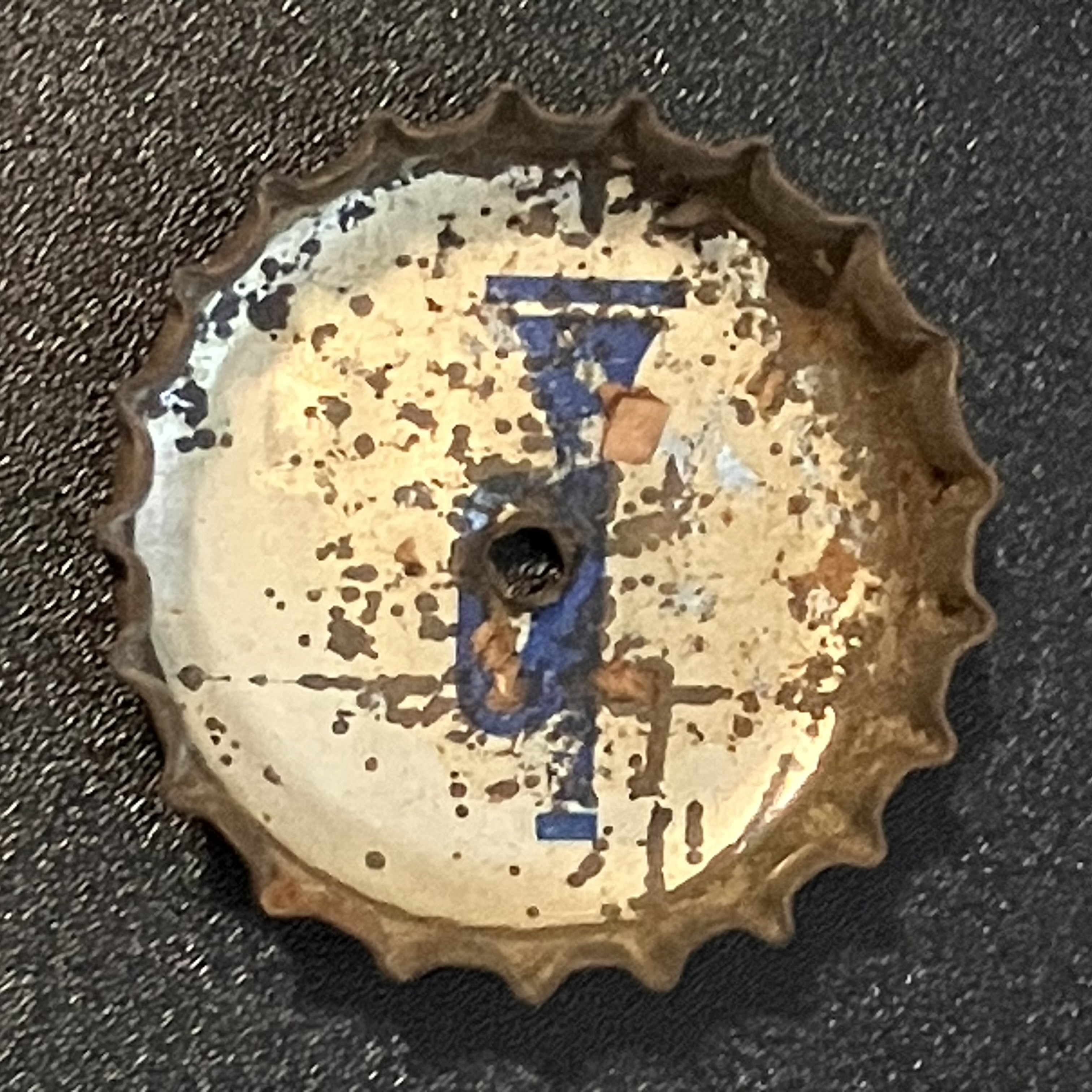
US Army insignia
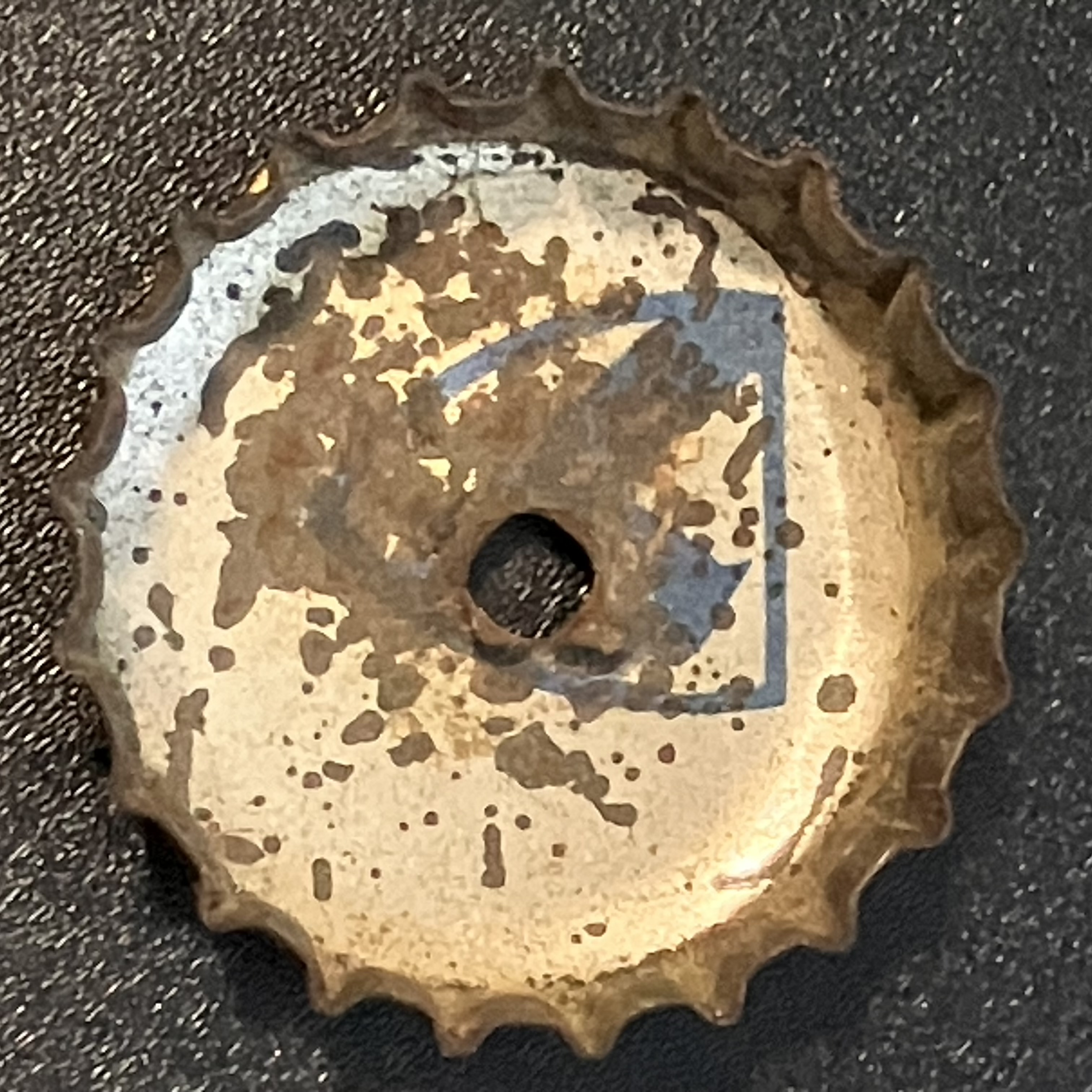
Confirmed error: liner art is 180º from official version.
Learn all about US Cavalry on Wikipedia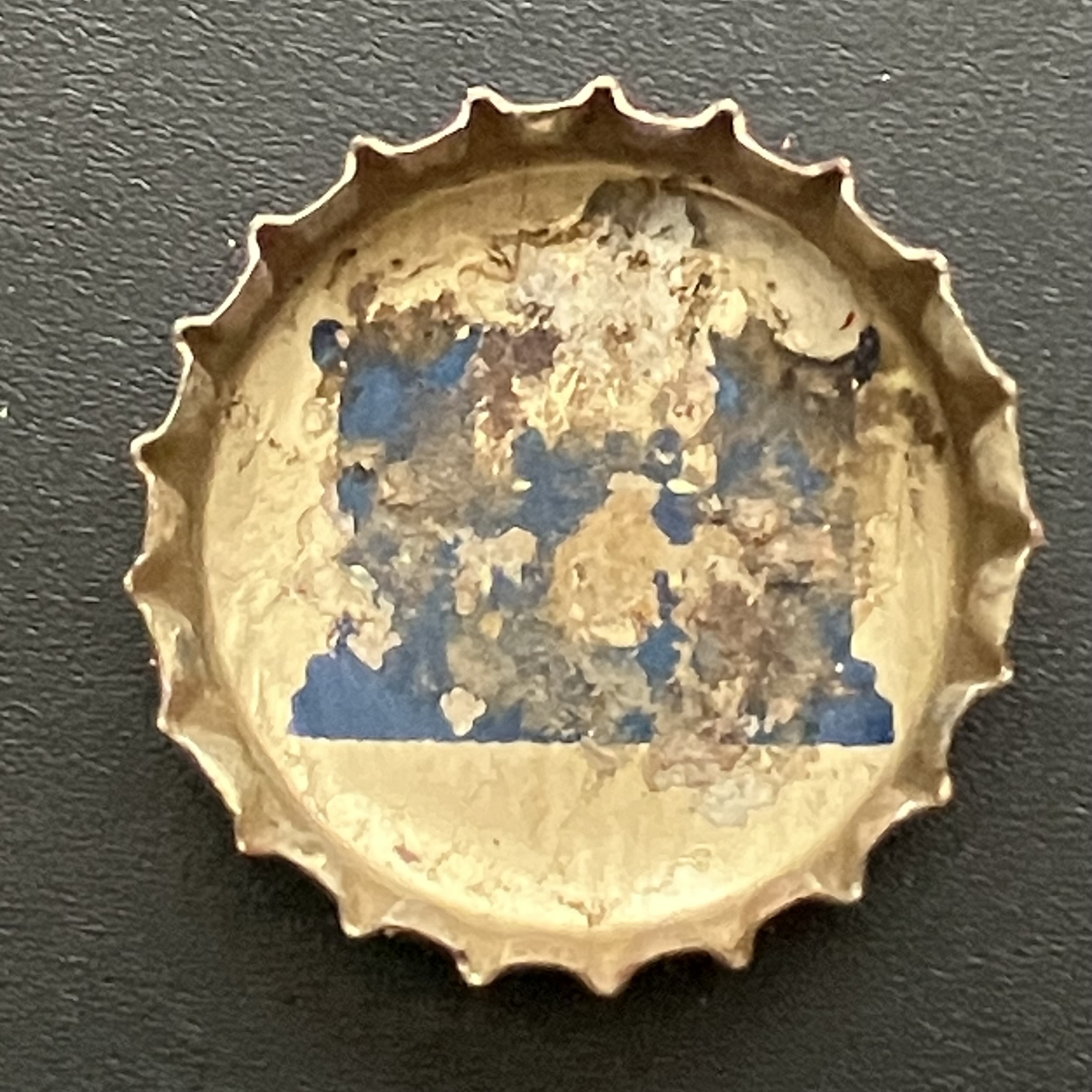

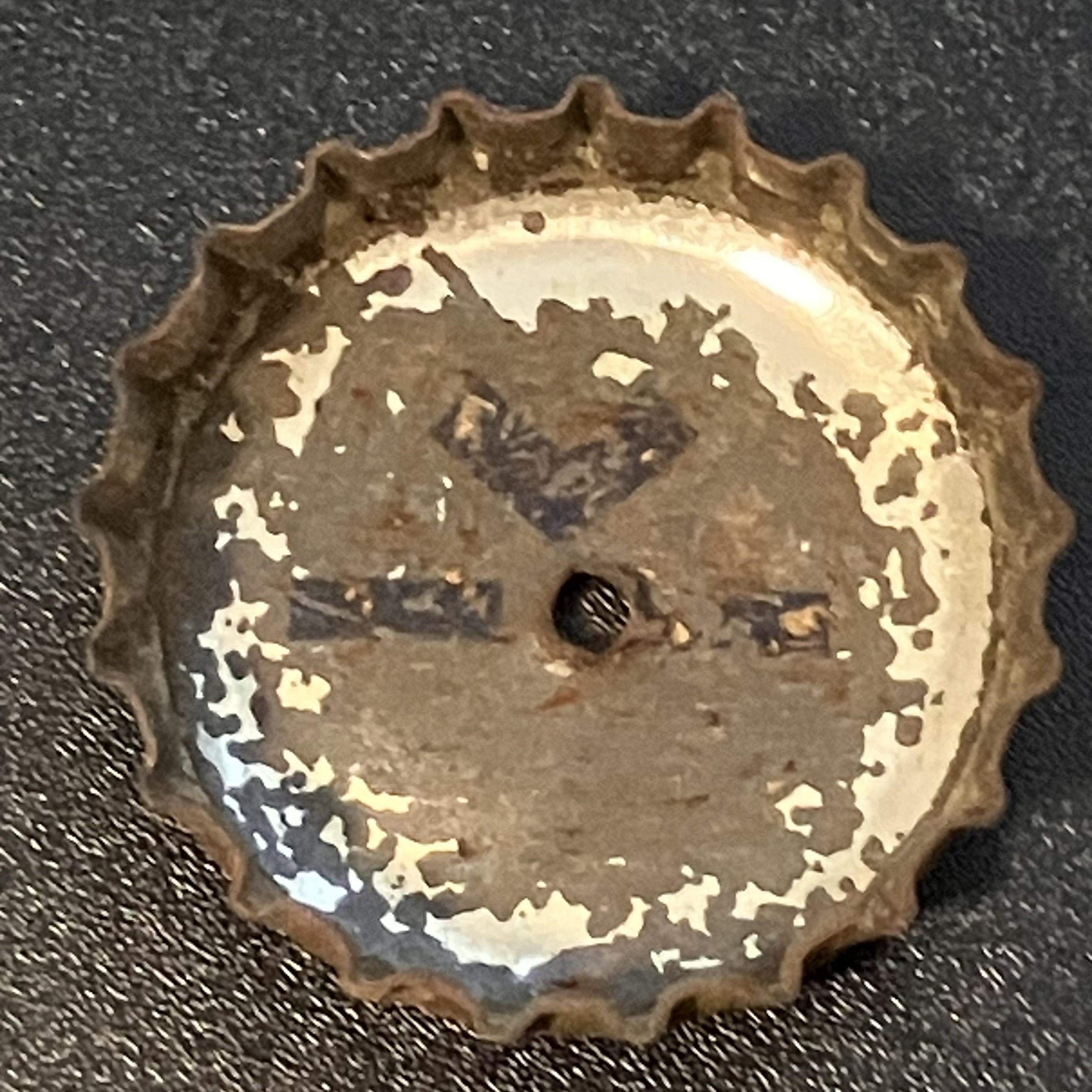
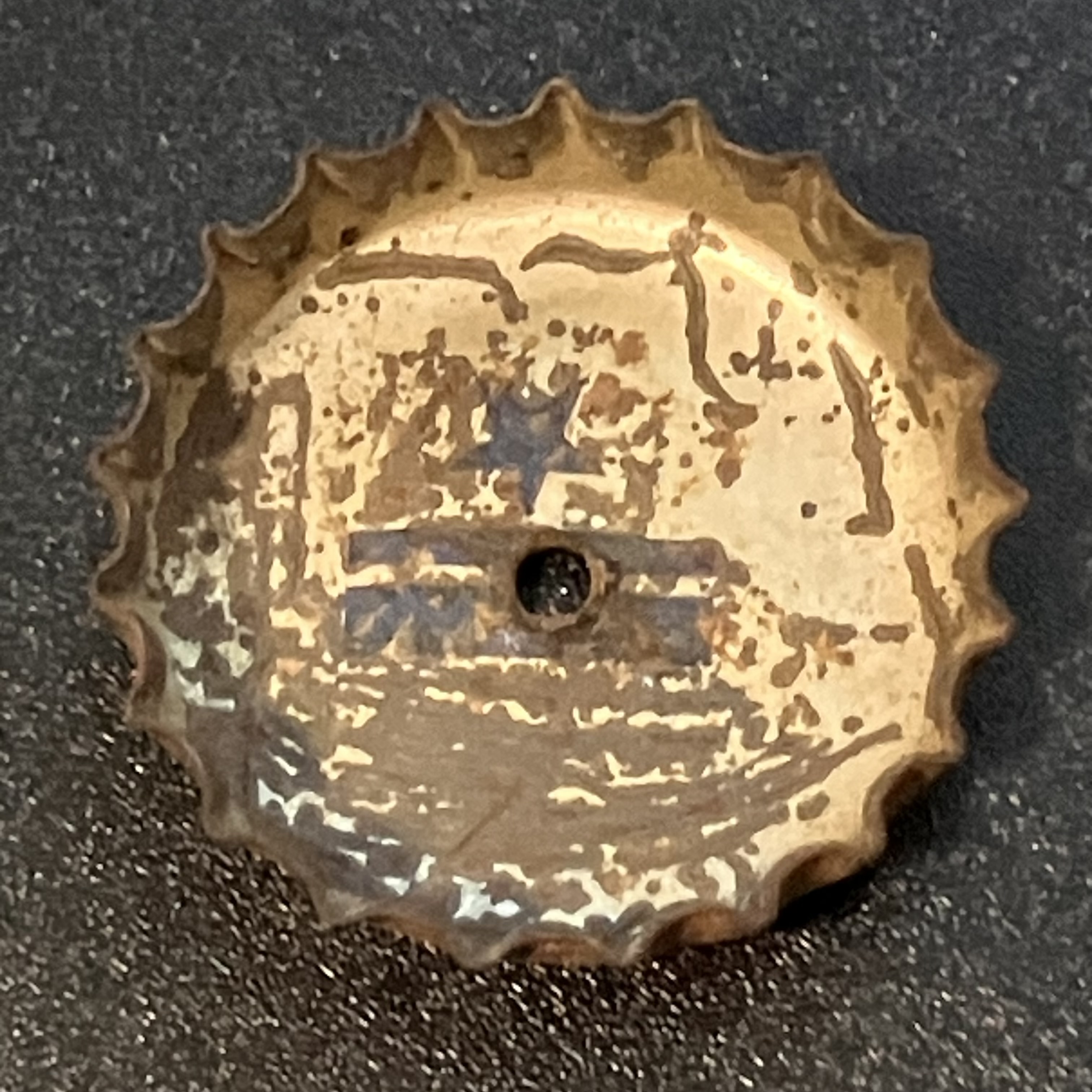
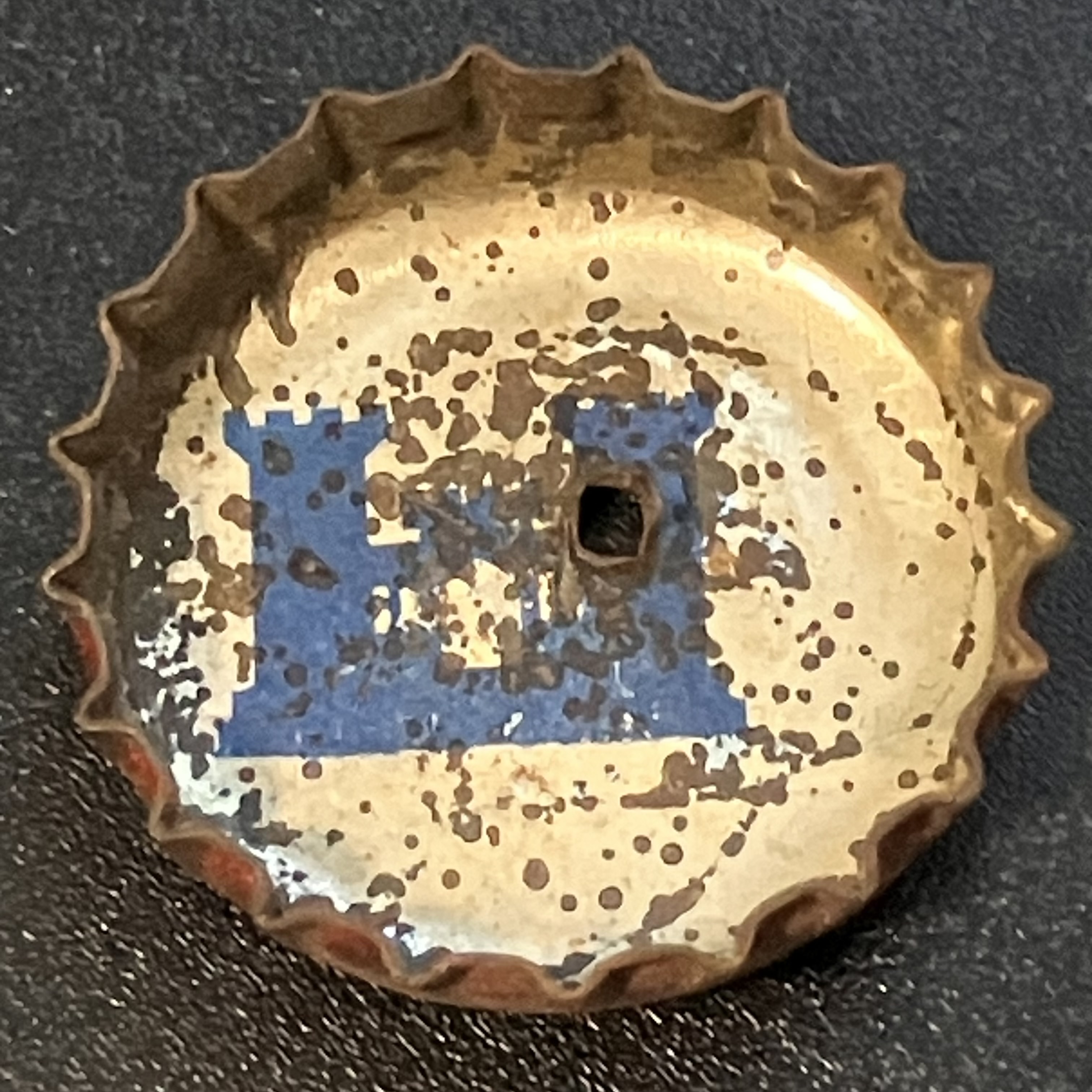
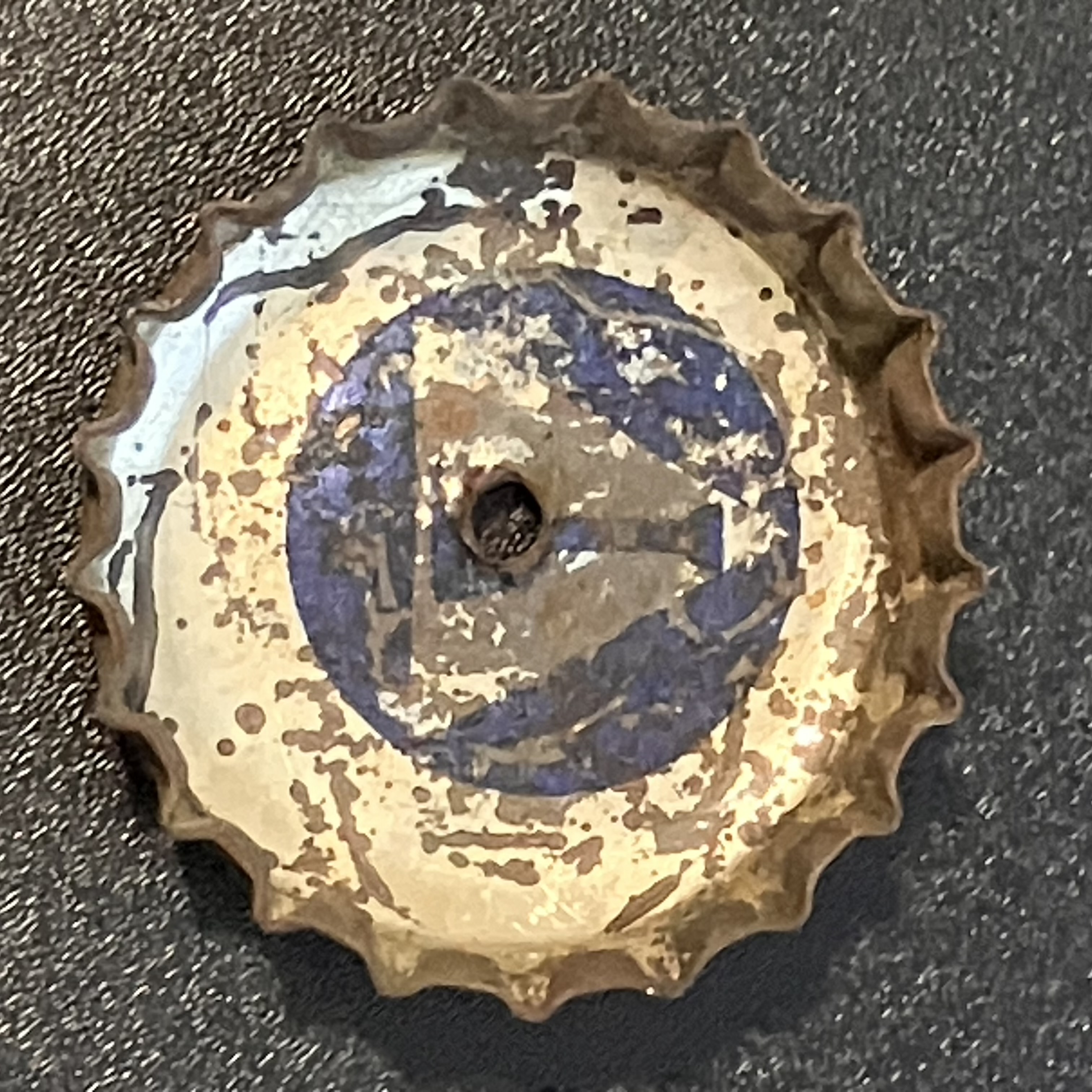
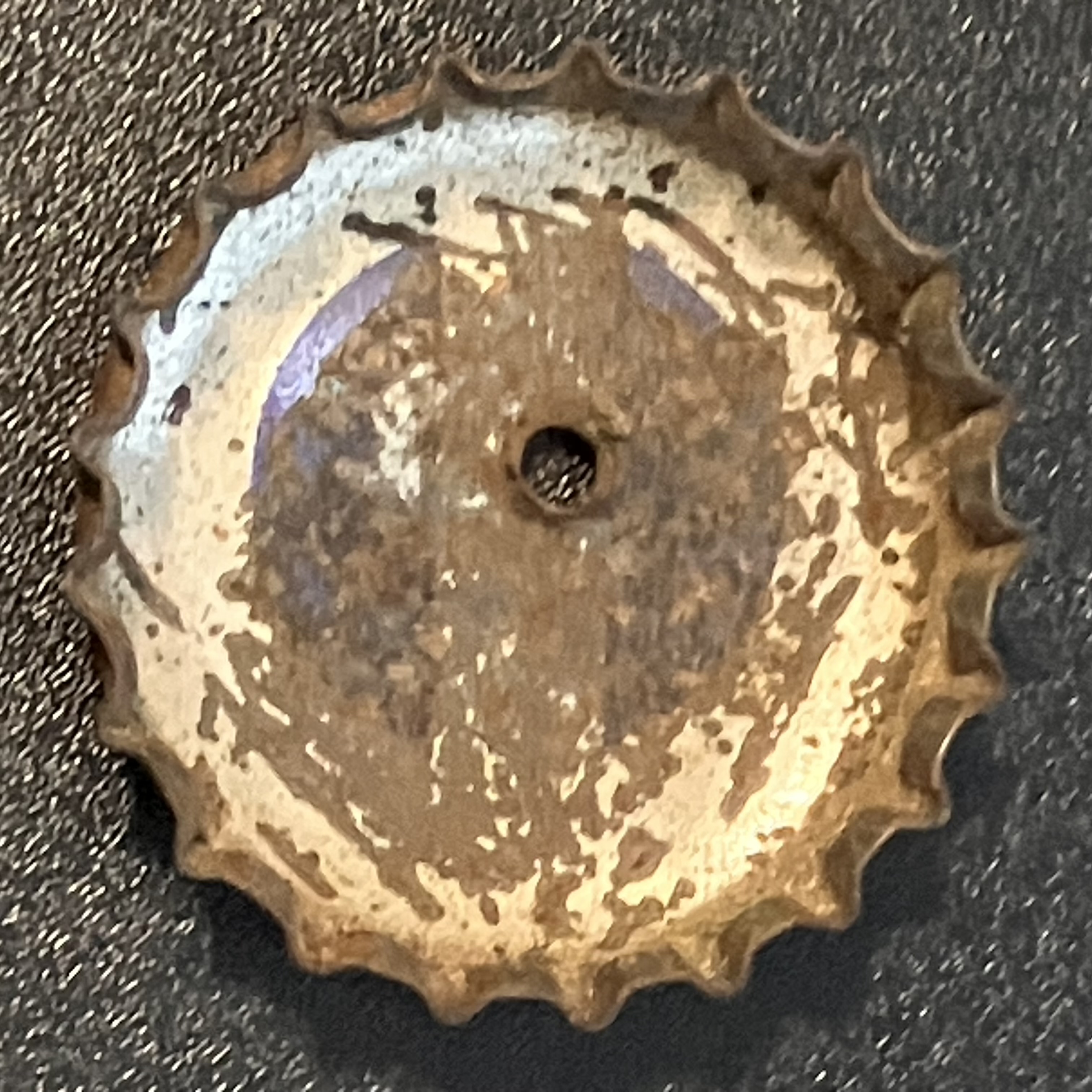
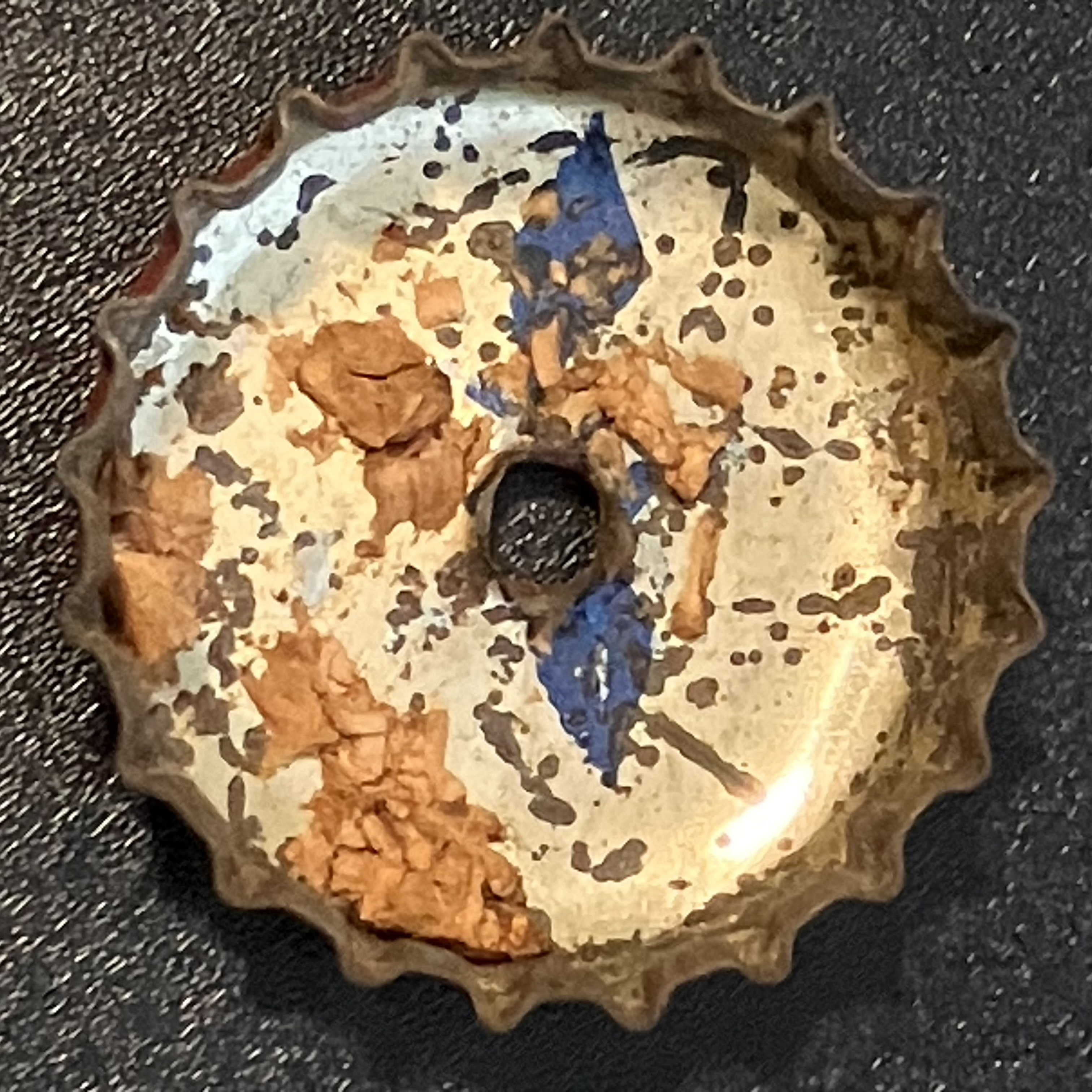
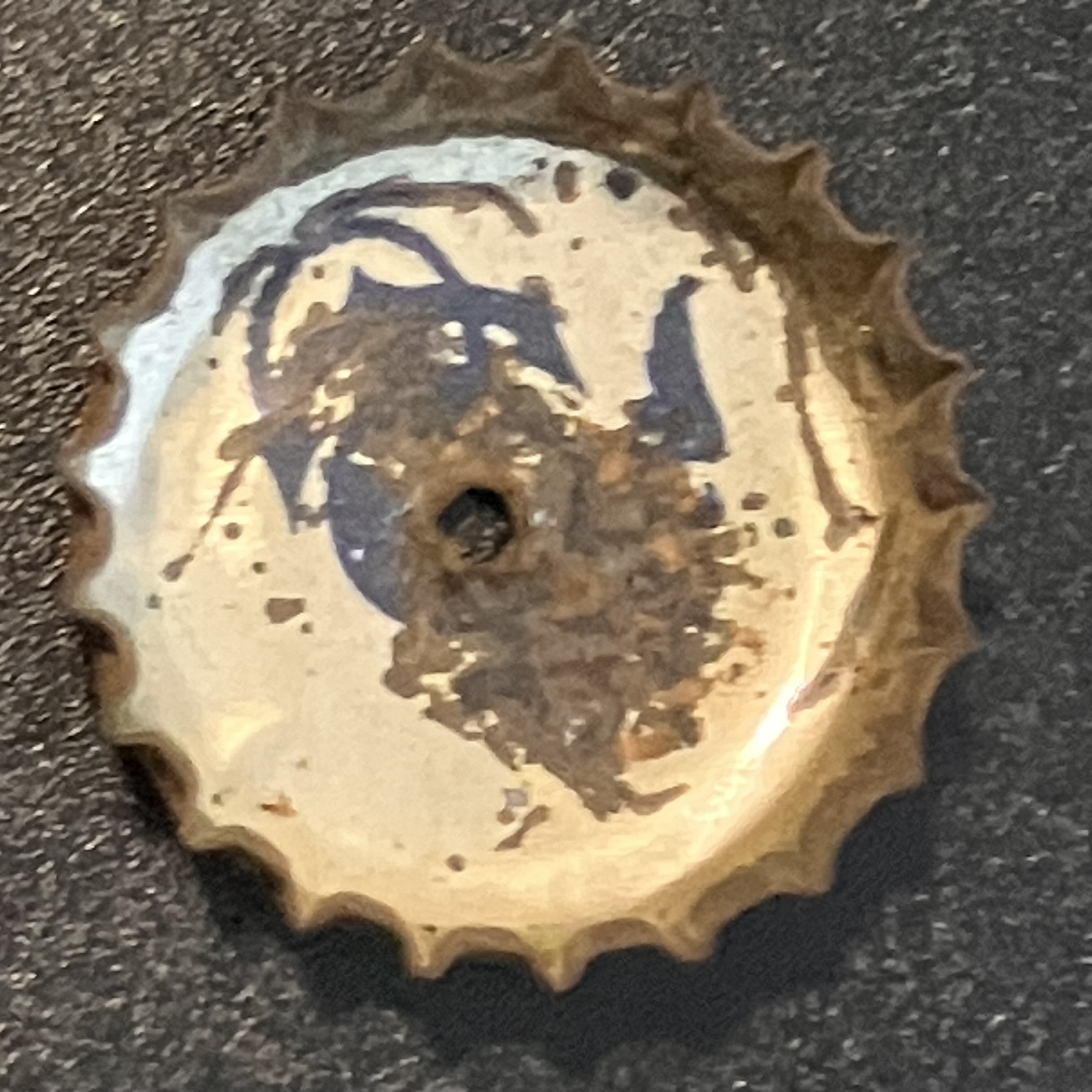
Liner art is mostly illegible, but edge details confirmed to match print materials.
Learn all about United States Army Corps of Engineers on Wikipedia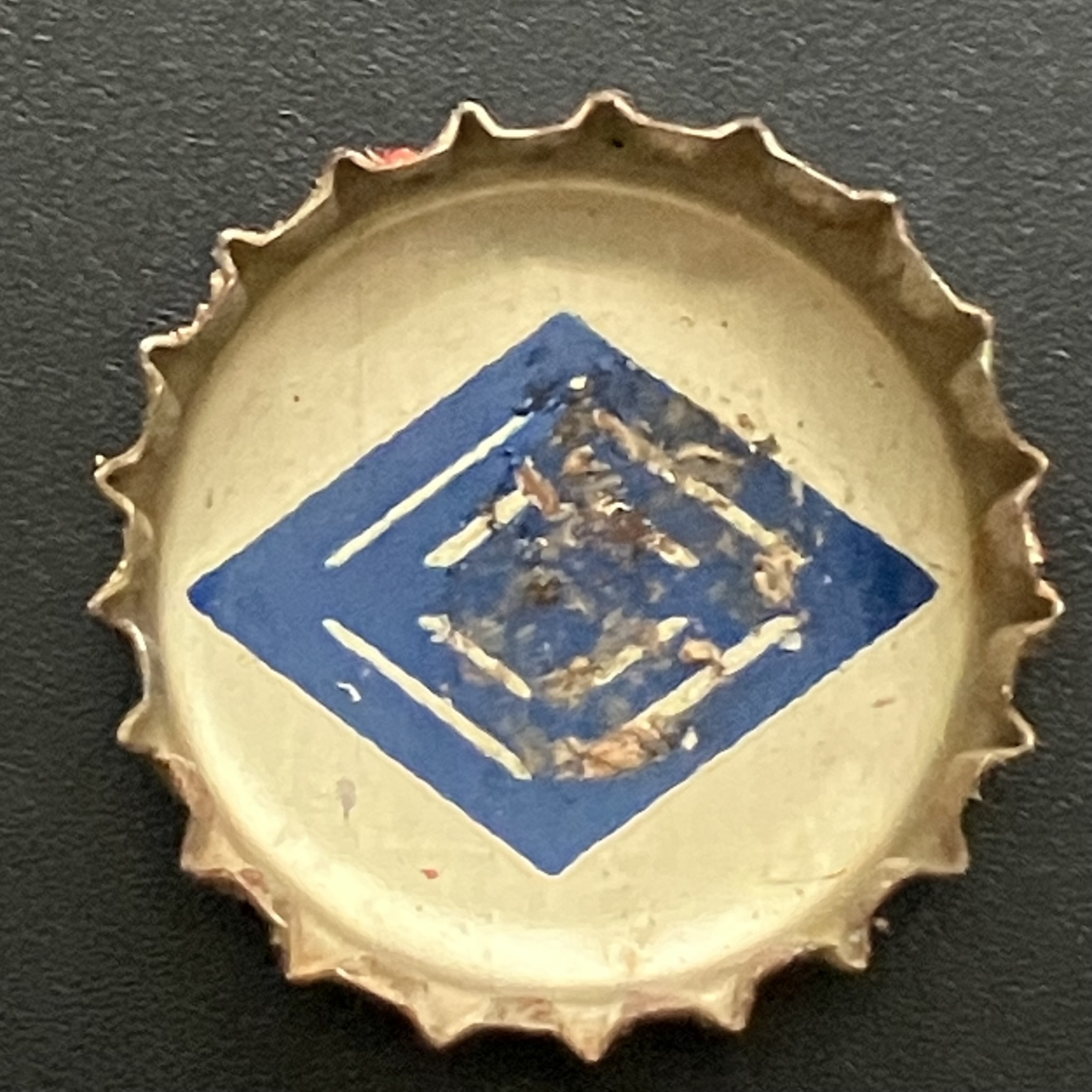
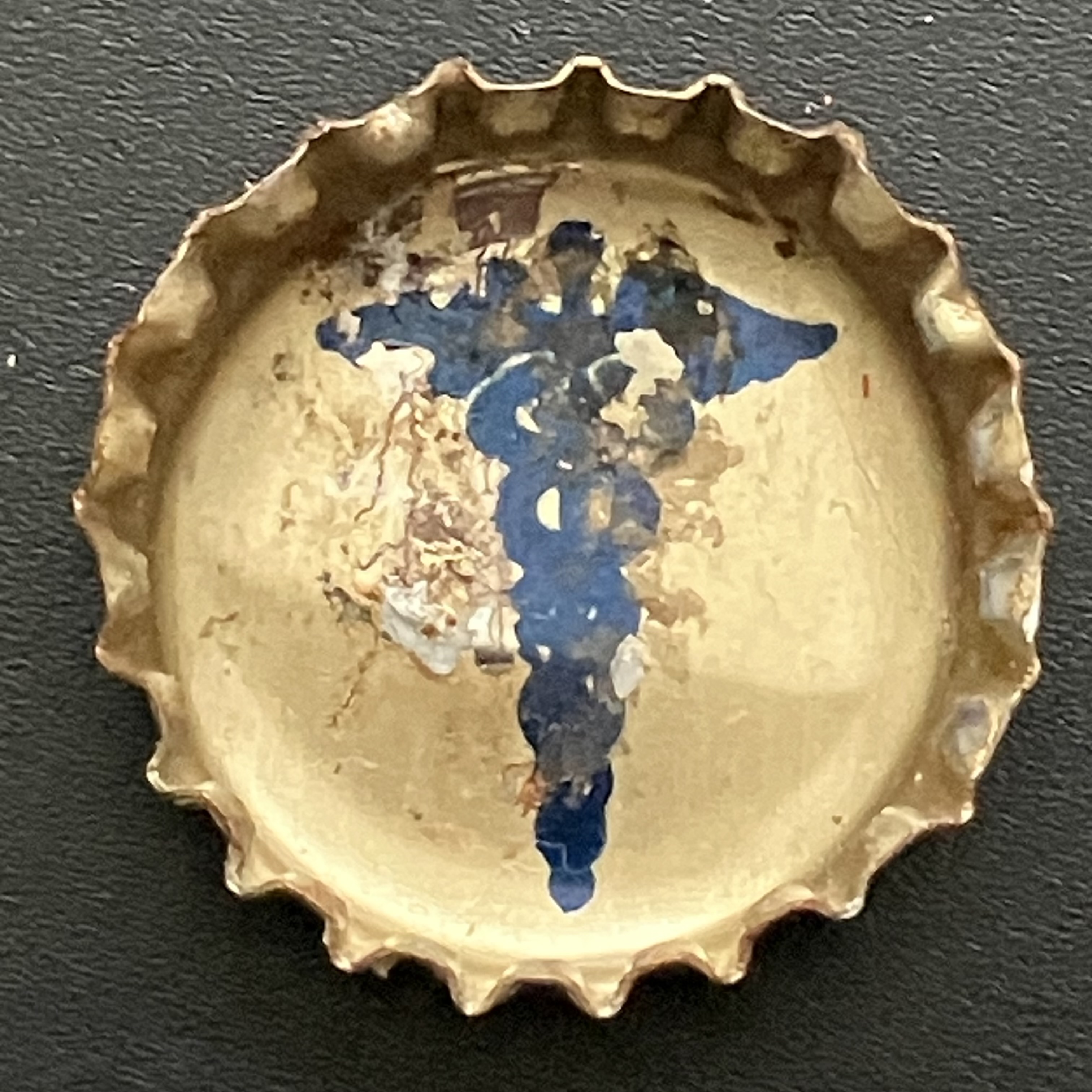
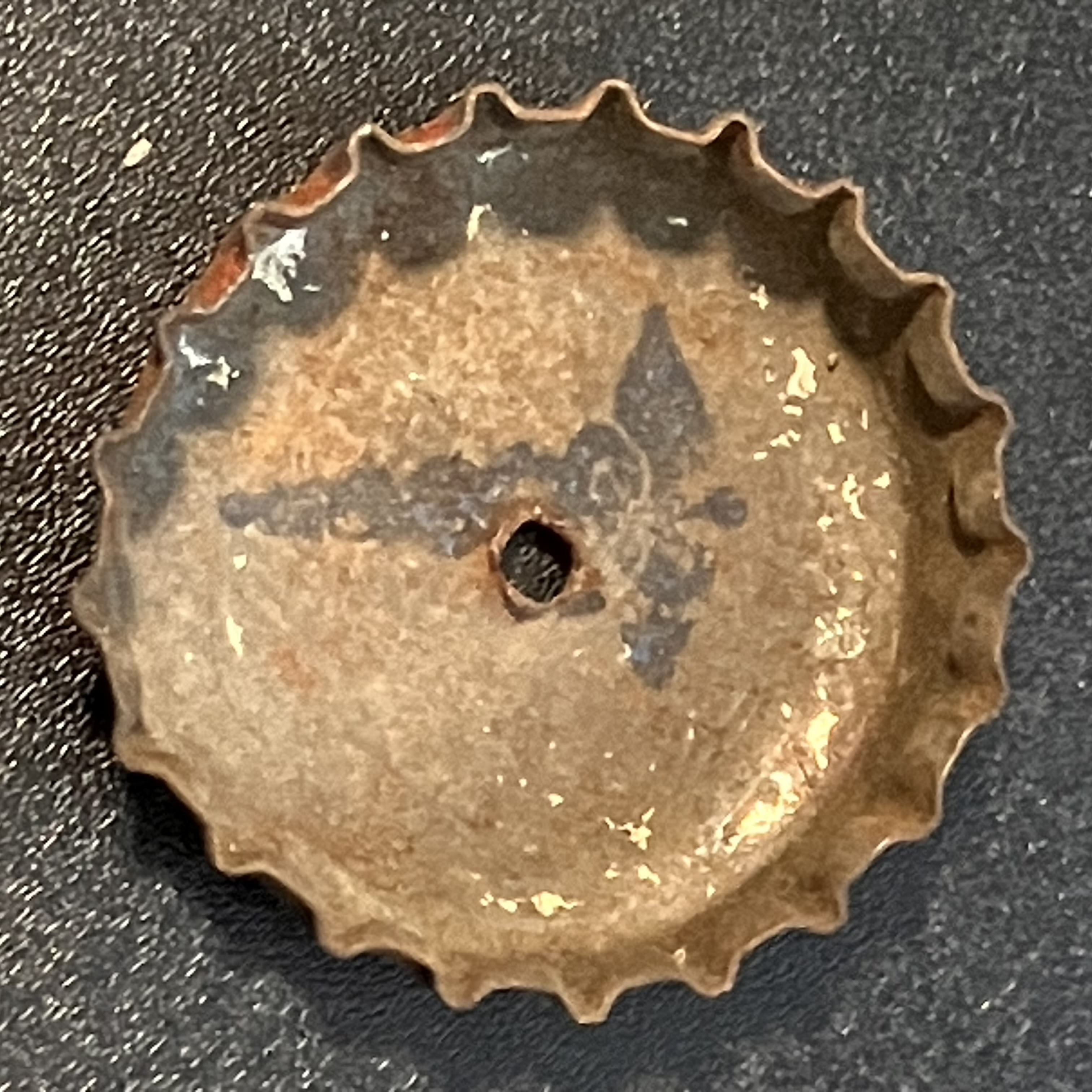
US Army insignia
This corps popularized the American misuse of the caduceus in place of the Rod of Asclepius
Learn all about United States Army Medical Corps on Wikipedia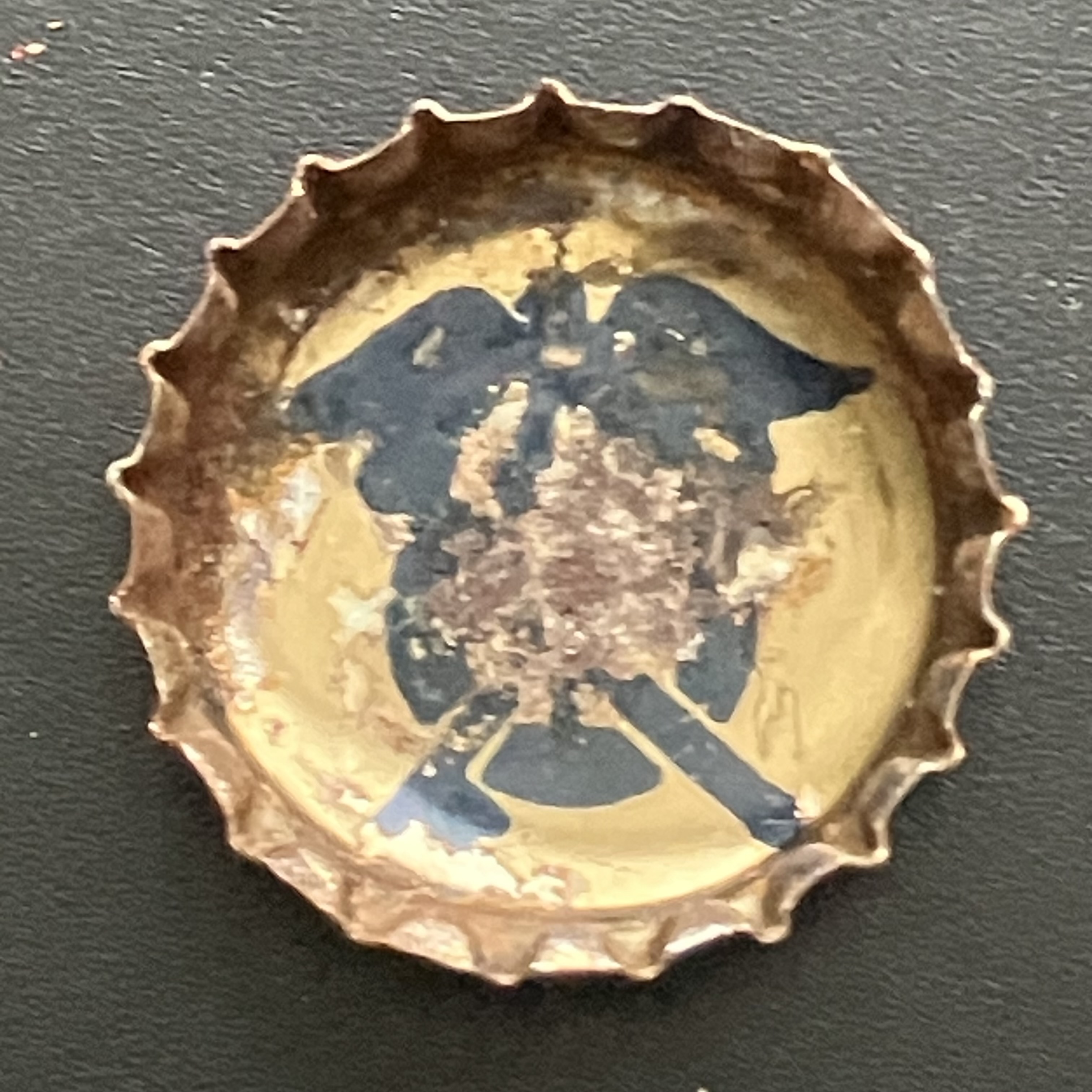
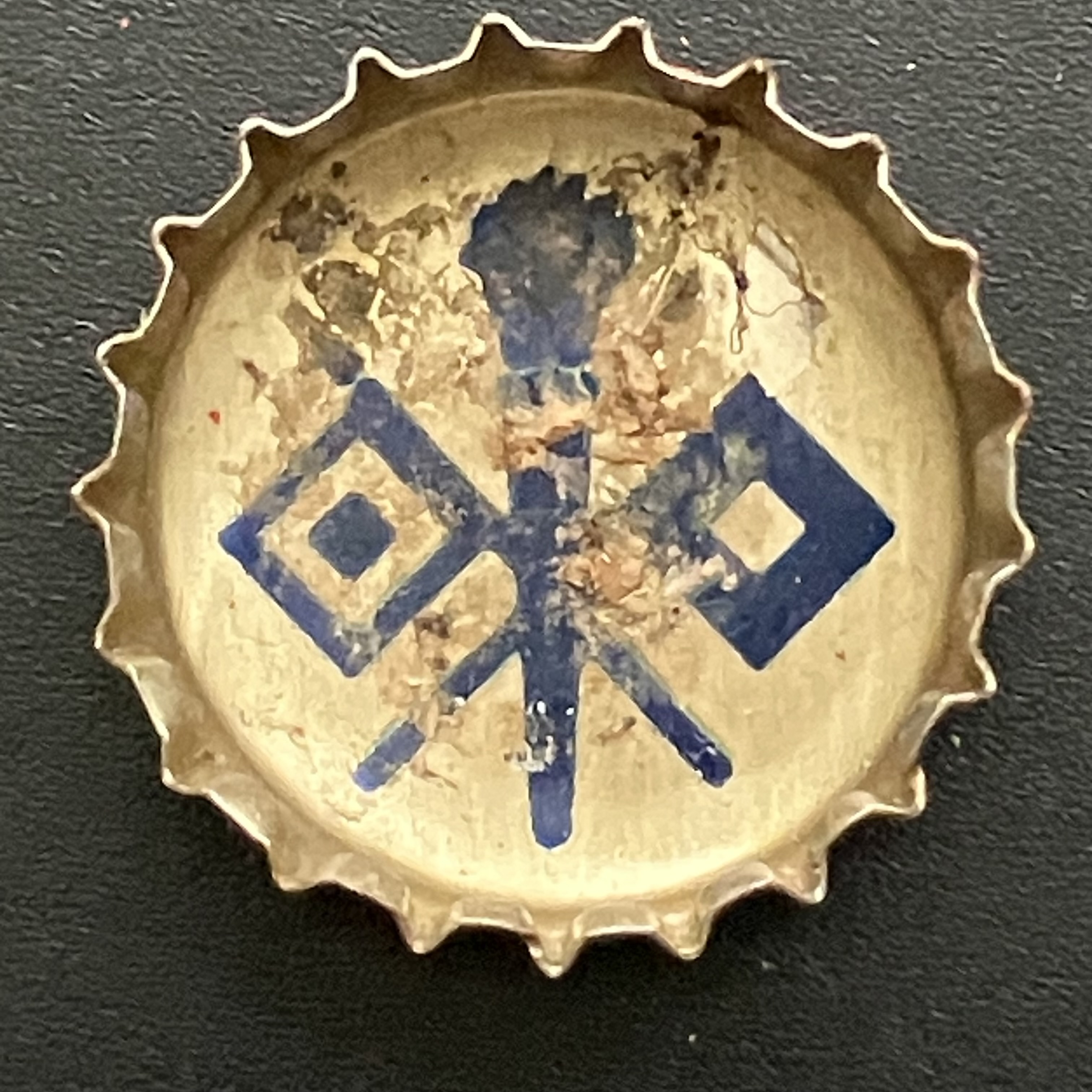
Currently Prospecting
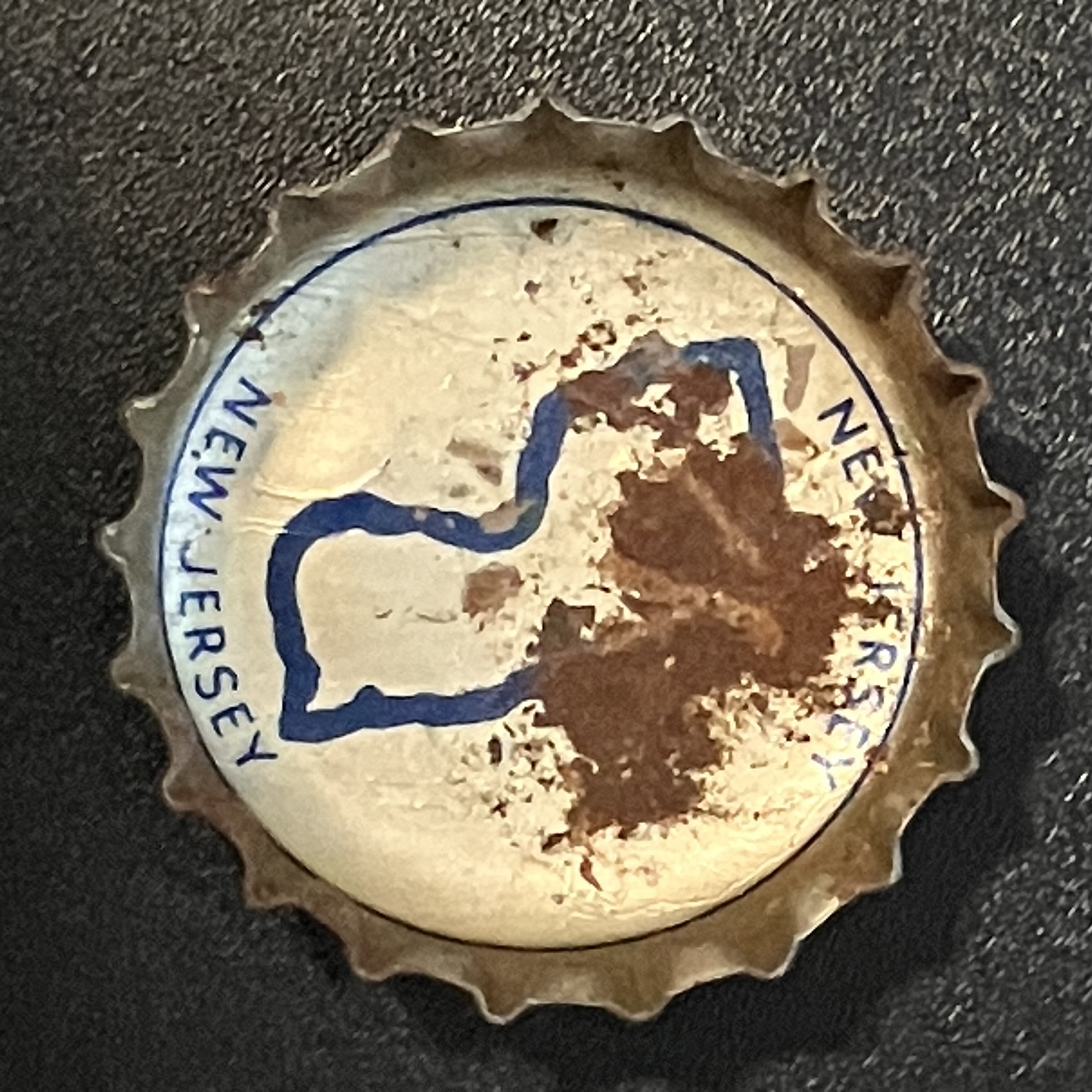
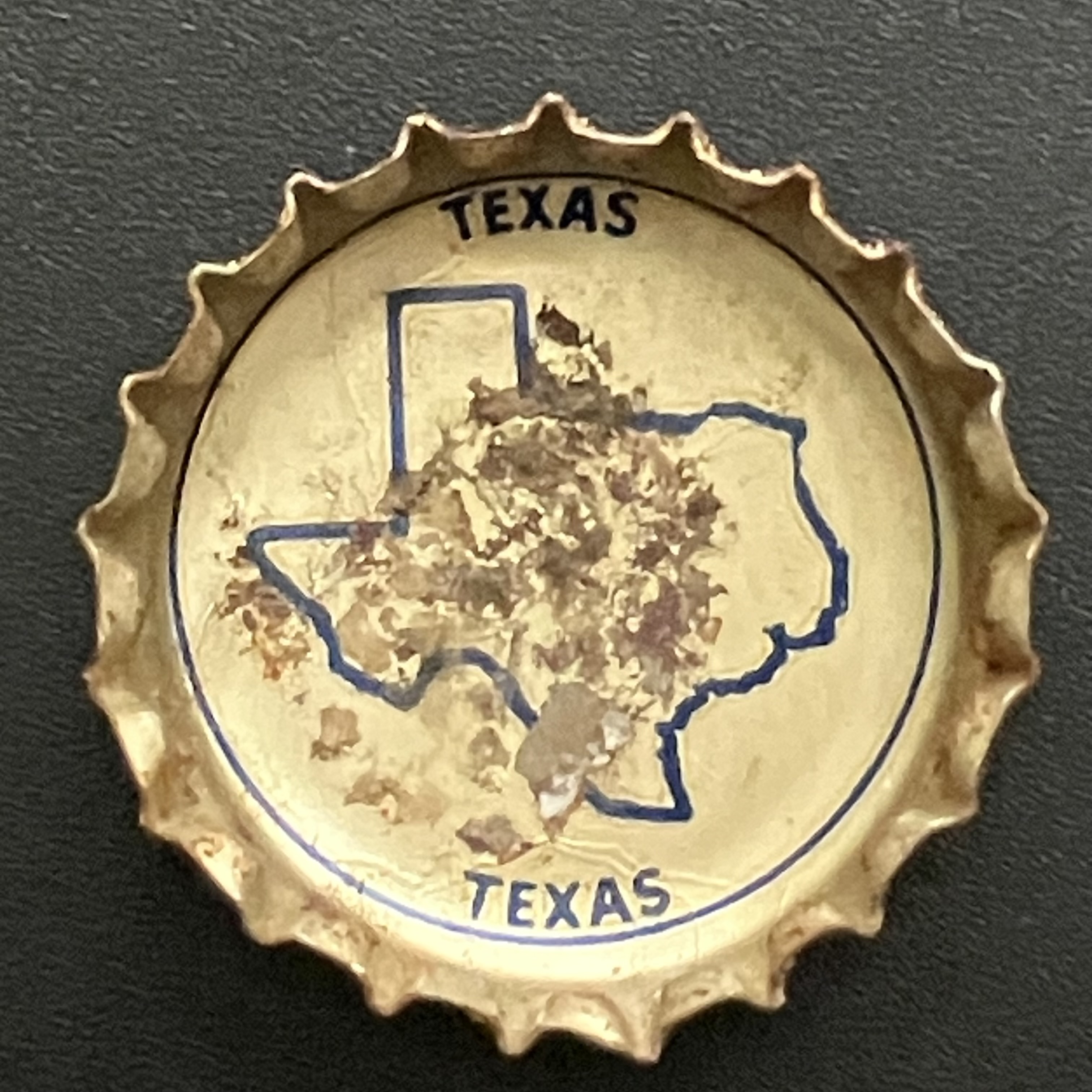
Despite only one reference about a “Treasure Tops” Series No. 2, consisting of outlines of the (then) 48 states, we have found two of them to date that confirm it did indeed publicly launch.
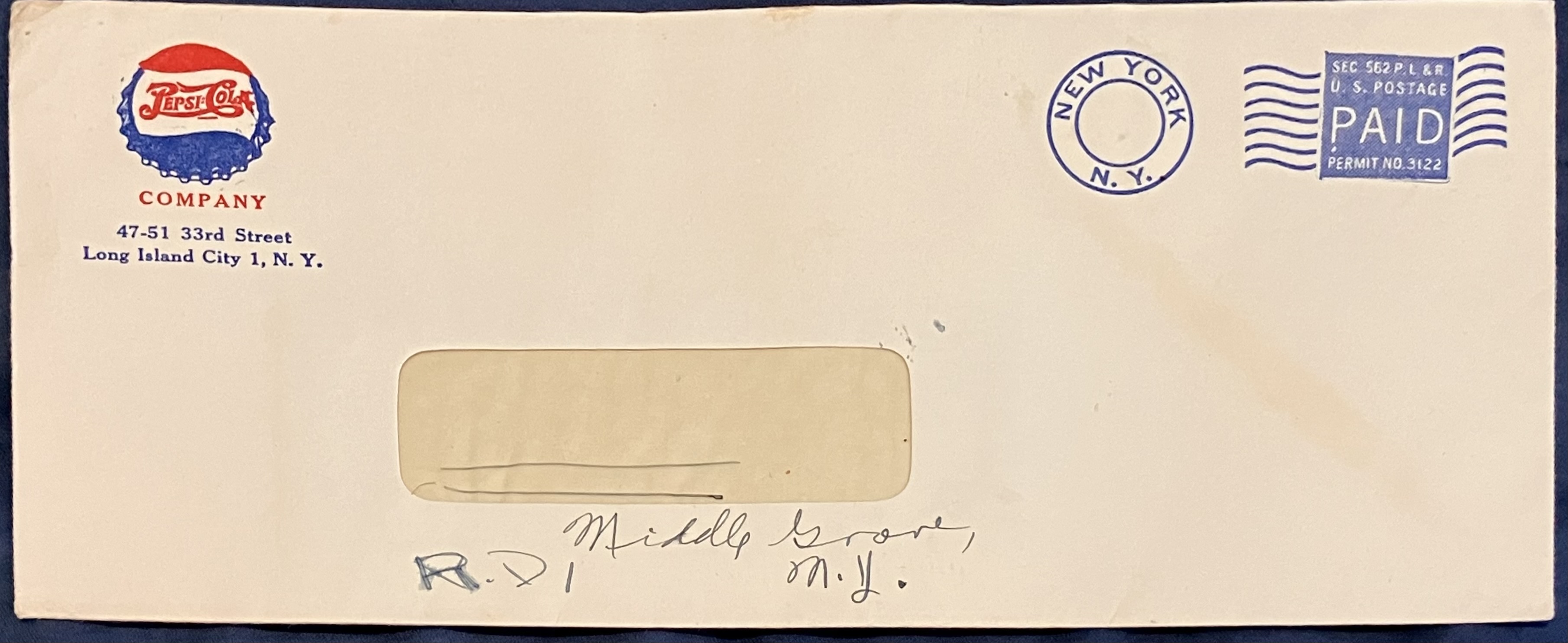
This envelope is an example of how the Treasure Certificates (next section) were distributed.
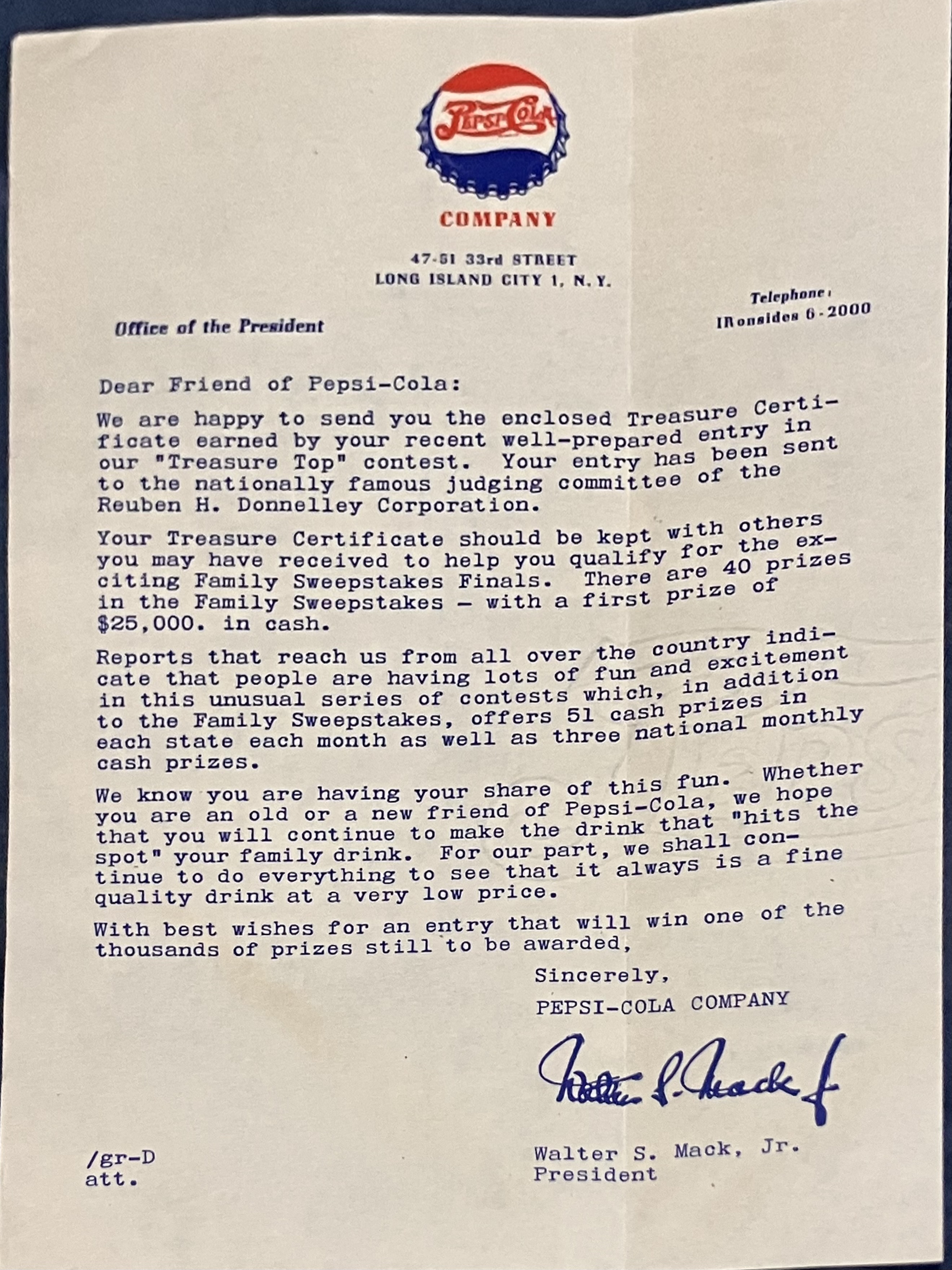
Note the subtle Pepsi-Cola logo watermark on the stationery.
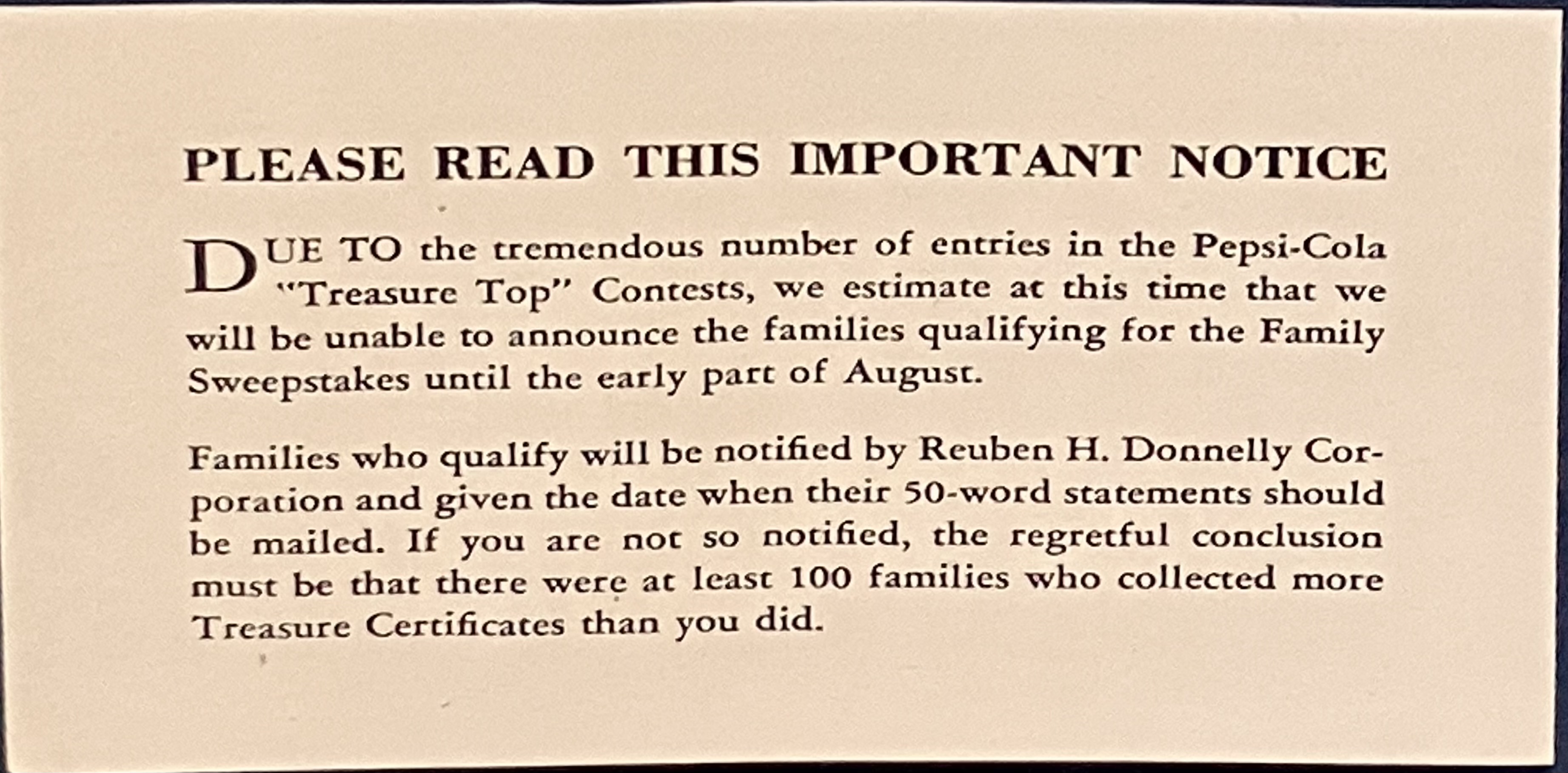
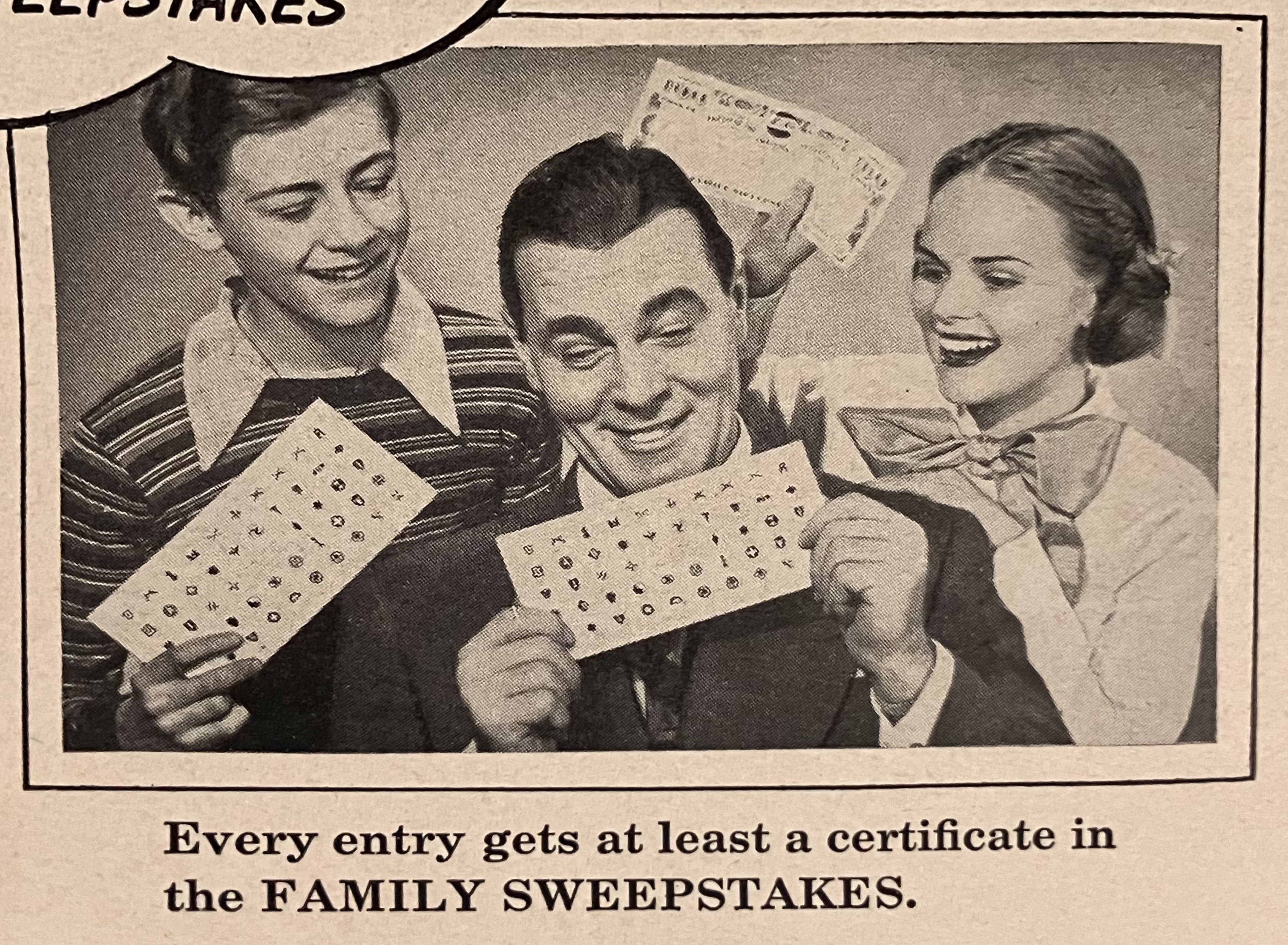
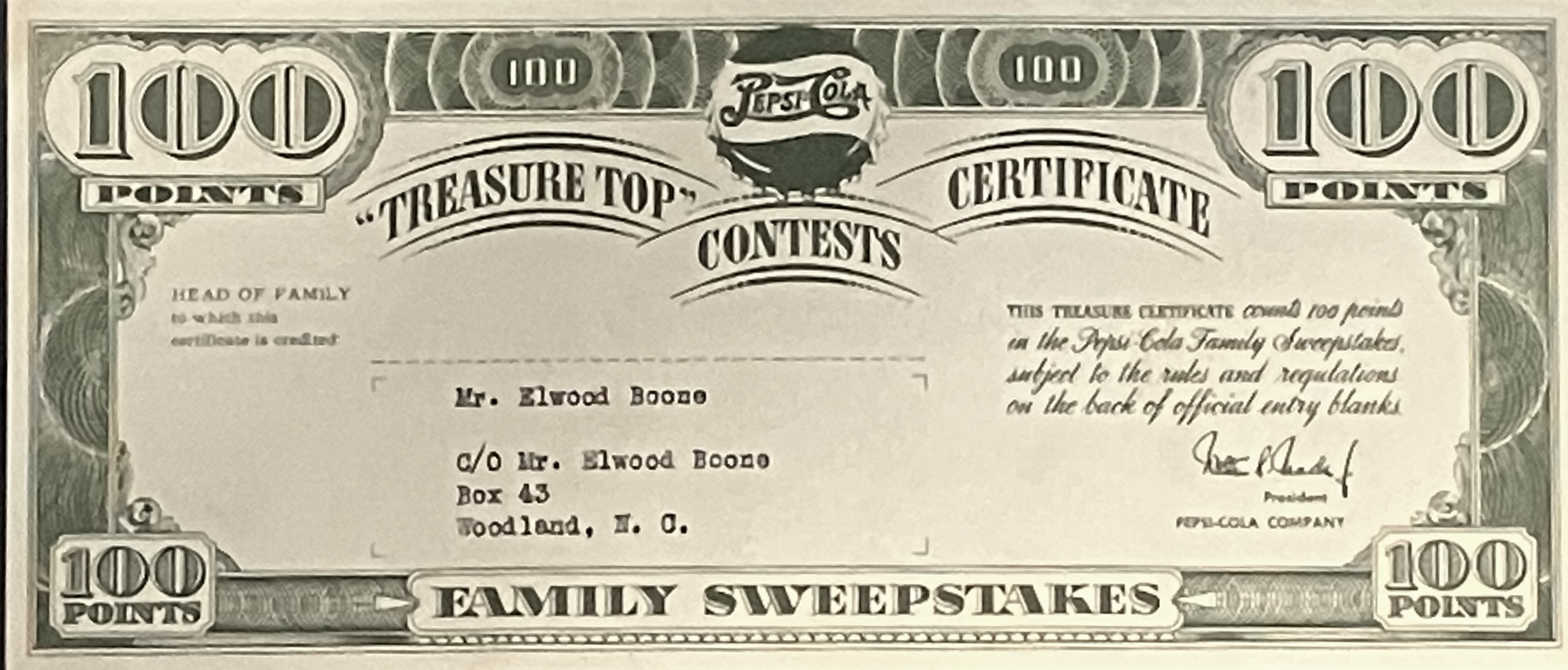
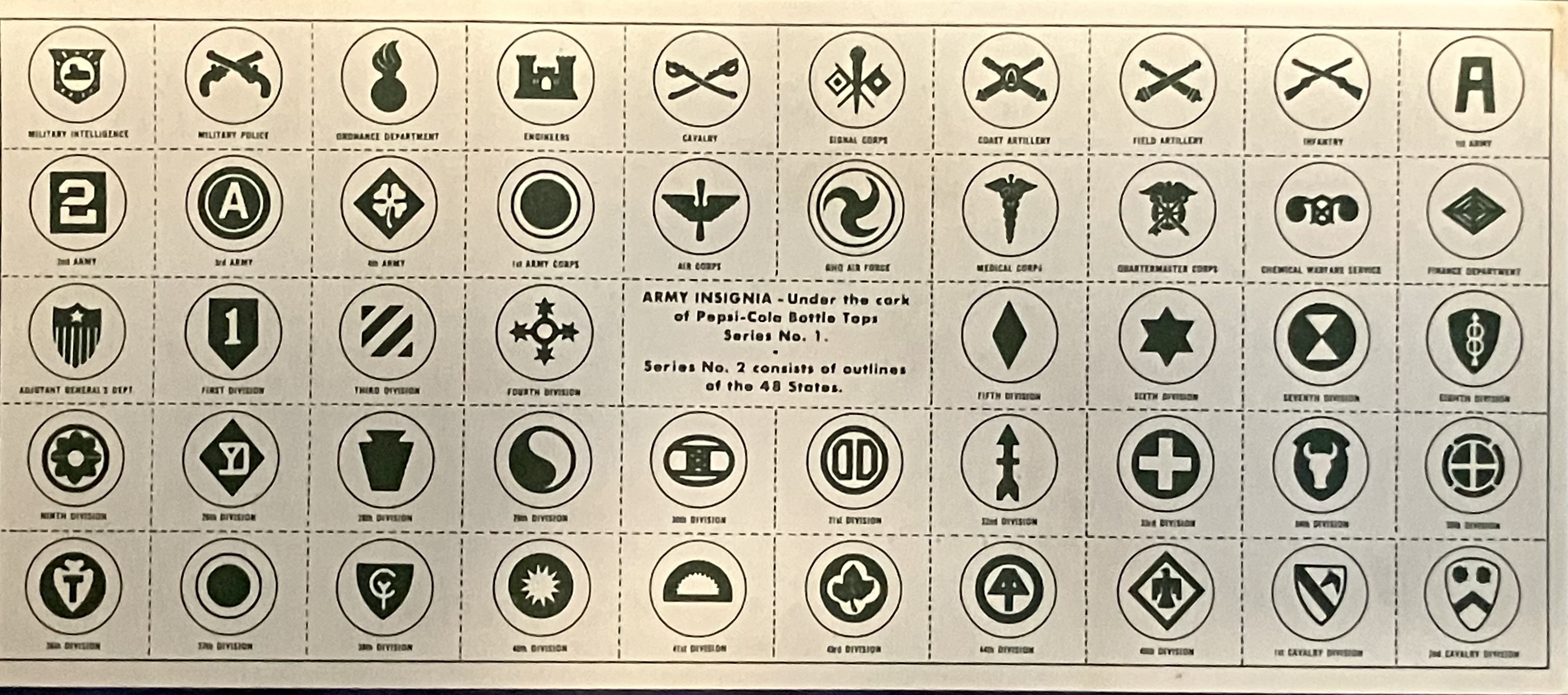
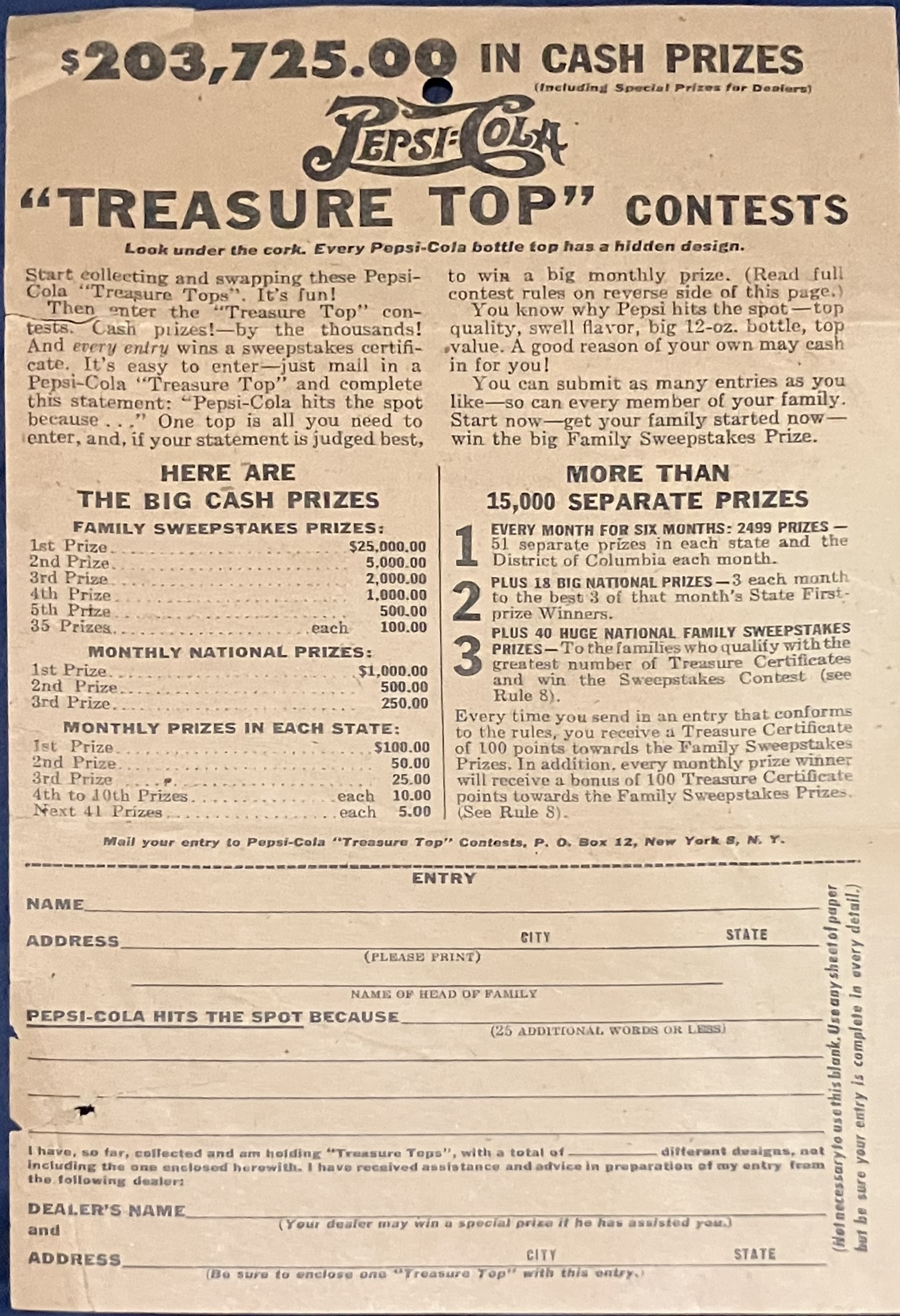
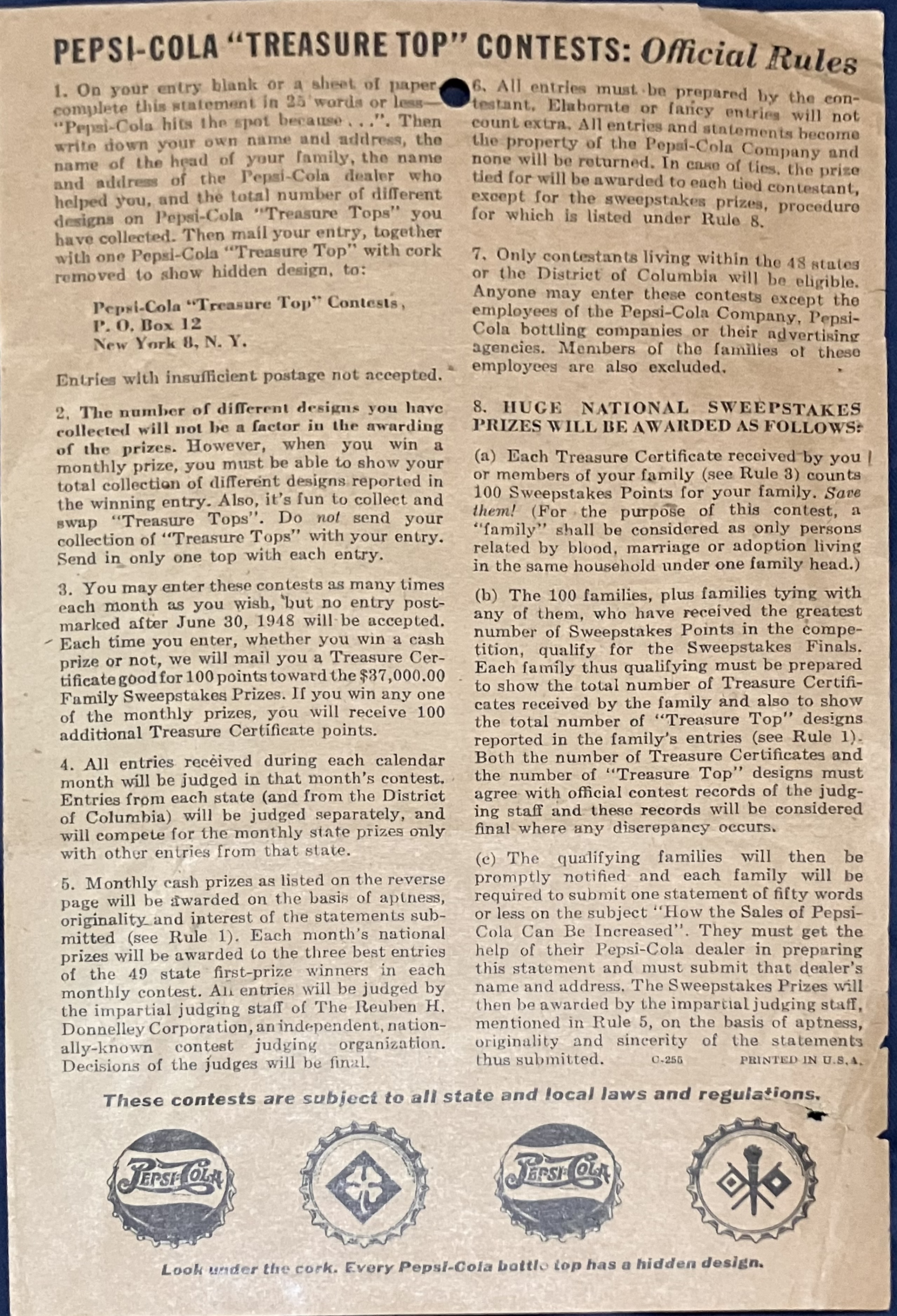
This is the official guide to what the crown-cap liners include (& exclude). Note the one-line reference to Series No.2 containing outlined maps of the (then) 48 states.
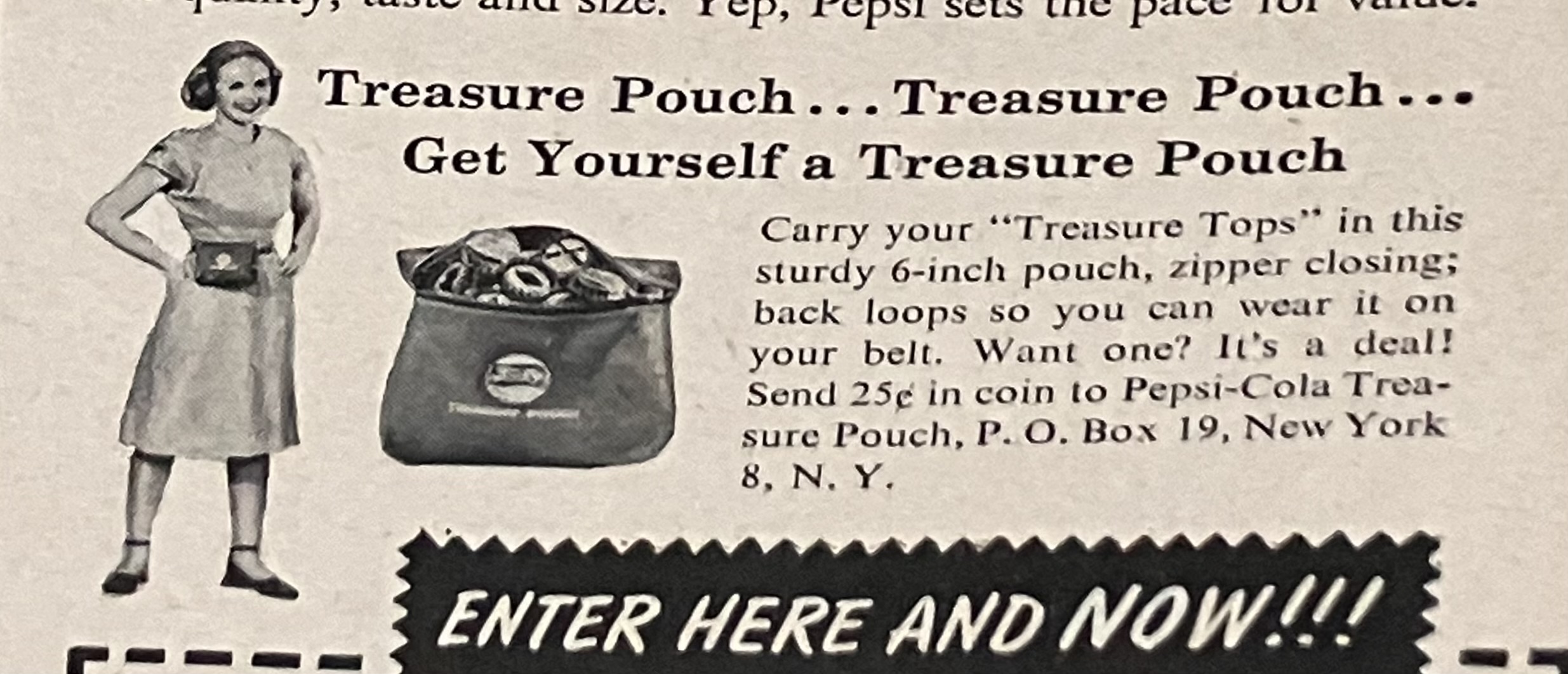
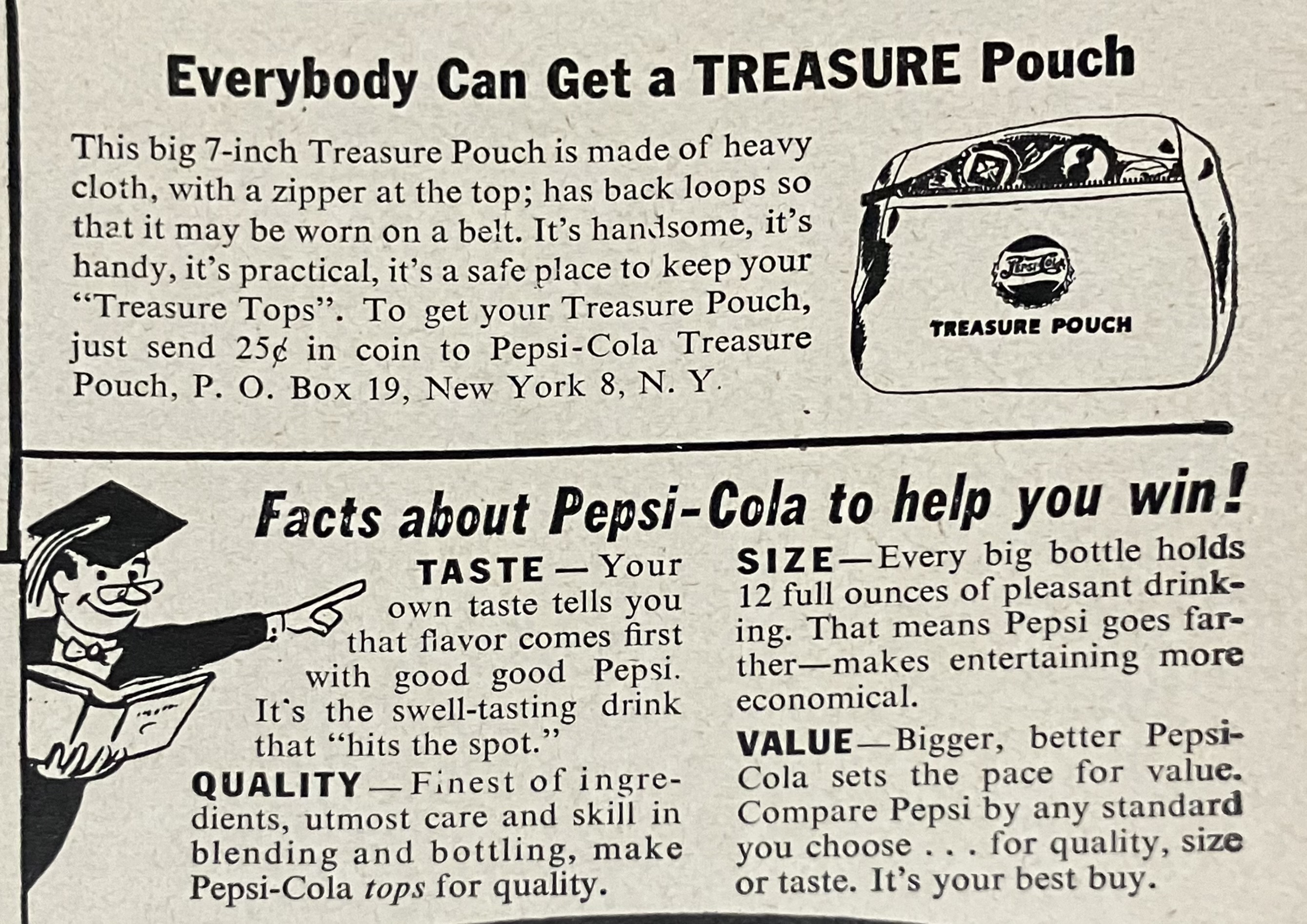
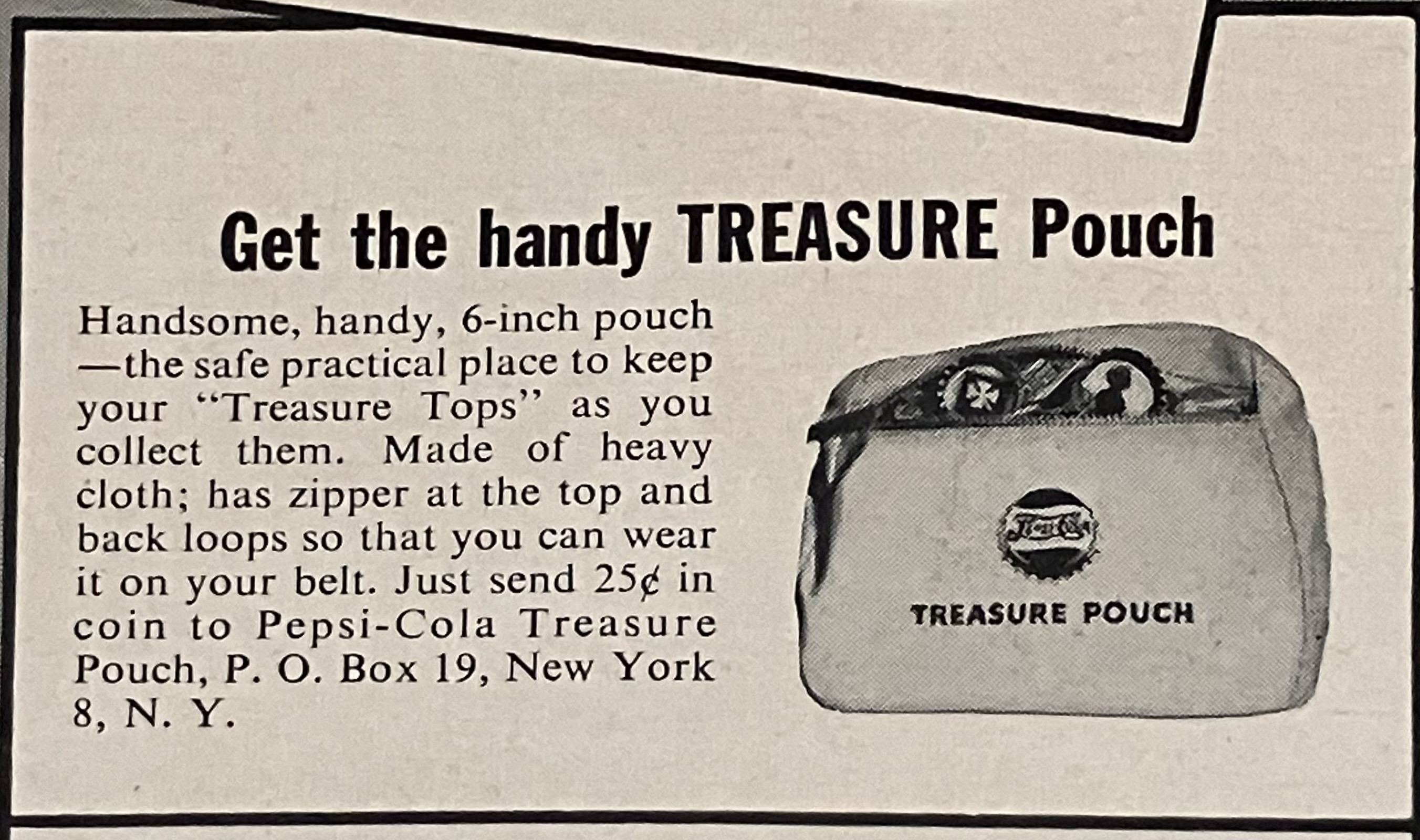
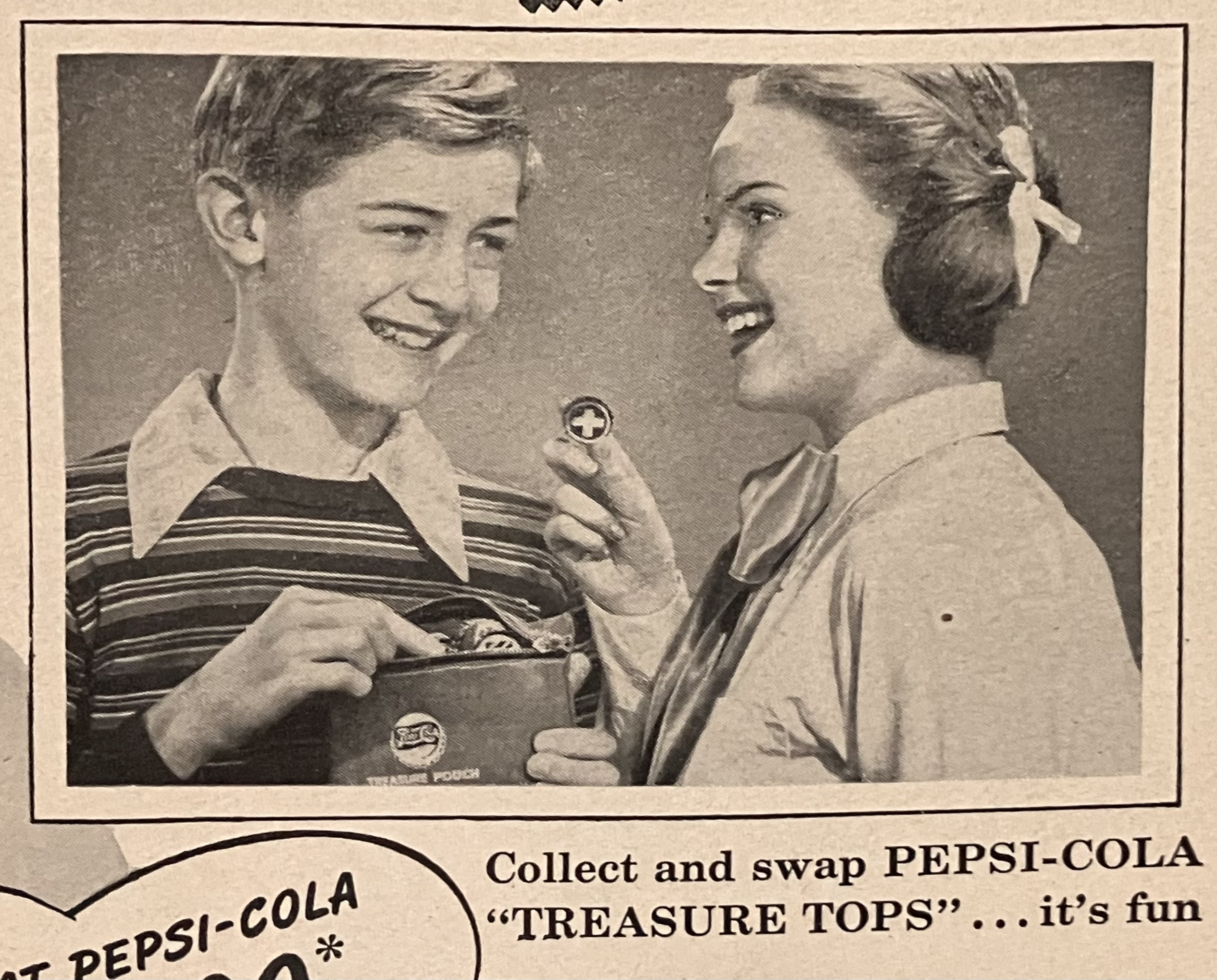
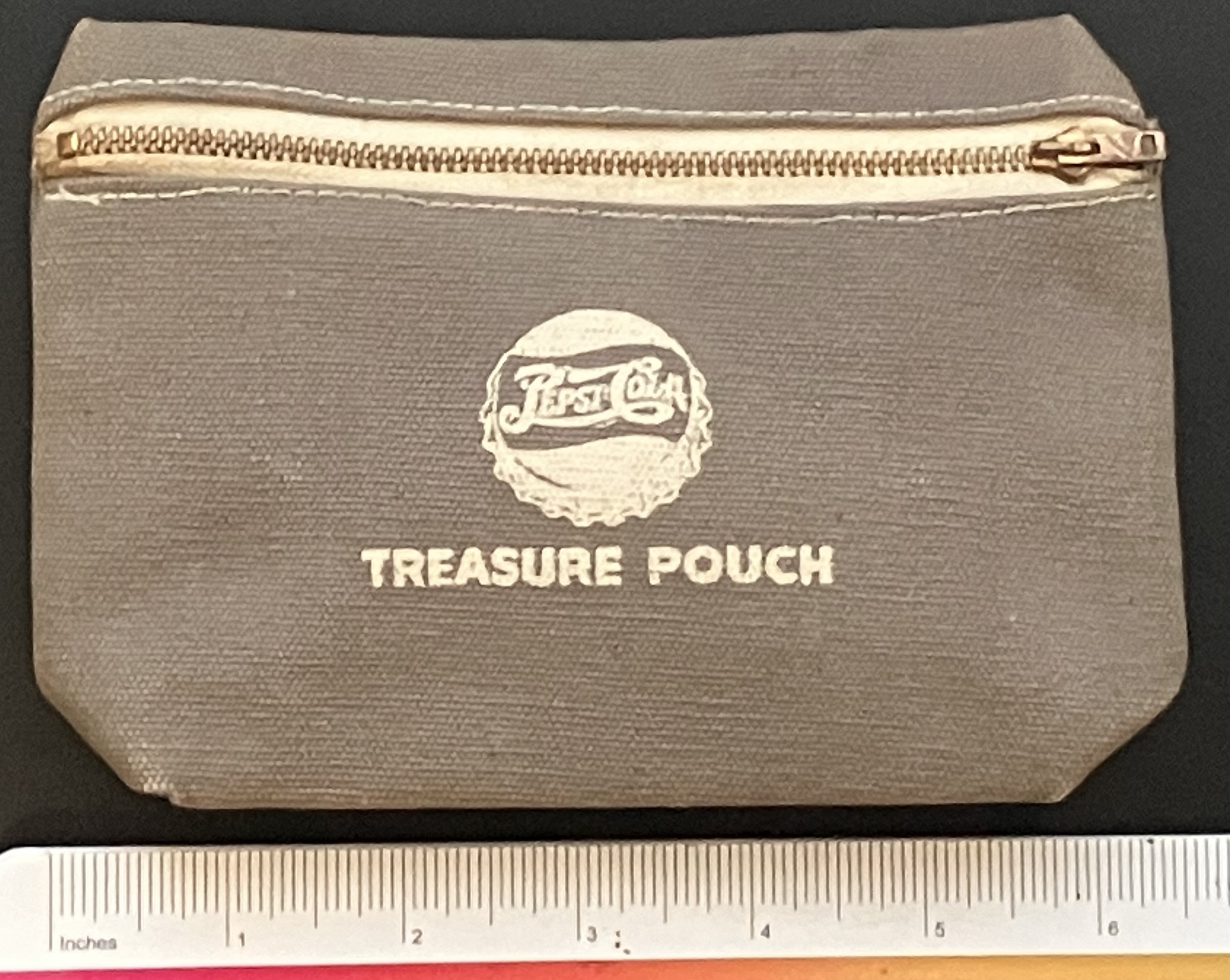
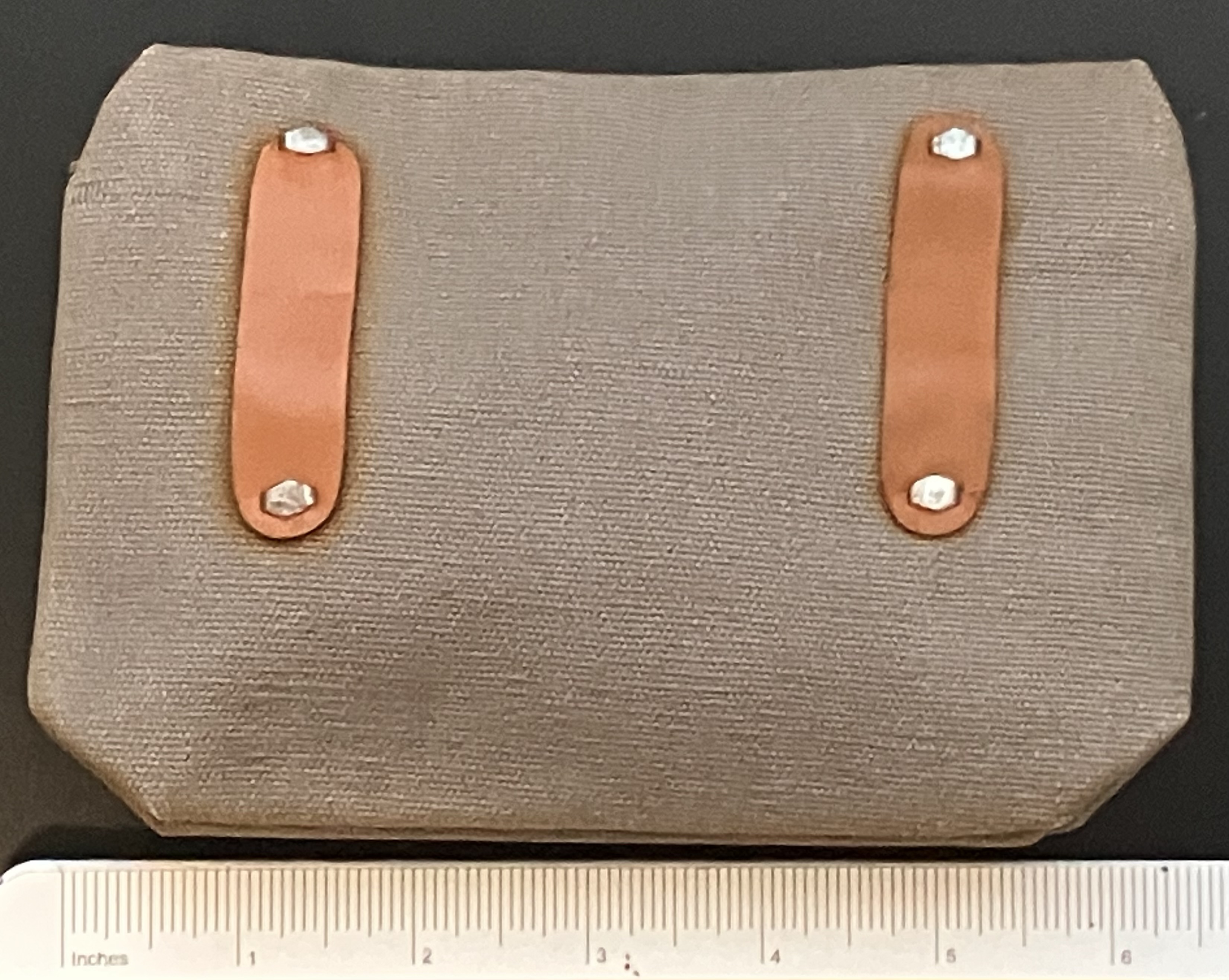
Acquiring this genuinely ‘Grail’ item 12/16/25 precipitated the founding of the CCLA just 9 days later on 12/25/25.
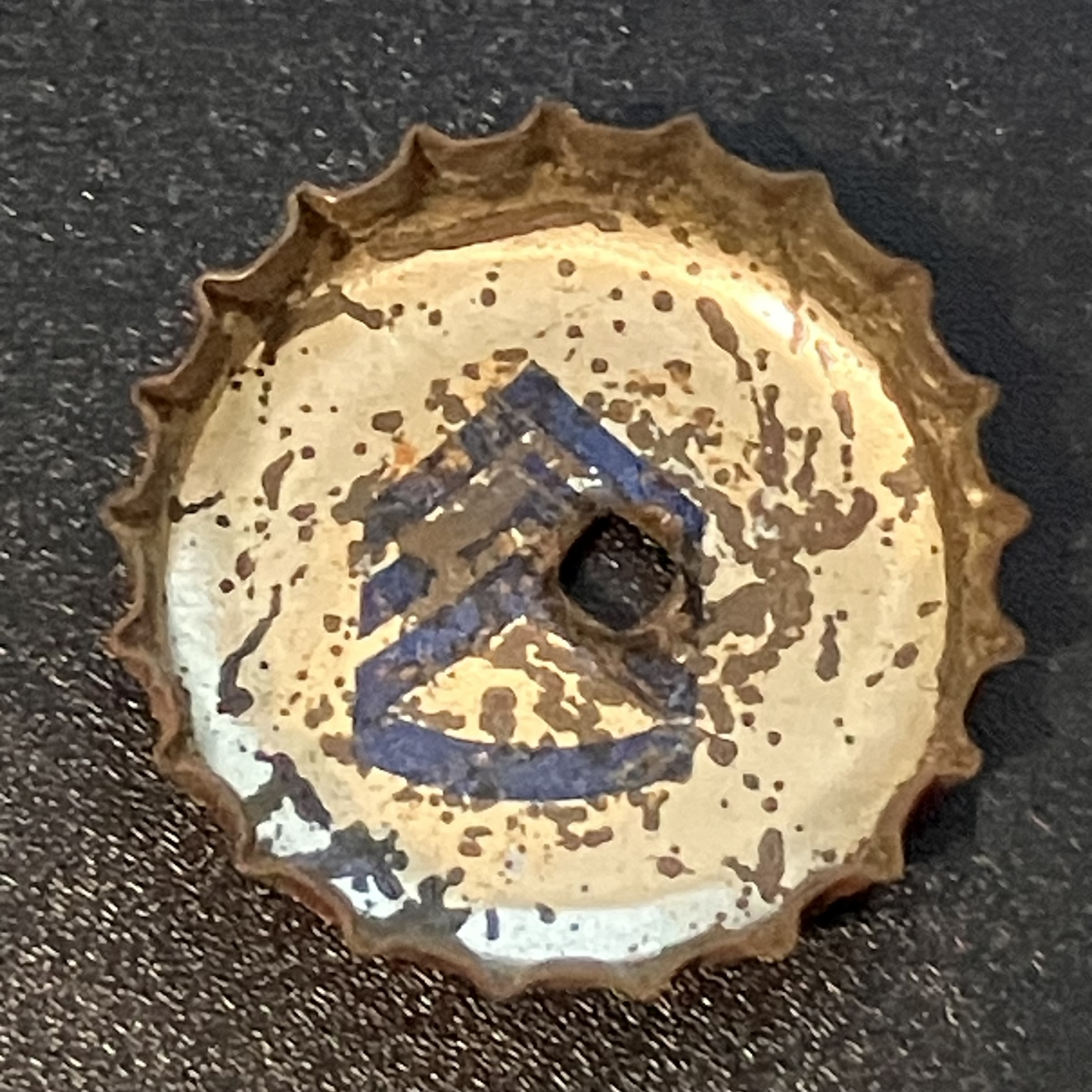
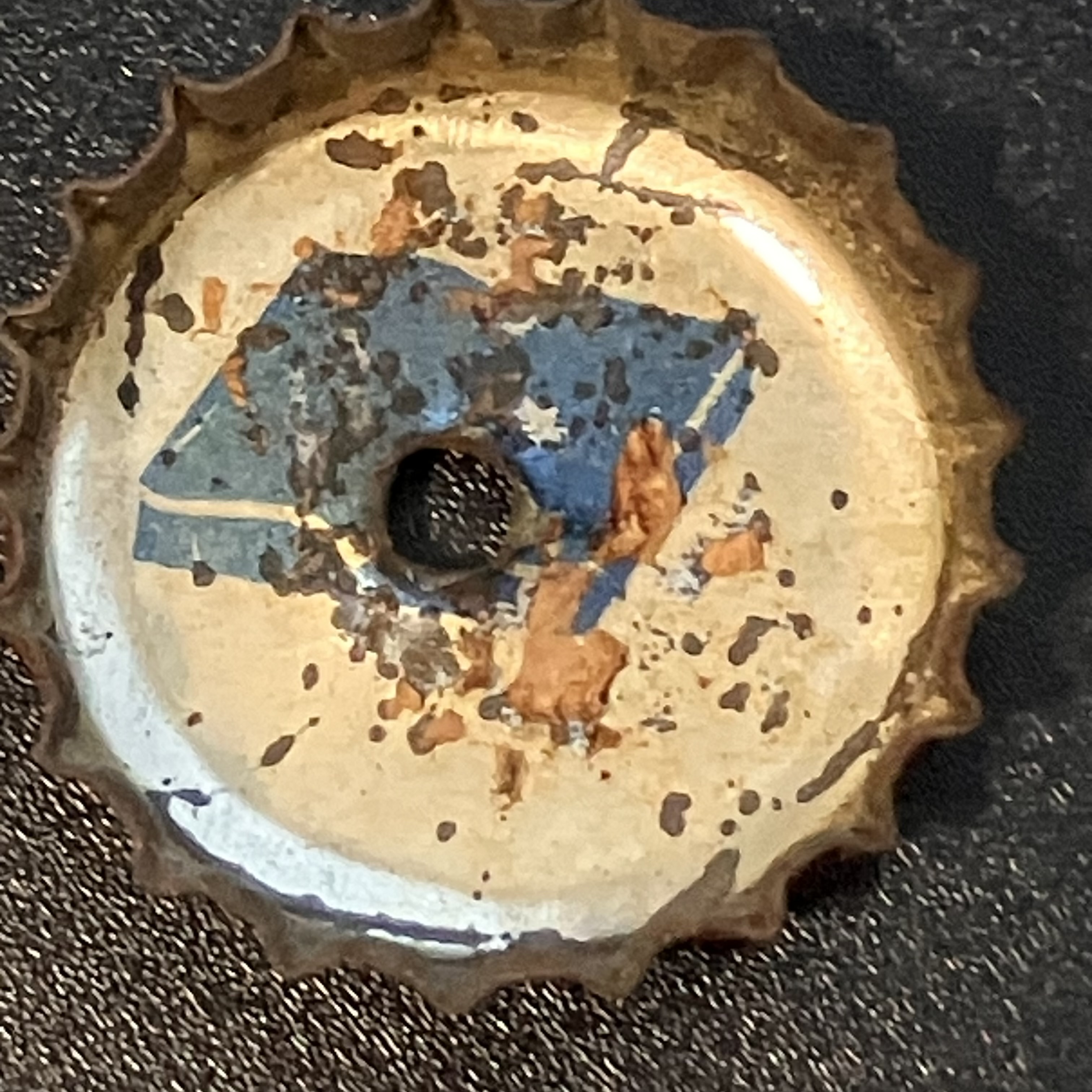
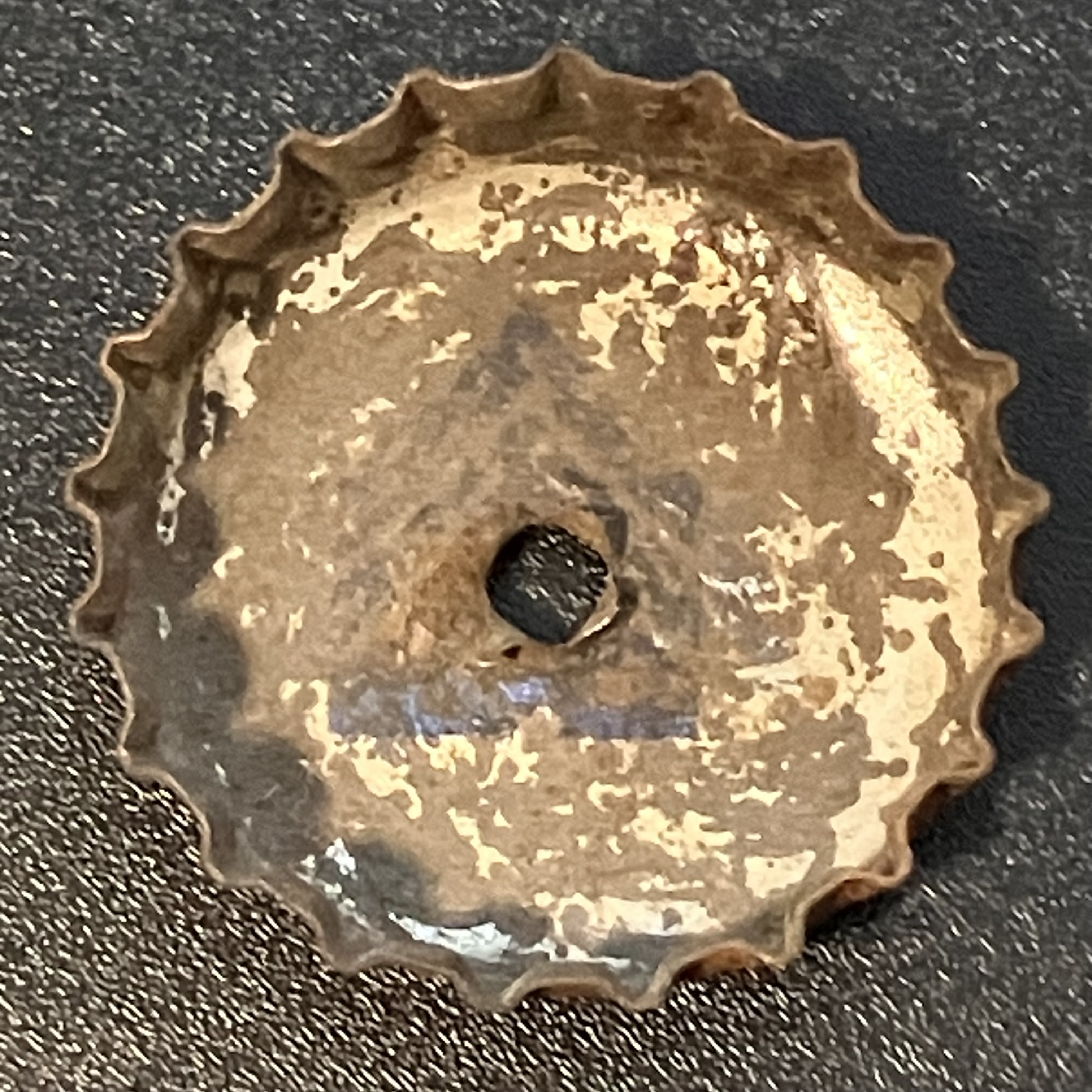
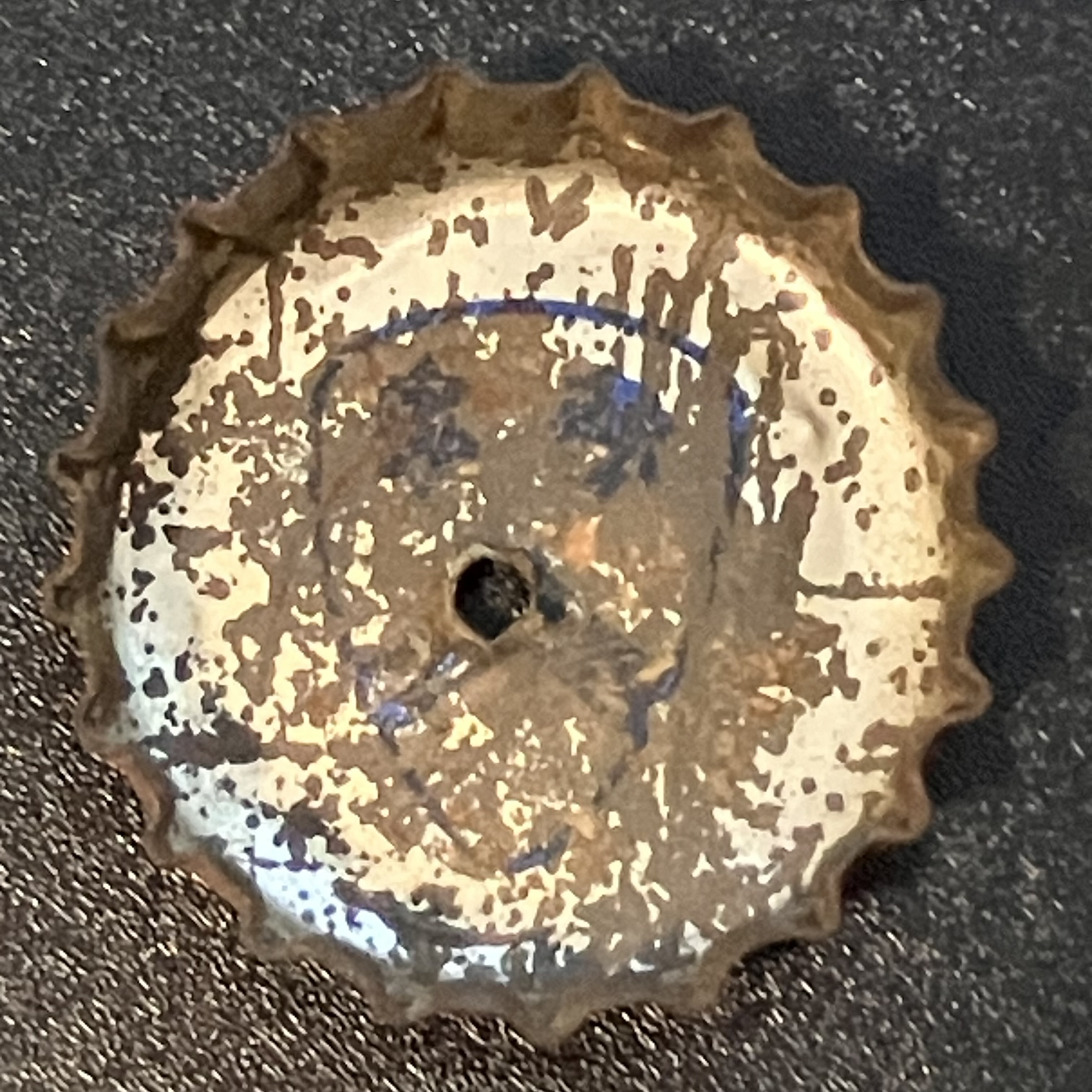
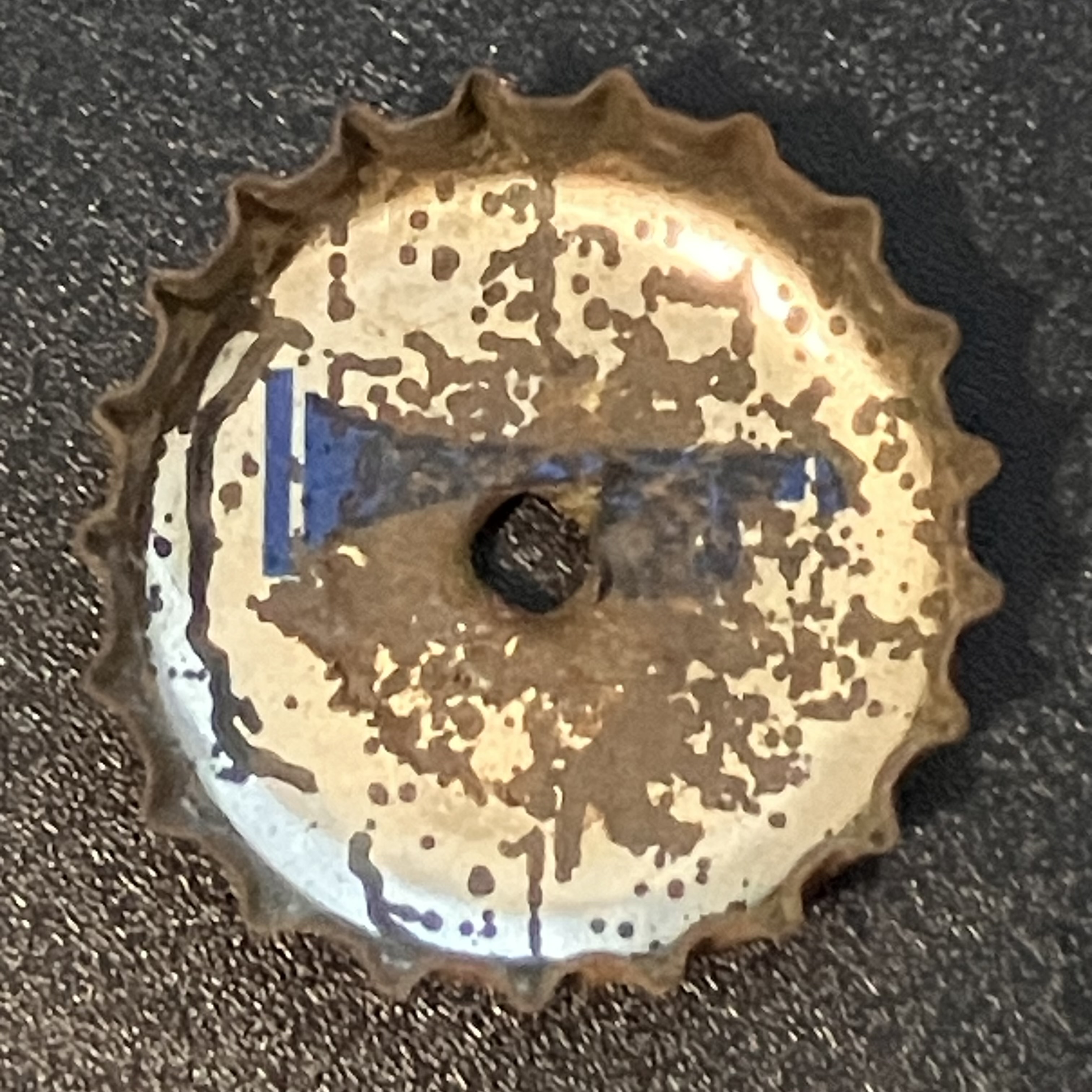
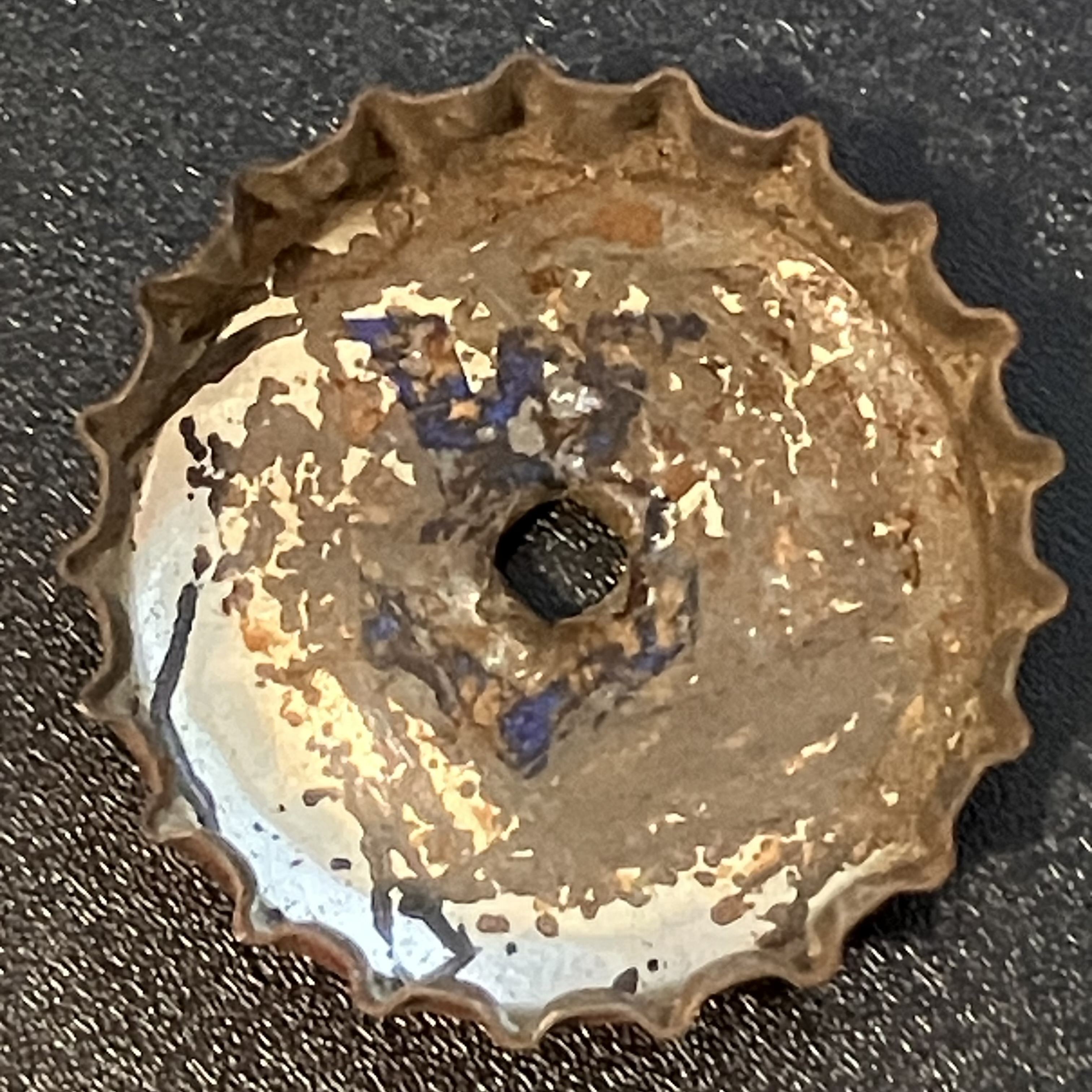
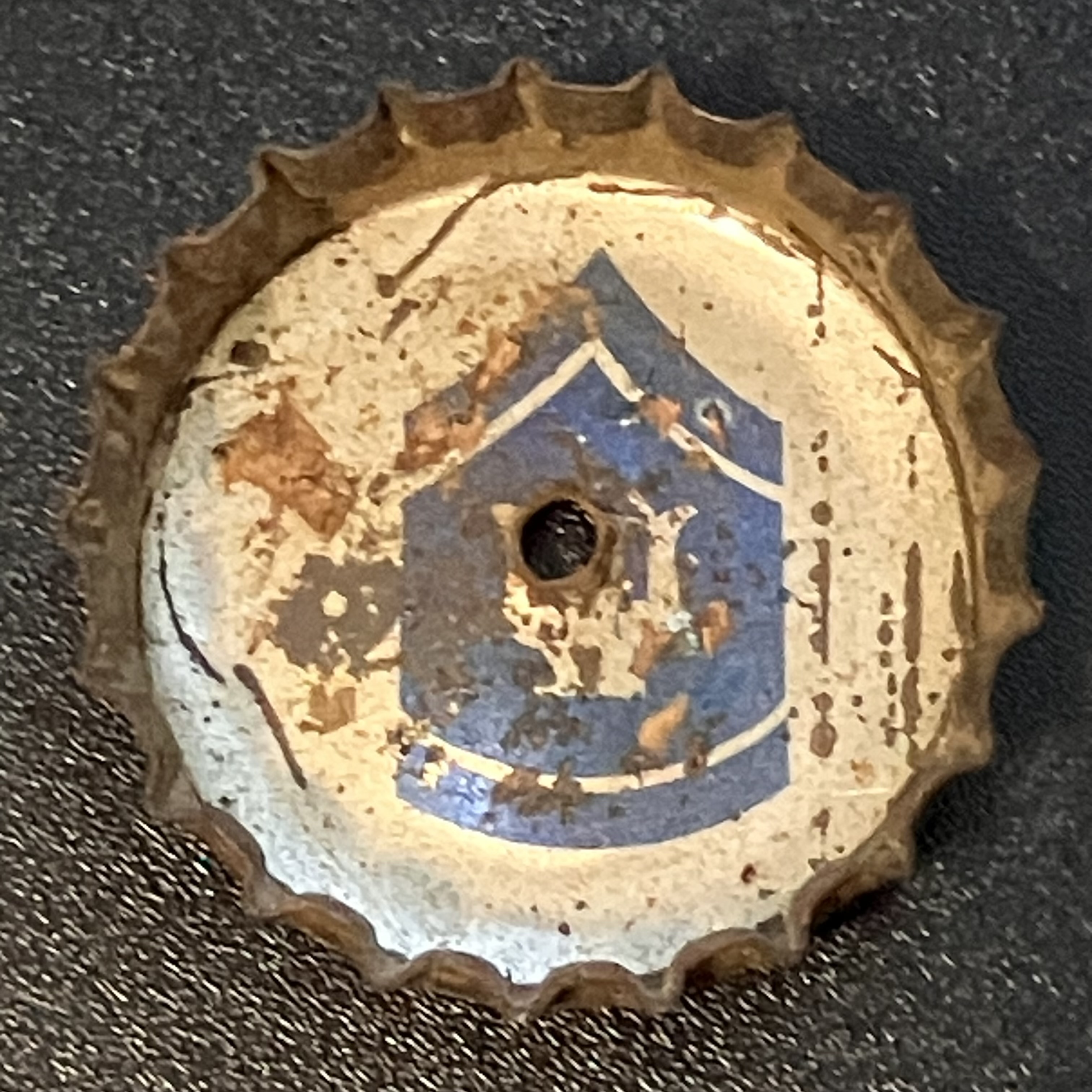
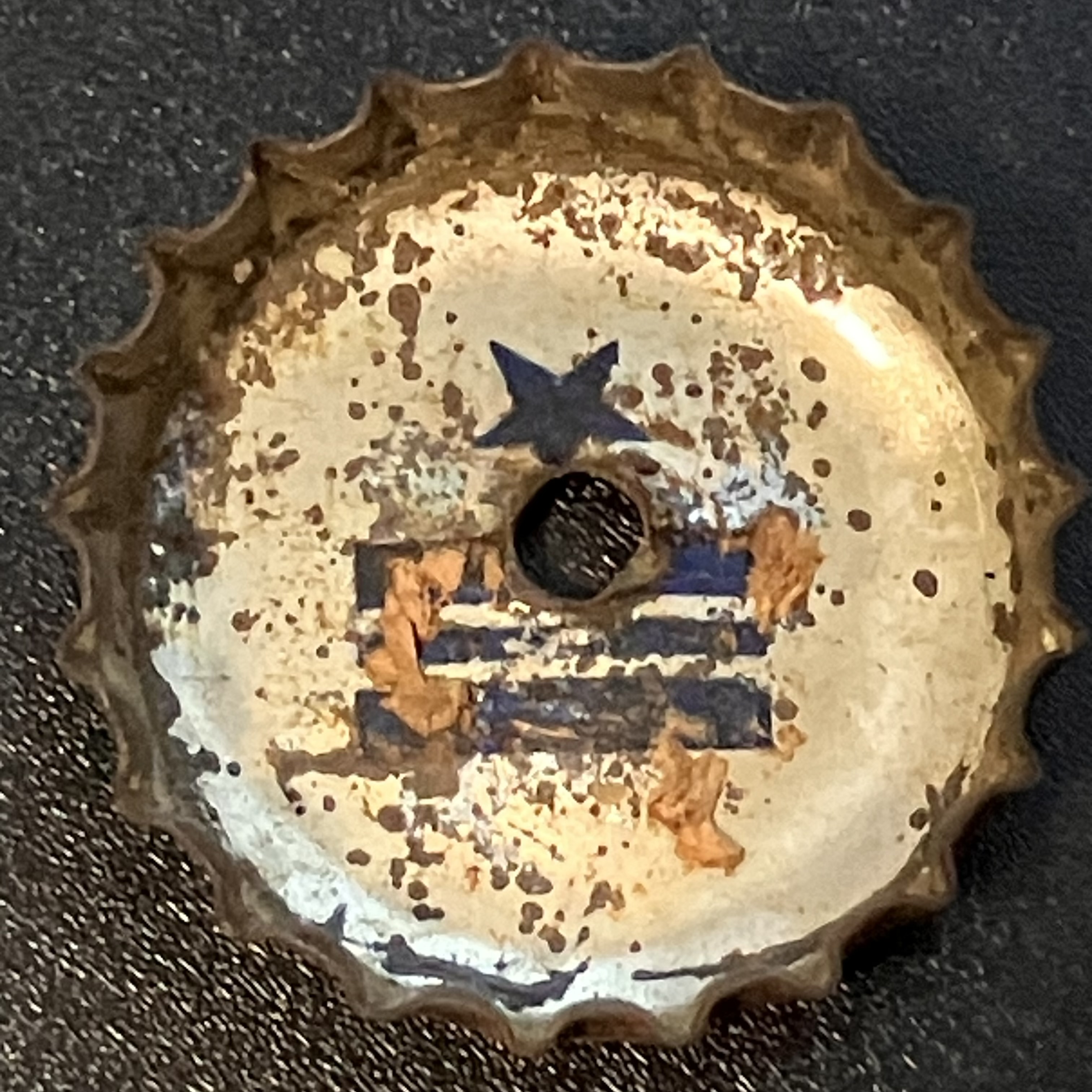
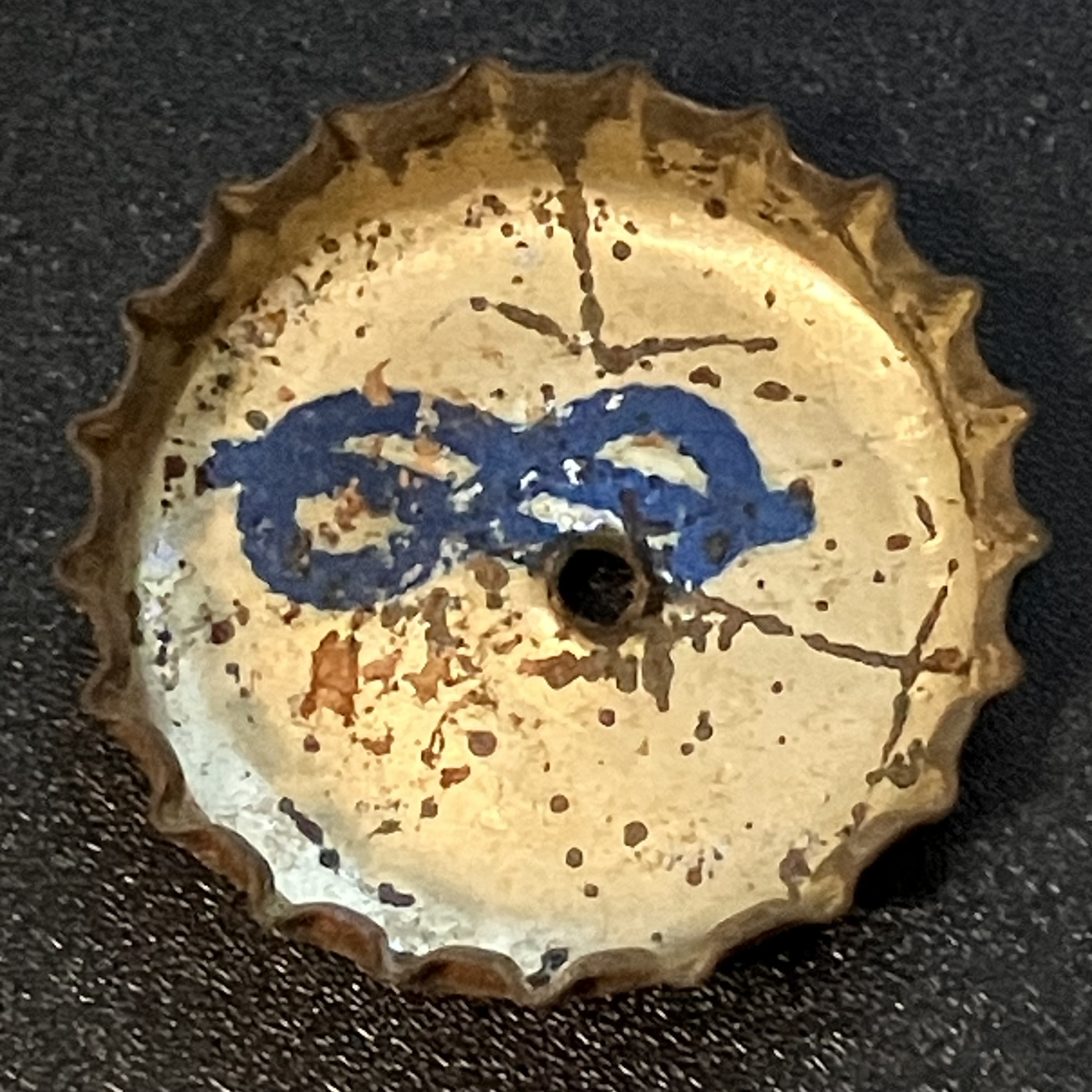
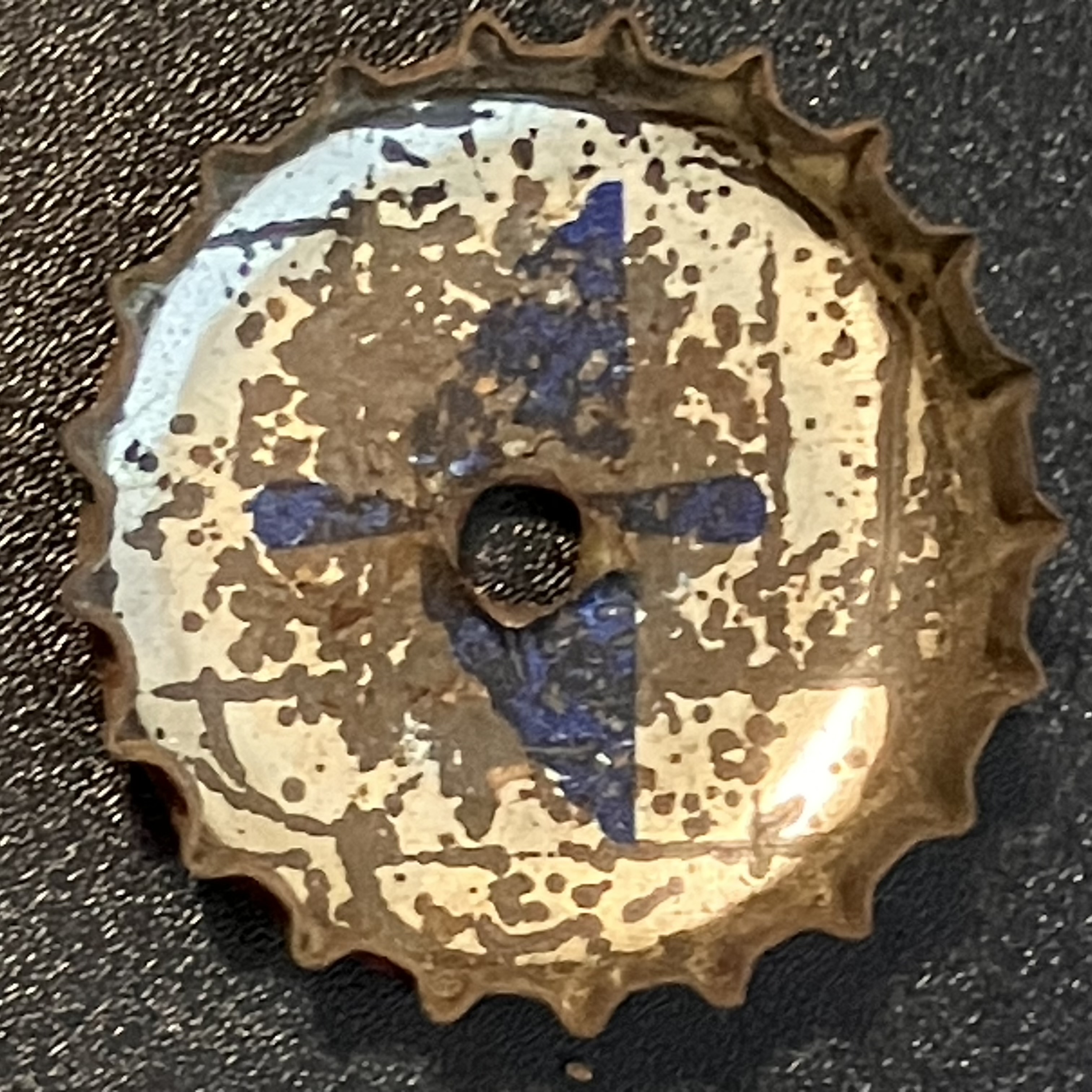
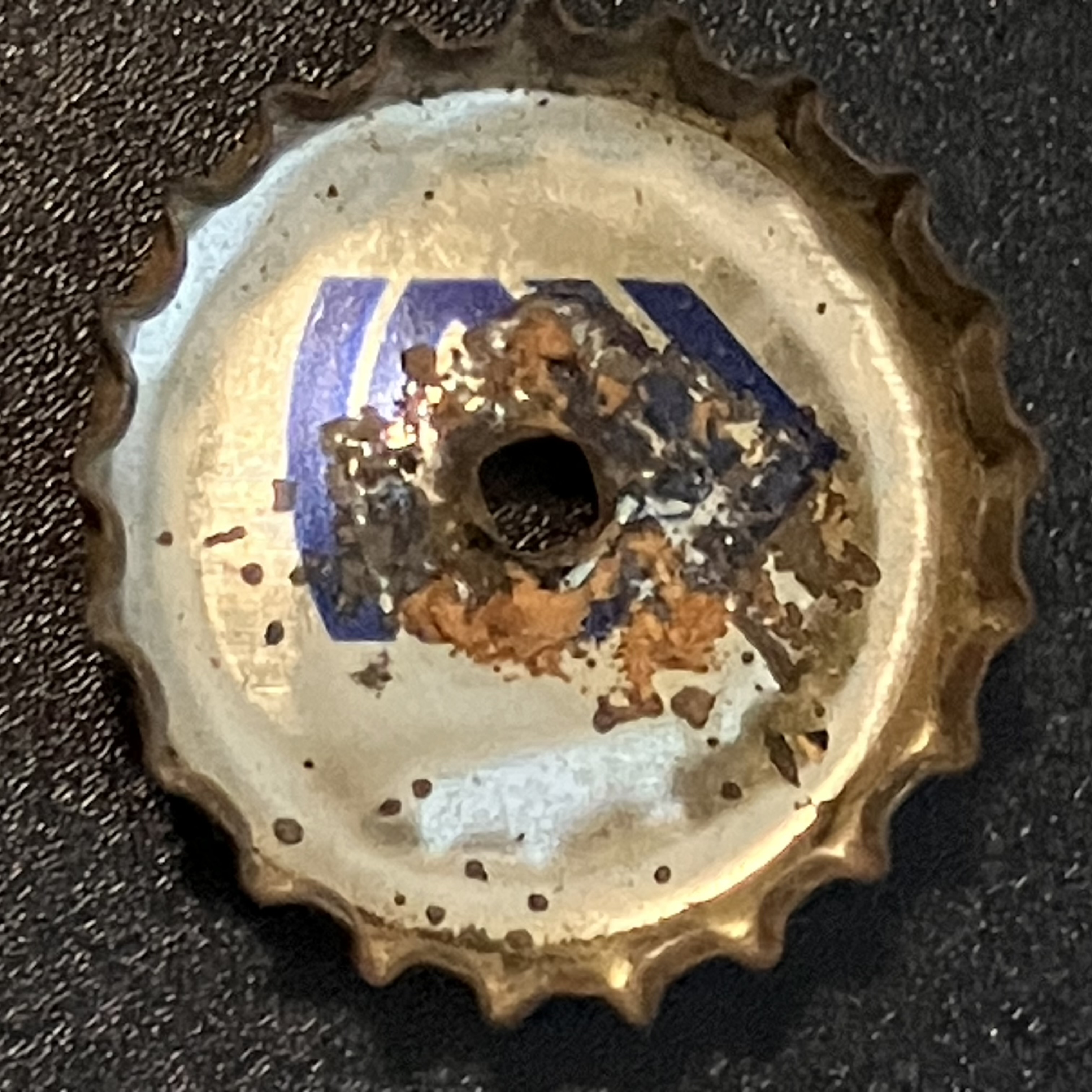
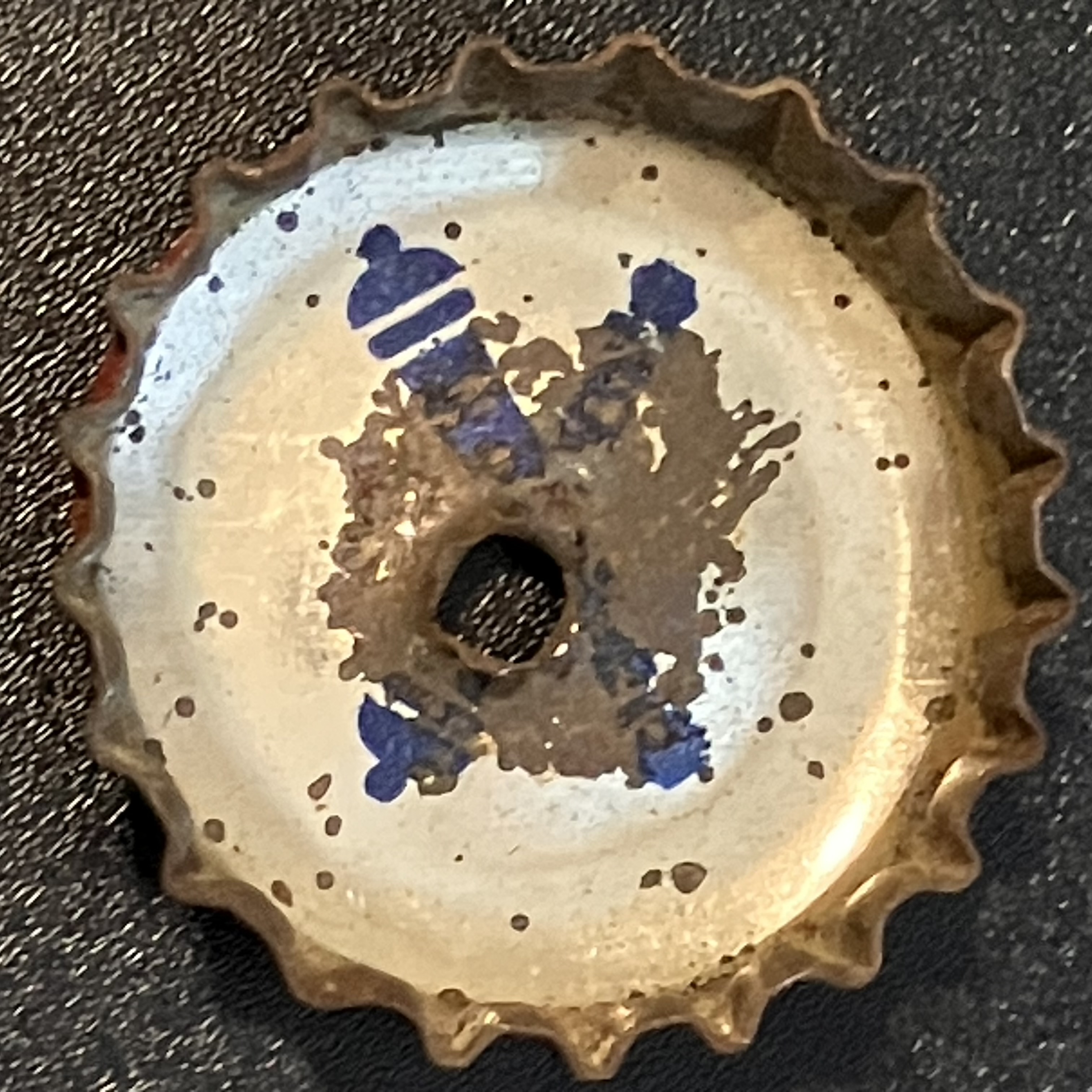
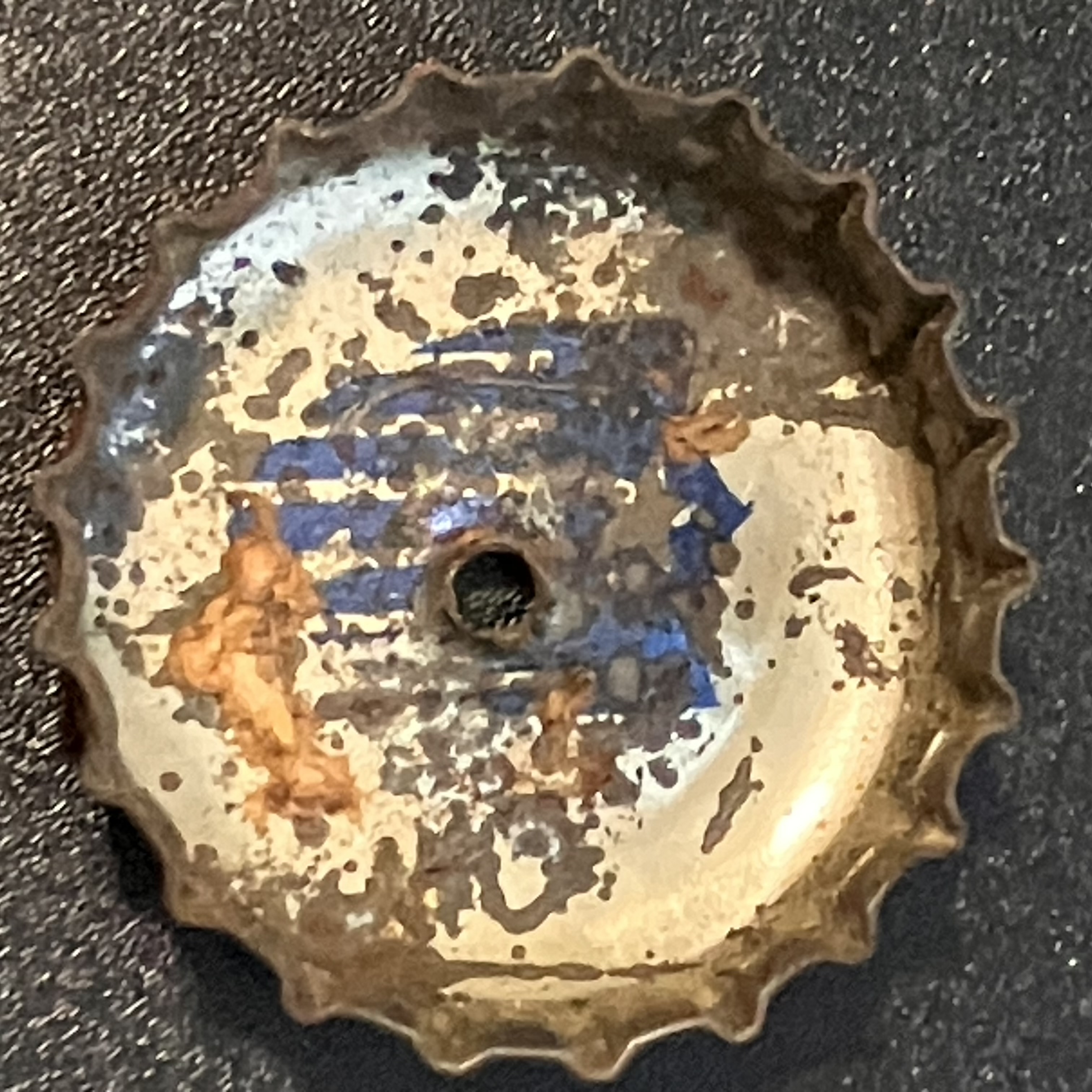
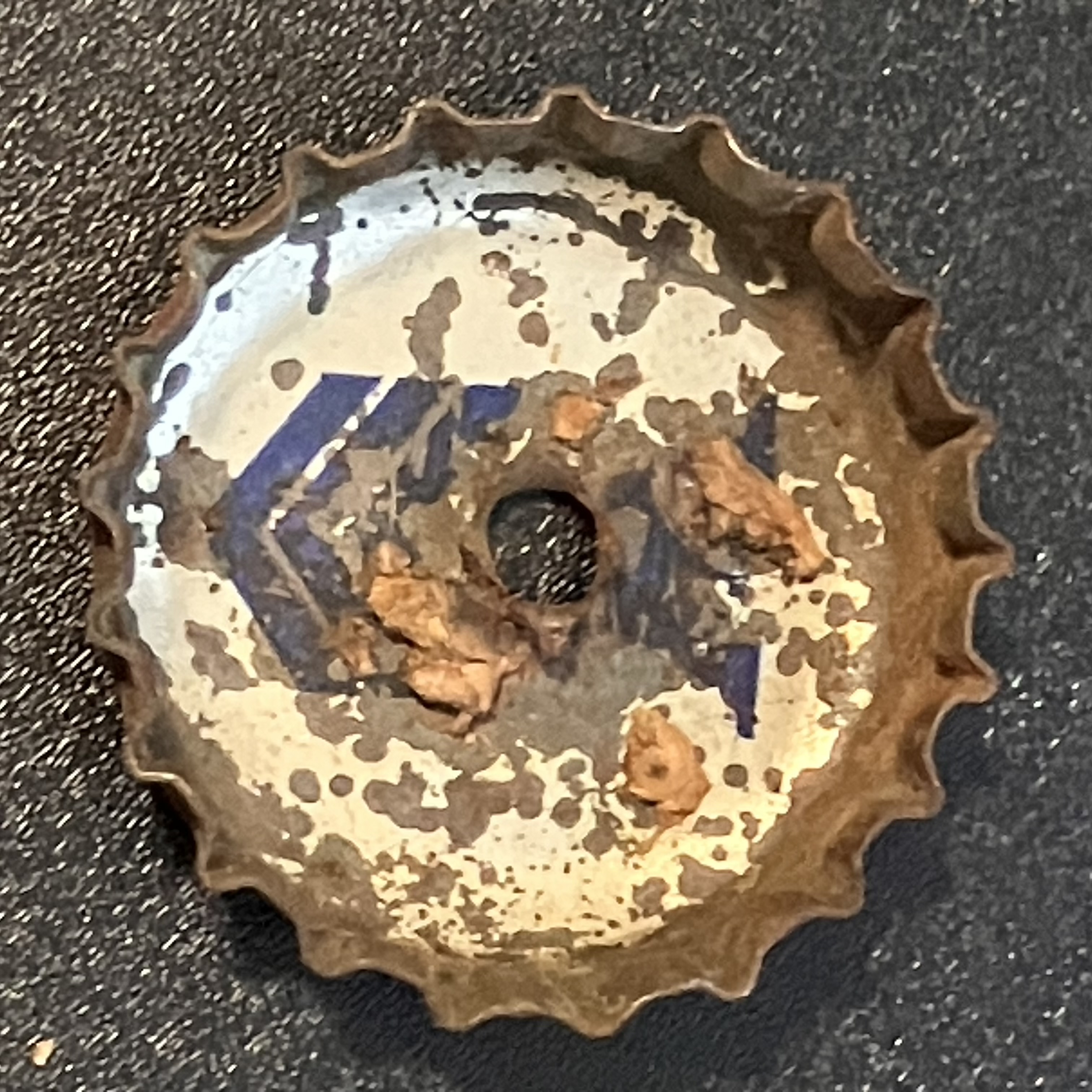
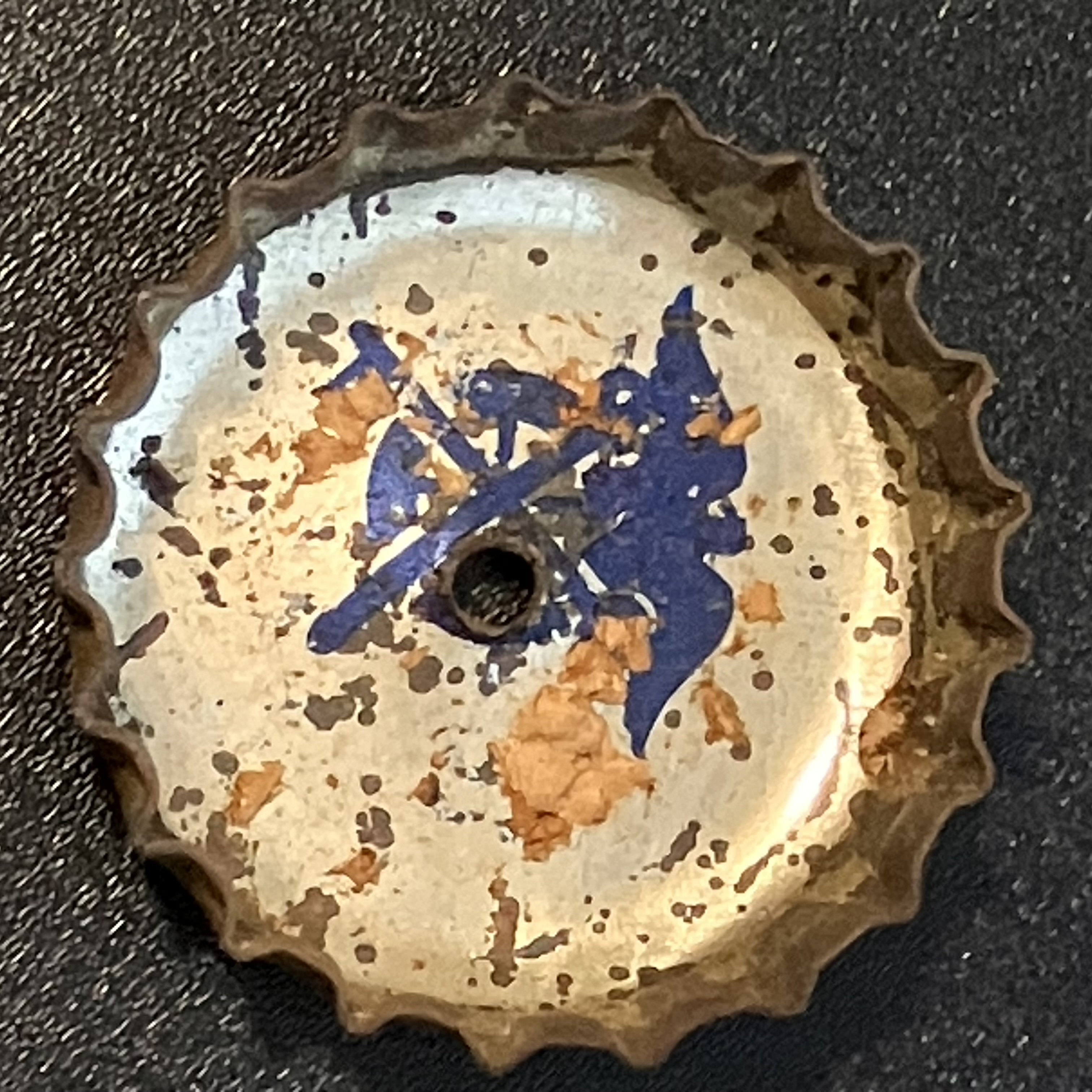
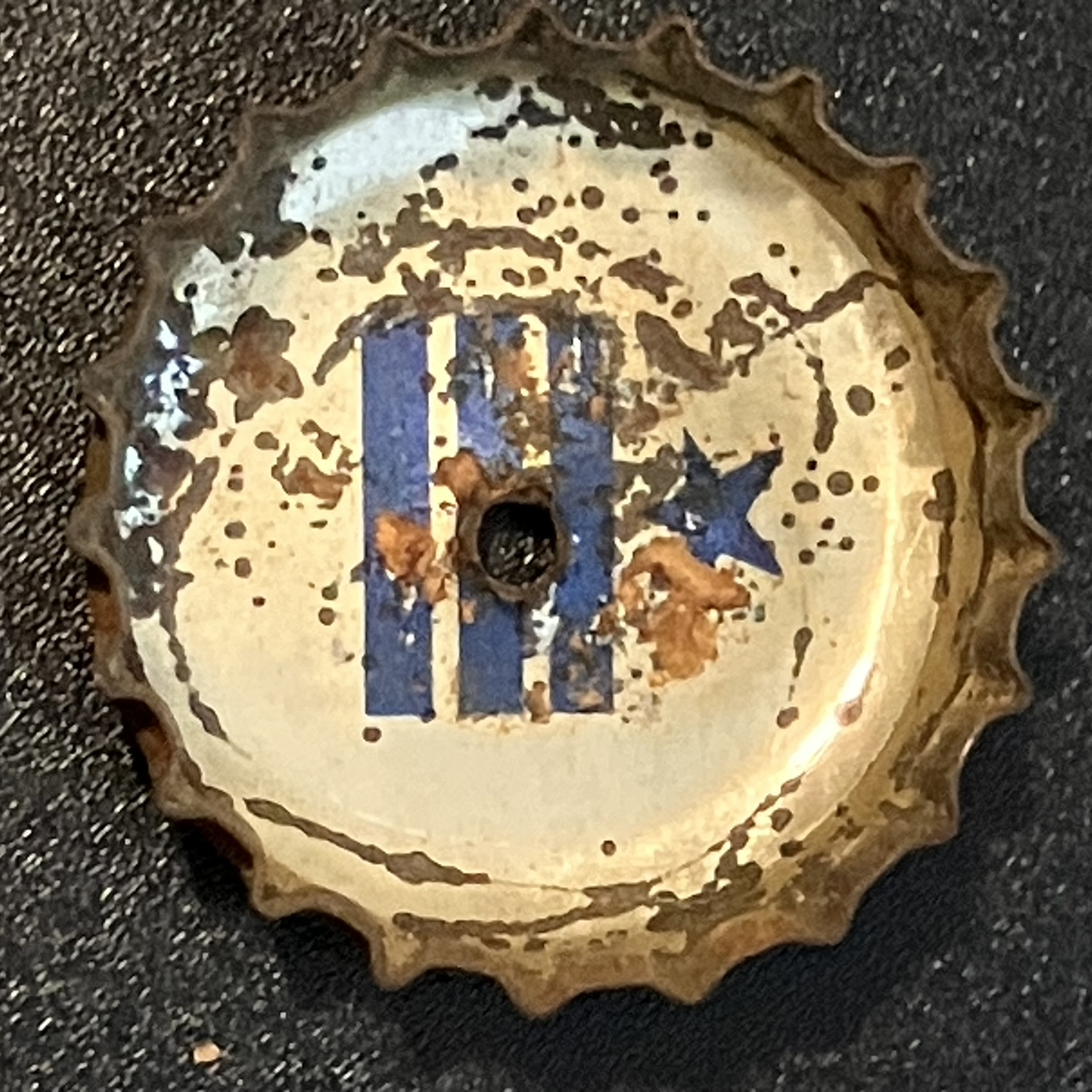
Below are Pepsi-Cola crown-cap liners that predate “Treasure Tops” (they all feature the older yellow top crown shown here) and are obviously related even though unadvertised. These are all US military insignia printed in blue, but smaller and including ranks and other branches of the military mixed with several Army ones seen in Series No.1. Other crowns with the same punch holes have been uncirculated, so these clearly being circulated is part of the mystery.